Goal
Increase vehicle fuel efficiency and reduce emissions by vaporizing an alcohol-water fuel mixture before combustion.
Problem
Low mileage and high emissions of gasoline-powered internal combustion engines; cold-start difficulties of pure alcohol fuels.
Concept Summary
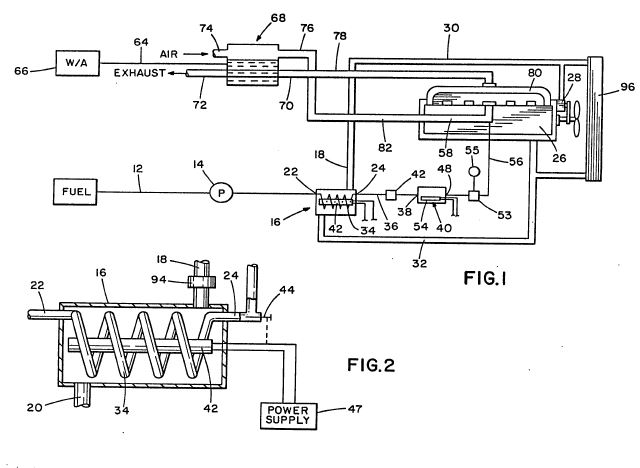
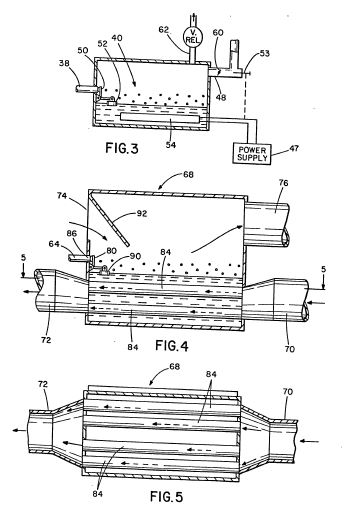
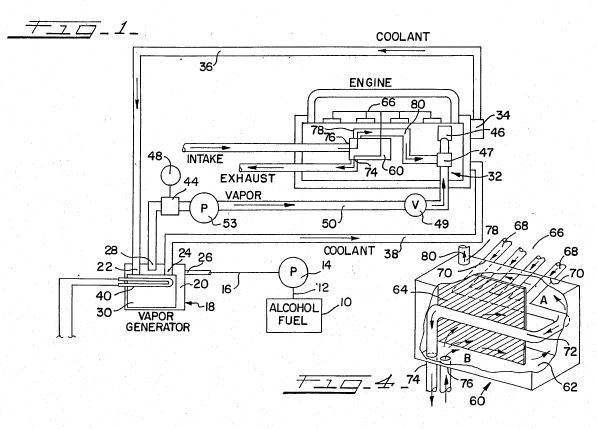
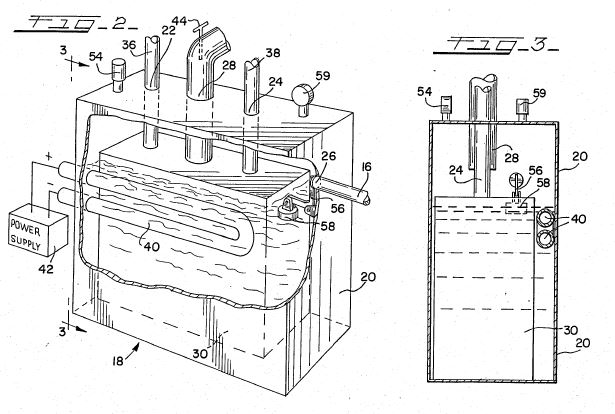
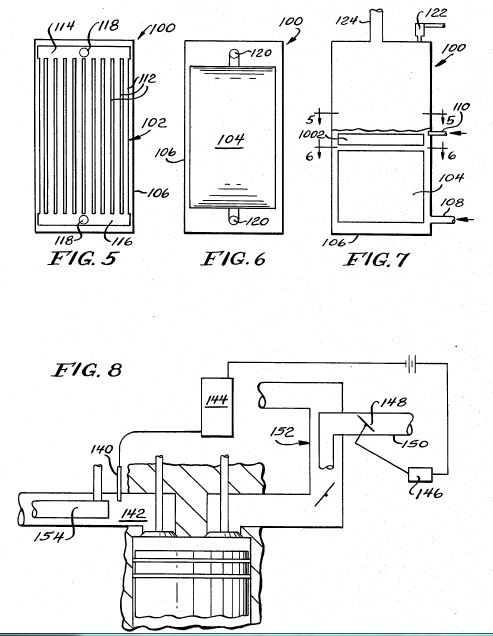
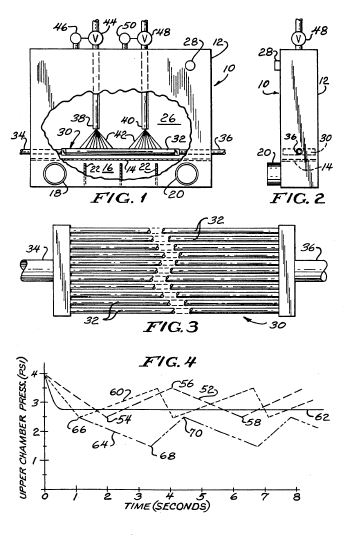
The system routes a 90 % alcohol / 10 % water blend from the fuel tank through a pre-heater that uses engine coolant (and optional electric heaters) to raise the fuel temperature to about 170 deg F. The heated mixture is then combined with moisturized intake air heated by exhaust gases, producing a vapor that is fed to the carburetor. The vapor combusts more completely, delivering 20-25 % better mileage (70-75 mpg on a Ford Pinto) with no loss of power and only CO_2 and water exhaust.
Principles
- Fuel pre-heating using waste heat
- Electric supplemental heating
- Air humidification for improved vaporization
- Vapor-phase fuel delivery to carburetor
- Use of alcohol-water blend to raise octane and reduce emissions
Scientific Domains
Materials
- Ethanol (or other alcohols)
- Water
Mechanisms of Action
- Heat exchanger transfers engine coolant heat to fuel
- Electric immersion heaters raise fuel temperature to boiling
- Exhaust-heated humid air further vaporizes fuel
- Vaporized fuel-air mixture ignites in cylinders
- Steam expansion adds to combustion pressure
Energy Sources
Applications
- Passenger automobiles
- Light trucks
- Retrofit kits for legacy vehicles
Claimed Performance
70-75 mpg on 140-proof alcohol (~=20-25 % better than gasoline), comparable or higher engine power, no visible pollution.
Experimental Evidence
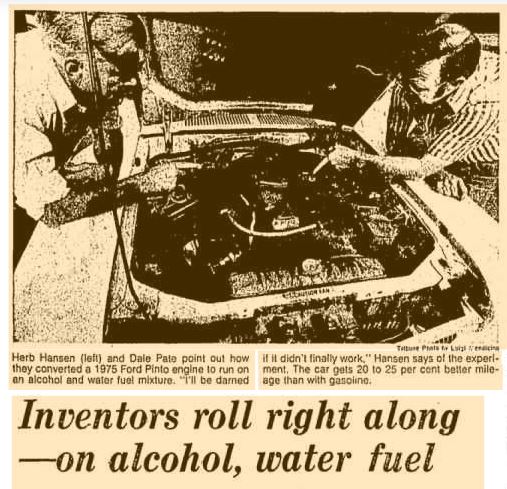
The inventors reported 1,000+ trouble-free miles on a 1975 Ford Pinto and a 1925 Model T, achieving 70-75 mpg on alcohol-water fuel versus 32 mpg on gasoline. They also cited a 20-25 % mileage improvement in newspaper reports.
Replication Status
Only the inventors' own road tests are documented; no independent replication or commercial scaling reported.
Limitations
- Requires pre-heating period (~1 min) before start
- Needs a water supply for humidification
- Limited to alcohol-compatible engines
- Potential corrosion of fuel system components
Red Flags
- Claims of "revolutionary idea" without third-party validation
- No peer-reviewed data or independent testing