Goal
Provide a more efficient, compact, and high-power-to-weight rotary engine for automotive and other transportation applications.
Problem
Complexity, weight, inefficiency, and emissions of conventional piston engines; limited power-to-weight ratio for aircraft and helicopters.
Concept Summary
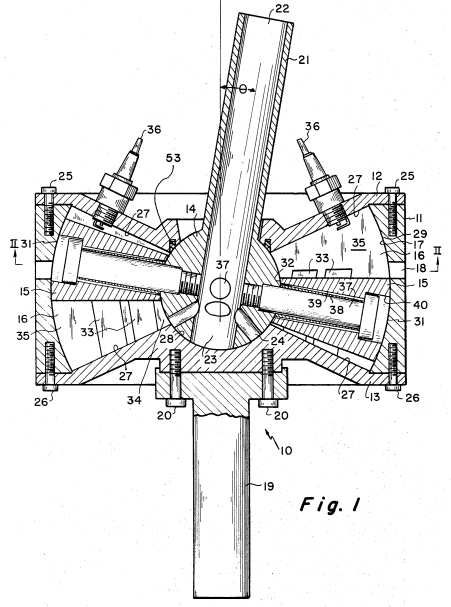
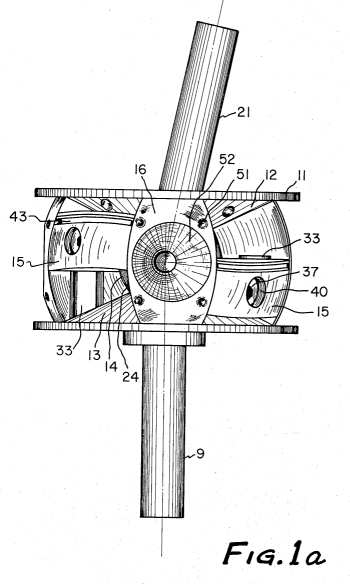
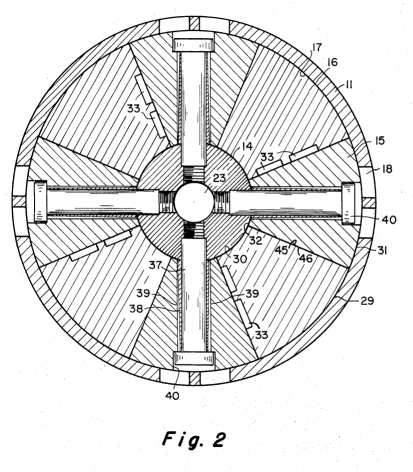
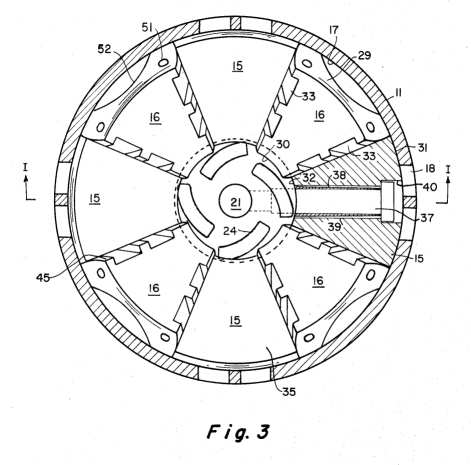
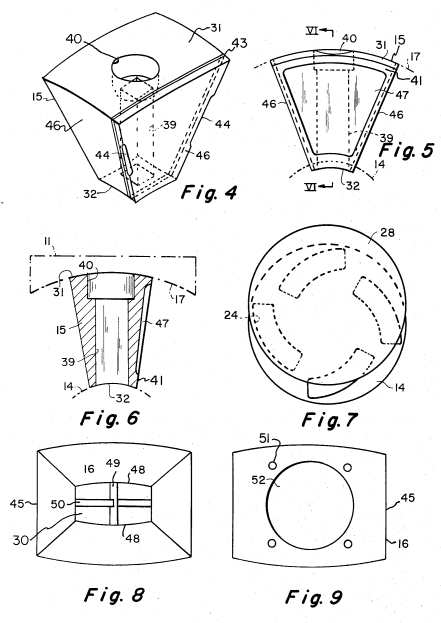
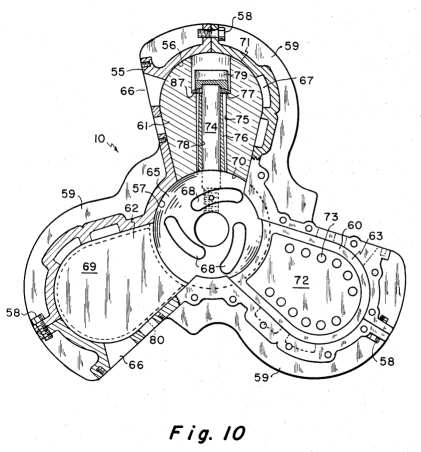
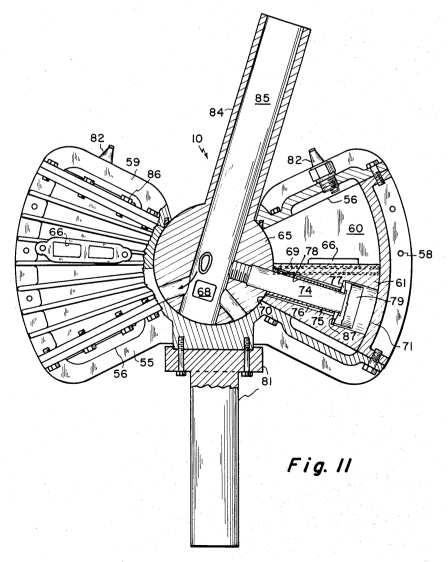
A rotary internal-combustion engine in which the housing and piston carrier rotate on separate, angularly displaced axes. The design uses spherical and conical surfaces, variable compression, and self-lubricating seals to achieve high torque at low speed, compact size, and reduced emissions.
Detailed Description
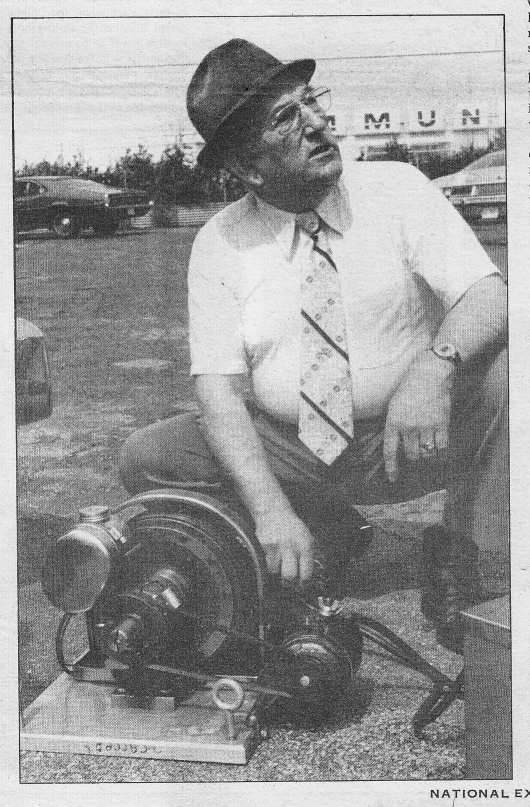
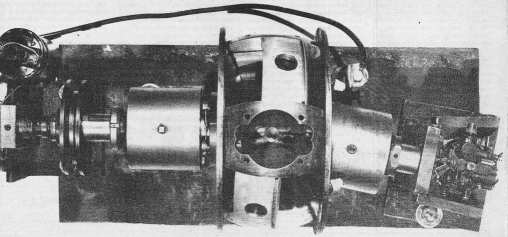
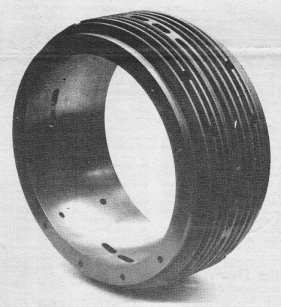
The Harper engine features a housing with multiple combustion chambers and a spherical piston carrier. Both the housing and carrier rotate at the same rate on separate shafts whose axes are inclined to each other. Combustible gas enters through a hollow central shaft, is directed into the chambers, and is transported around the pistons by internal ports. The engine can run on gasoline, diesel, steam, or as a Rankine-cycle turbine, and is air-cooled with ball-bearing main bearings. Prototype weight was 55 lb, tested at 3 200 RPM (potentially up to 20 000 RPM) and projected to produce about 114 hp based on a 3 hp/cu in rating.
Principles
- Angular displacement of rotation axes
- Positive displacement turbine concept
- Variable compression ratio
- Self-lubricating line-contact seals
Scientific Domains
Materials
- steel
- iron
- aluminum
- ball bearings
Mechanisms of Action
- Rotary motion conversion of combustion pressure
- Gas transport around pistons via internal ports
- Variable compression through geometry of conical surfaces
Energy Sources
Applications
- automotive propulsion
- aircraft engines
- helicopter power units
- steam power generation
Claimed Performance
Prototype ran at 3 200 RPM, rated for up to 20 000 RPM; projected 114 hp (3 hp per cubic inch) based on displacement of 38 cu in.; variable compression 6.5:1 to 1:1.
Experimental Evidence
Working prototype demonstrated for a few minutes; tested at 3 200 RPM; analyzed by University of Denver researchers who reported no unmanageable stress and confirmed variable compression benefits.
Replication Status
Prototype built and demonstrated; examined by independent researchers; no commercial production reported.
Limitations
- No cooling system in prototype
- Piston pins need enlargement
- Short run time (few minutes) per test
Red Flags
- Claims of "unlimited potential" without quantitative data
- Projected horsepower based on theoretical rating rather than measured output