Goal
Provide a very small but efficient antenna suitable for limited space (e.g., attic) while maintaining acceptable performance for amateur radio bands.
Problem
Conventional half-wave dipoles require large physical dimensions; many users lack space for full-size antennas.
Concept Summary
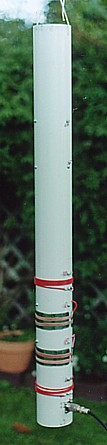
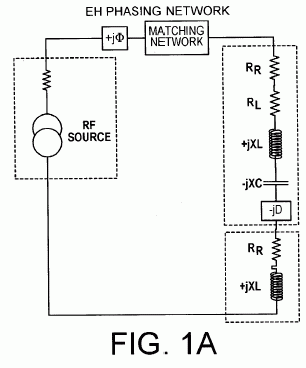
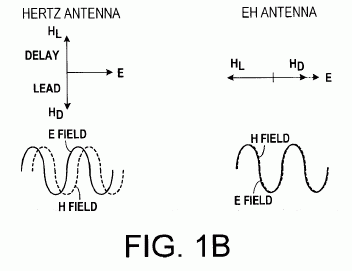
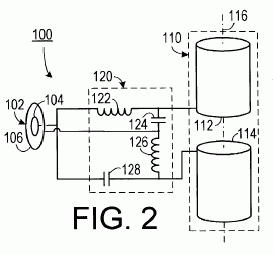
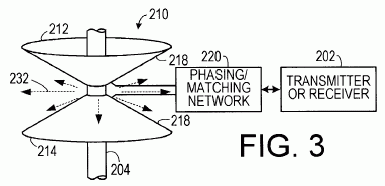
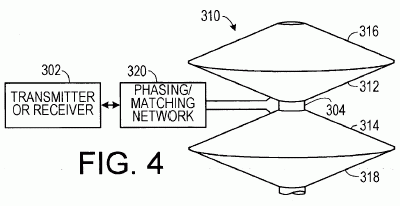
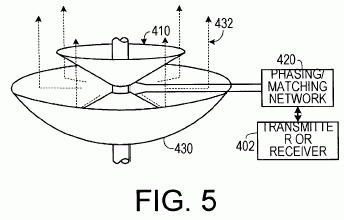
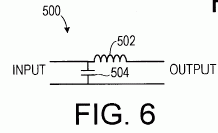
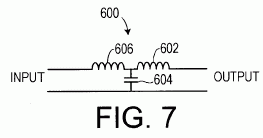
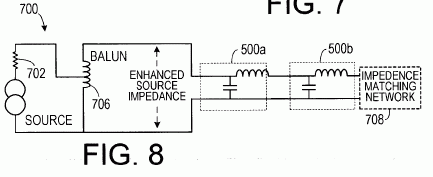
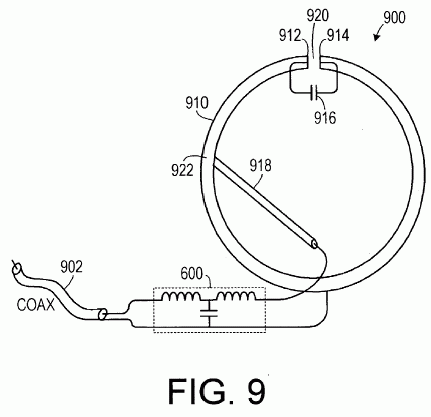
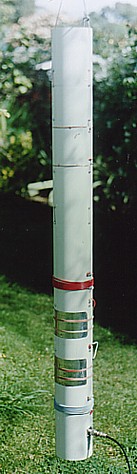
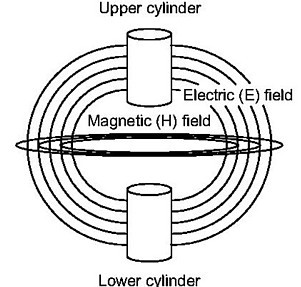
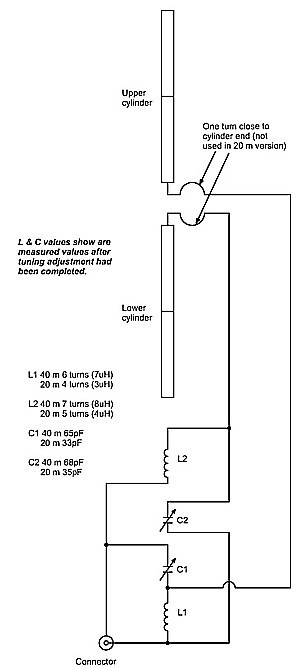
The EH antenna consists of two tubular (or conical) conductive plates separated by a dielectric (PVC). The electric field is generated by voltage across the plates, and the magnetic field by displacement current in the dielectric. By arranging the E- and H-fields at right angles and in phase within a compact volume, a high radiation resistance (~2368 Omega) is achieved. A balanced L-network (two inductors and two capacitors) matches the antenna to a 50-Omega feed line.
Principles
- Crossed-field generation
- Impedance matching
- Resonant radiation resistance
Scientific Domains
Materials
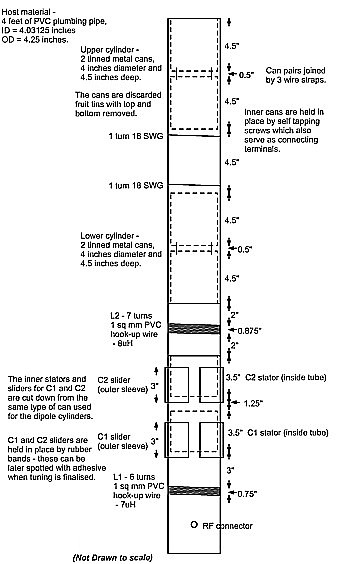
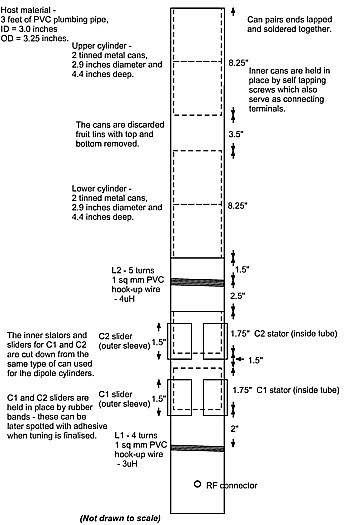
- PVC plumbing tube
- tin-plated steel fruit cans
- copper wire
- capacitors
- inductors
- self-tapping screws
- rubber bands
Mechanisms of Action
- Voltage across conductive plates creates an electric field
- Displacement current in the dielectric creates a magnetic field
- Balanced L-network transforms 50 Omega feed to high radiation resistance
Energy Sources
Applications
- Amateur radio transmission and reception
- Shortwave communication where space is limited
Claimed Performance
Radiation resistance ~=2368 Omega; SWR can be tuned to ~1:1; signal strength only a few S-points below a full-size inverted-V; can light a small fluorescent lamp with <15 W input.
Experimental Evidence
Author built 20 m and 40 m units, measured inductance/capacitance, achieved low SWR, and reported on-air performance compared with an inverted-V antenna.
Replication Status
Two prototype units (20 m and 40 m) were constructed and tested by the author.
Limitations
- Weather durability - tin-plated cans corrode without protection
- Potential magnetic distortion from ferromagnetic steel cans
- Performance still modest compared with full-size dipole