Goal
Convert lignocellulosic biomass into fermentable sugars (and ethanol) at low cost by efficiently recovering hydrochloric acid.
Problem
High operating costs of the Bergius acid hydrolysis process due to expensive HCl recovery and low overall economic viability.
Concept Summary
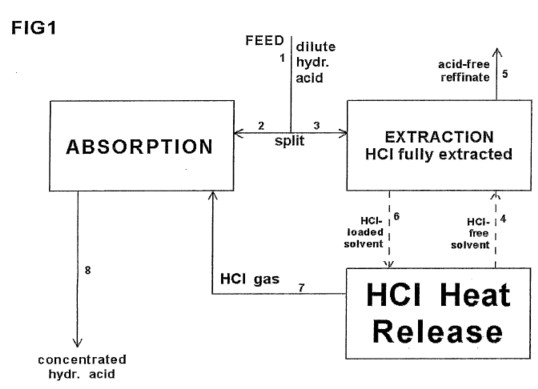
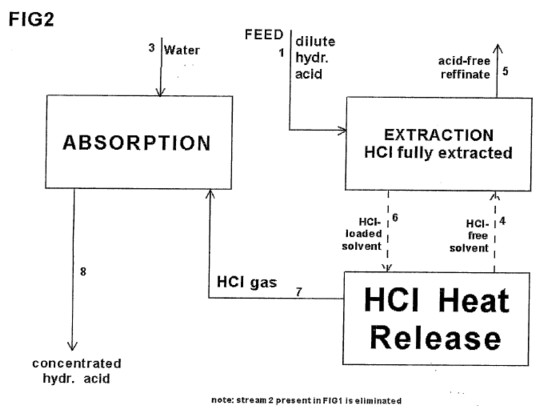
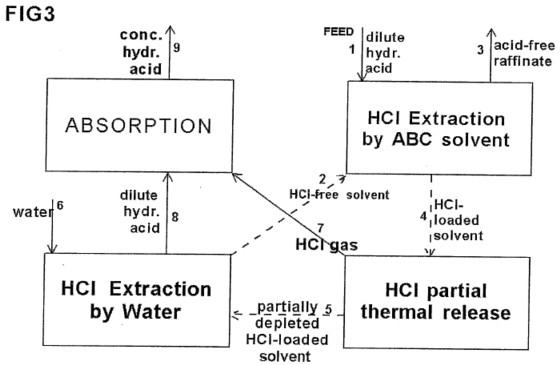
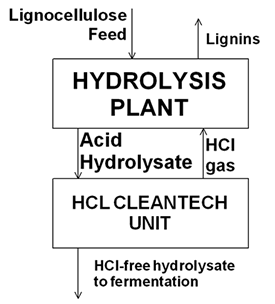
A proprietary solvent-extraction process recovers HCl from dilute aqueous solutions using an immiscible extractant (oil-soluble amine, oil-soluble organic acid, and a solvent). The recovered gaseous HCl is reused for acid-catalyzed hydrolysis of cellulose, enabling near-100 % sugar conversion with minimal water and energy use.
Detailed Description
The invention brings a dilute aqueous HCl solution into contact with a substantially immiscible extractant that contains (1) an oil-soluble amine (water-insoluble in free and salt forms), (2) an oil-soluble organic acid (water-insoluble in free and salt forms), and (3) a solvent for the amine and acid. HCl selectively transfers to the extractant, forming an HCl-carrying phase. This phase is then treated to release gaseous HCl, which can be recycled back into the hydrolysis reactor. The process eliminates the need for costly HCl reconcentration steps, reduces water usage, and allows hydrolysis of various cellulosic feedstocks without drying or pretreatment.
Principles
- Solvent extraction
- Acid-catalyzed hydrolysis
- Phase-transfer extraction
Scientific Domains
Materials
- Dilute aqueous HCl solution
- Oil-soluble amine
- Oil-soluble organic acid
- Organic solvent for amine and acid
Mechanisms of Action
- Acid-catalyzed cleavage of cellulose glycosidic bonds
- Selective liquid-liquid extraction of HCl into an oil-based phase
- Thermal or pressure release of gaseous HCl from the extractant
Applications
- Low-cost sugar production for biofuels
- Ethanol manufacturing
- Acid recovery for PVC and other HCl-dependent industries
Claimed Performance
Cost of ethanol below US$1 / gallon; 42 % HCl recovery via solvent extraction; near-100 % conversion of cellulose to sugars.
Experimental Evidence
Calculations by a US chemical engineering firm indicate ethanol cost < $1 / gallon; pilot plant planned for 1.25 t/day feedstock; historical Bergius process achieved near-100 % sugar conversion at industrial scale.
Limitations
- Potential corrosion of equipment (requires glass-lined or resistant vessels)
- Scale-up of solvent extraction system not yet demonstrated
- Economic assumptions based on calculations, not long-term commercial data
Red Flags
- Reliance on proprietary solvent system with limited public data
- No peer-reviewed experimental results presented
- Corrosion risk in high-acid reactors