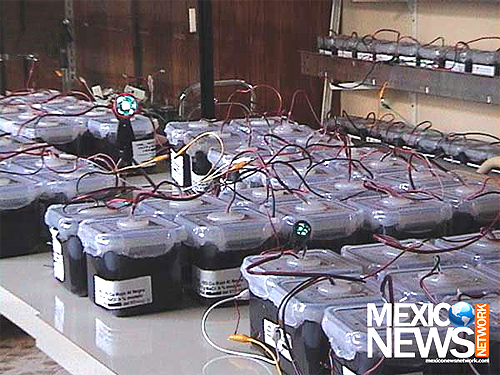
Goal
Provide a long-lasting, light-driven battery that can generate electricity and hydrogen/oxygen from water without conventional fuel.
Problem
Environmental impact of disposable batteries and the need for sustainable, low-cost energy storage.
Concept Summary
A photo-electrochemical system in which melanin (or melanin-derived compounds) acts as the central electrolyzing material. When illuminated with light (200-900 nm), melanin absorbs photons, generates high-energy electrons, and drives the reversible splitting of water into hydrogen and oxygen, producing electrical current. The process is claimed to operate at ambient temperature and to continue for decades.
Principles
- photoelectrochemical water splitting
- photocatalysis using melanin
- light absorption and electron excitation
- reversible hydrogen-oxygen recombination generating electricity
Scientific Domains
Materials
- melanin (eumelanin, pheomelanin, neuromelanin, etc.)
- melanin precursors (L-tyrosine, L-dopamine, etc.)
- melanin derivatives and analogues (polihydroxyindole, polyindolequinones, etc.)
- metal ions (Fe, Cu, Gd, Eu, etc.)
- water
- quartz or transparent glass (container walls)
Mechanisms of Action
- Melanin absorbs photons (200-900 nm) -> creates excited electrons
- Excited electrons reduce protons -> produce hydrogen gas
- Oxidized sites release oxygen atoms
- Reverse reaction (hydrogen + oxygen) reforms water and generates electric current
Energy Sources
Applications
- household power supply
- electric-vehicle propulsion
- hydrogen generation for fuel cells
Claimed Performance
The system can operate continuously for up to 100 years, power household appliances, and is planned for use in electric-vehicle engines.
Experimental Evidence
The article provides a descriptive patent narrative and qualitative statements (e.g., "process continues for 100 years", "photolysis of water molecules") but no quantitative test data, efficiency measurements, or independent replication.
Limitations
- No quantitative efficiency or lifetime data provided
- Scalability of melanin production not demonstrated
- Dependence on sufficient light exposure
- Potential degradation of melanin in long-term operation
Red Flags
- Extraordinary claim of 100-year operation without external fuel
- Lack of peer-reviewed experimental data
- Patented technology with limited independent verification