Goal
Increase engine efficiency, reduce fuel consumption and emissions, and eliminate the need for a transmission.
Problem
Conventional internal-combustion engines waste >80 % of fuel energy as heat, require radiators, and emit high levels of CO_2 and NO_x.
Concept Summary
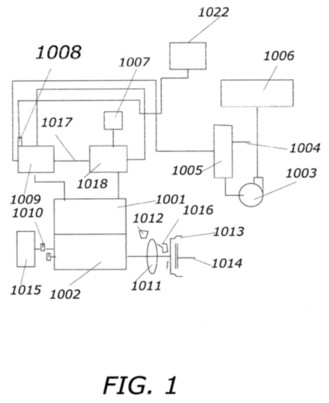
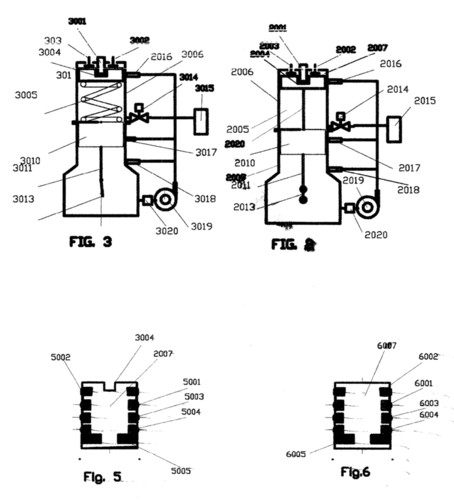
The Gun Engine uses a secondary piston floating on a compressible air pocket to receive the pressure from a homogeneous fuel-air explosion. The delayed pressure transfer creates harmonic oscillations that add extra expansion strokes, converting waste heat into additional work. The engine operates in a 12-stroke cycle (induction, compression, primary power, up to four extra compression and power strokes) and can run on any liquid or gaseous fuel, including hydrogen. By re-using heat that would normally be rejected to a radiator, the design claims to quadruple overall efficiency.
Principles
- Homogeneous fuel-air combustion
- Secondary piston with compressible air pocket
- Pressure oscillation and harmonic expansion
- Internal heat recovery
- Multi-stroke (12-stroke) engine cycle
Scientific Domains
Materials
- Metal
- Mould-injected plastic
Mechanisms of Action
- Explosive combustion drives a secondary piston
- Delayed pressure transfer produces extra expansion work
- Heat retained in the engine is converted to mechanical work
- Twelve-stroke cycle extracts energy from waste heat and pressure oscillations
Energy Sources
Applications
- Automotive vehicles
- Marine propulsion
Claimed Performance
90 % overall efficiency (~=80 % reduction in fuel consumption & emissions), 92 % efficiency in initial tests, torque increase 70-90x without extra fuel, vehicle mileage >220 mpg, marine version claimed 200 000 hp at 100 rpm.
Experimental Evidence
Initial test results showed 92 % efficiency; the inventor reports the engine runs cool without a radiator and that fuel consumption is difficult to measure precisely.
Limitations
- No independent, peer-reviewed testing
- Claims rely on inventor's anecdotal measurements
- Durability of the secondary piston under repeated explosions not demonstrated
Red Flags
- Extraordinary efficiency claims without published data
- Potential over-unity or "free-energy" implications
- Lack of third-party verification