Goal
Provide a high-efficiency, low-emission home heating solution using powdered biomass charcoal.
Problem
Low thermal efficiency (46-54 %) and high emissions of conventional biomass stoves, and the need for sustainable small-scale heating.
Concept Summary
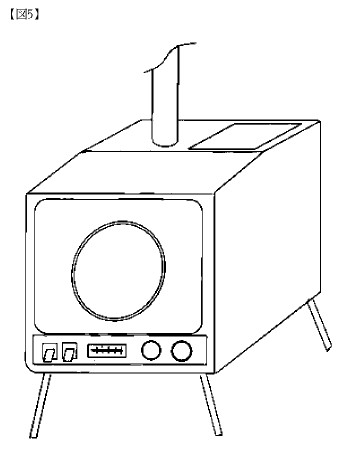
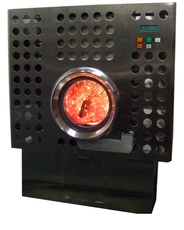
A prototype heater burns powdered biomass charcoal in a thin-bed cross-flow (TBCF) mode inside a rotating combustion chamber. The design ensures uniform fuel-air contact, rapid ignition, and complete combustion, delivering 6 kW of heat with thermal efficiencies of 60-86 % and CO emissions below 5 ppm.
Detailed Description
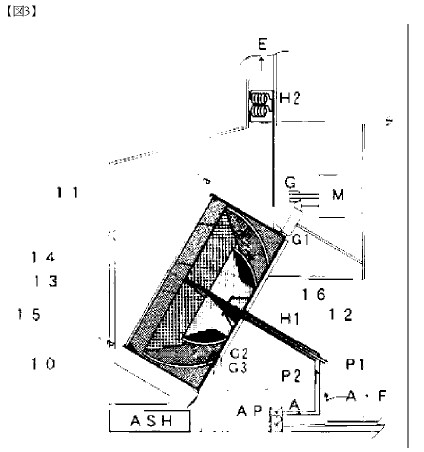
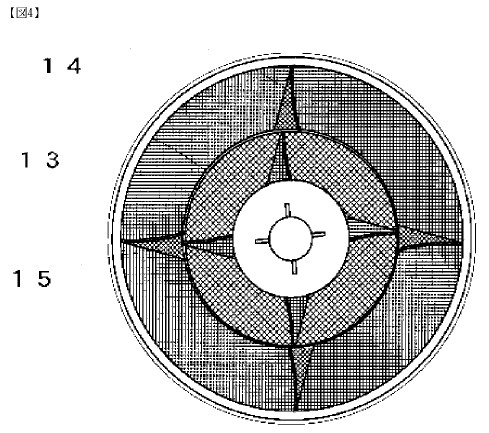
The heater uses a duplex tube system: an inner tube supplies a mixed stream of powdered charcoal and air, pre-heated by a coil (H1), while an outer tube provides secondary air for complete oxidation. The combustion chamber rotates, allowing the thin charcoal bed to be uniformly fixed on the wall. A non-rotating high-temperature glass plate seals the rotating chamber, and a negative draft keeps the plate cool. Experiments with charcoal from Japanese oak, apple branches, coffee waste, and soybean fiber demonstrated efficiencies of 65-86 % (wood charcoal) and 60-81 % (waste charcoal) at a stable 6 kW output, with CO concentrations after a catalyst below 5 ppm.
Principles
- Thin-bed cross-flow (TBCF) combustion
- Rotary combustion chamber for uniform fuel distribution
- Pre-heating of fuel-air mixture
- Secondary air injection for complete oxidation
- Automated combustion control
Scientific Domains
Materials
- Biomass charcoal (Japanese oak, apple branch, coffee waste, soybean fiber)
- Air
- Catalyst (for CO reduction)
- High-temperature glass plate
Mechanisms of Action
- Powdered charcoal combustion
- Air-fuel mixing and pre-heating
- Residence-time control via rotation
- Heat exchange through heater coil
Energy Sources
Applications
- Household space heating
- Small-scale district heating
Claimed Performance
Thermal efficiency 60-81 % (up to 86 % for wood charcoal), heat output 6 kW, CO emissions <5 ppm after catalyst.
Experimental Evidence
Prototype tested with 6 kW output; measured efficiencies 65-86 % for wood charcoal and 60-81 % for waste biomass charcoal; CO concentration in exhaust after catalyst <5 ppm.
Limitations
- Requires supply of powdered charcoal
- Complex rotating chamber and sealing mechanism
- Potential wear of glass plate at high temperature