Goal
Extend the refrigerated shelf life of fluid milk and other dairy products by inhibiting microbial growth.
Problem
Rapid spoilage of milk due to pathogenic and spoilage bacteria, leading to limited shelf life.
Concept Summary
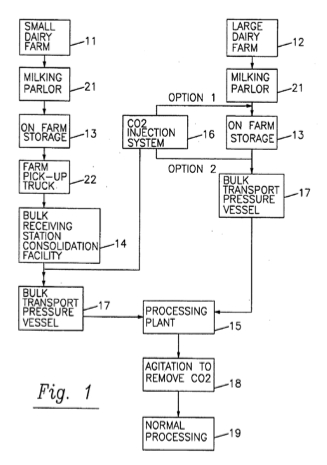
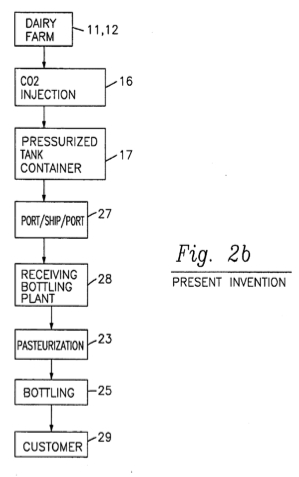
Inject low levels of dissolved carbon dioxide (CO_2) into milk and package it in high-barrier (EVOH-coated) cartons. The CO_2 creates a modified atmosphere that suppresses microbial growth through O_2 displacement, pH reduction, and direct metabolic inhibition, allowing milk to stay fresh for months without detectable taste changes.
Detailed Description
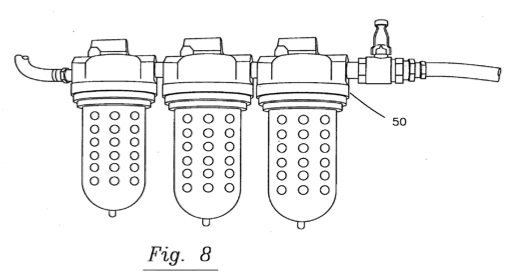
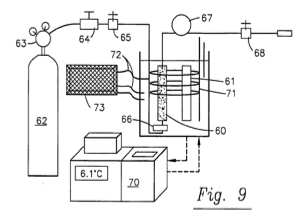
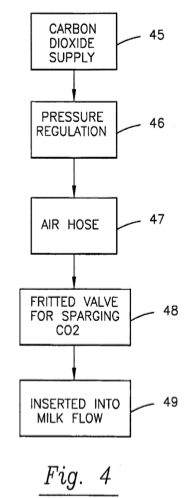
The process uses a gas-sparging unit (a sintered stainless-steel frit) to dissolve 5.68-22.7 mM CO_2 directly into a flowing stream of milk. The milk is then sealed in ethylene-vinyl-alcohol (EVOH) coated cartons that provide a high barrier to CO_2 loss. The dissolved CO_2 remains in equilibrium with the headspace, maintaining a low, constant concentration that inhibits spoilage microorganisms by lowering pH, displacing O_2, and directly affecting cellular metabolism. The method has been demonstrated on cottage cheese (~=200 % shelf-life increase) and on fluid milk (>=2 months shelf life) without detectable carbonation taste.
Principles
- Modified atmosphere packaging (MAP)
- Carbon dioxide antimicrobial inhibition
- pH reduction via carbonic acid
- O_2 displacement
- Direct metabolic inhibition of microbes
Scientific Domains
Materials
- Carbon dioxide (CO_2) gas
- Ethylene vinyl alcohol (EVOH) coated carton material
- Stainless-steel sintered frit
Mechanisms of Action
- Microbial growth inhibition
- Lowering of aqueous pH
- Displacement of oxygen
- Disruption of membrane fluidity
- Direct inhibition of metabolic pathways
Applications
- Extended refrigerated storage of fluid milk
- Improved safety of dairy products during transport
- Shelf-life extension for other perishable foods
Claimed Performance
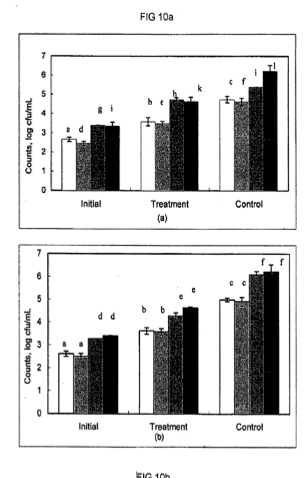
Shelf life of fluid milk extended to more than two months in refrigeration; cottage cheese shelf life increased by about 200 %; no detectable carbonation taste at used CO_2 levels.
Experimental Evidence
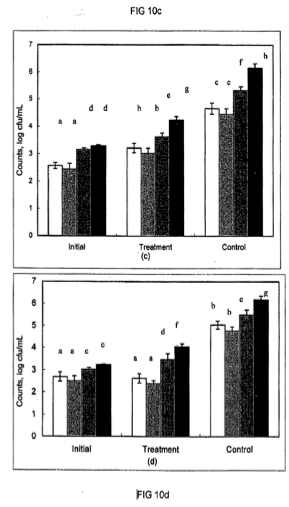
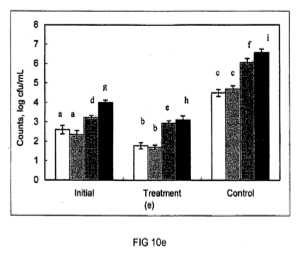
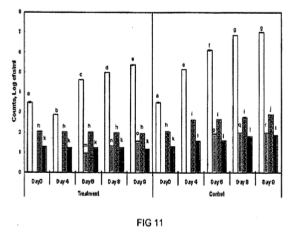
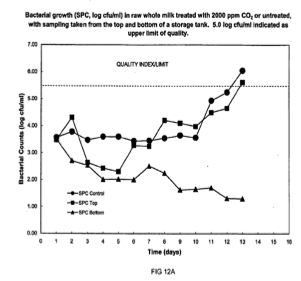
Demonstrated in laboratory and pilot-scale trials on cottage cheese and fluid milk; CO_2 injection devices and EVOH-coated cartons were tested; microbial inhibition observed even when O_2 was held constant and pH unchanged.
Replication Status
Method has been demonstrated in the cottage-cheese industry and is used commercially for some dairy products worldwide.
Limitations
- Taste detection threshold limits maximum CO_2 concentration
- Requires high-barrier (EVOH) packaging, increasing cost
- Effectiveness depends on precise CO_2 dosing and temperature control