Goal
Extract heat from ambient air for heating or refrigeration, potentially replacing conventional fuels.
Problem
Dependence on fuel for household heating, refrigeration, and transportation; desire for a low-cost heat source.
Concept Summary
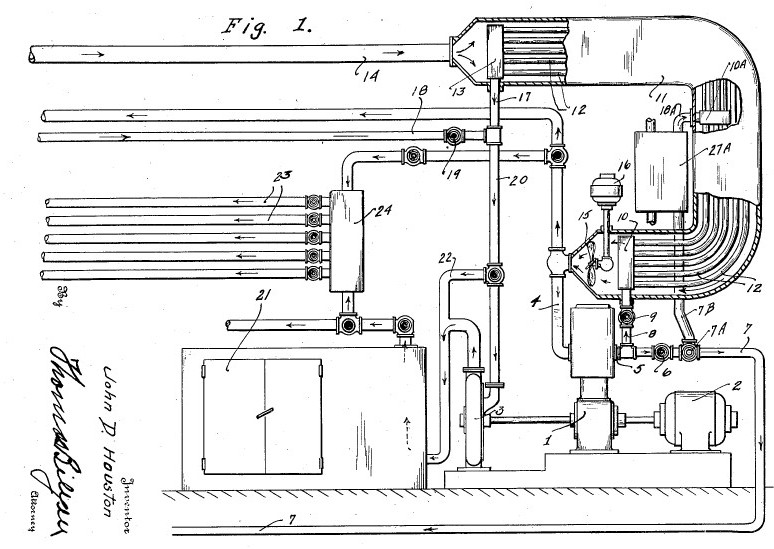
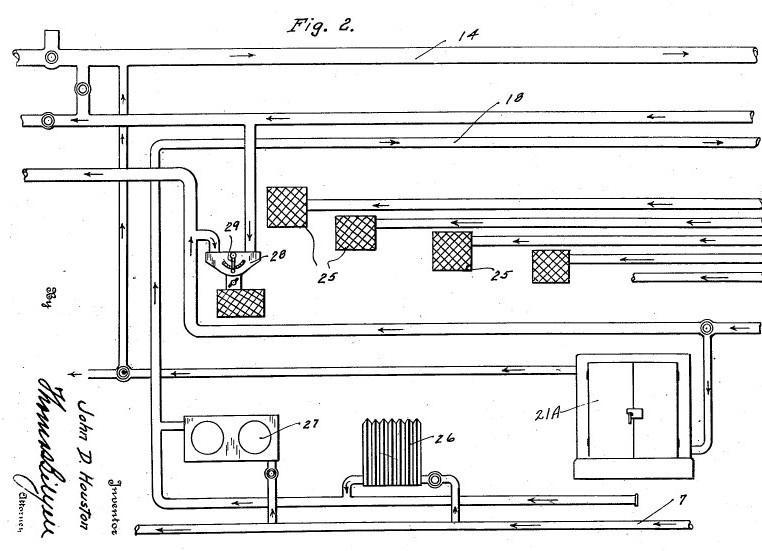
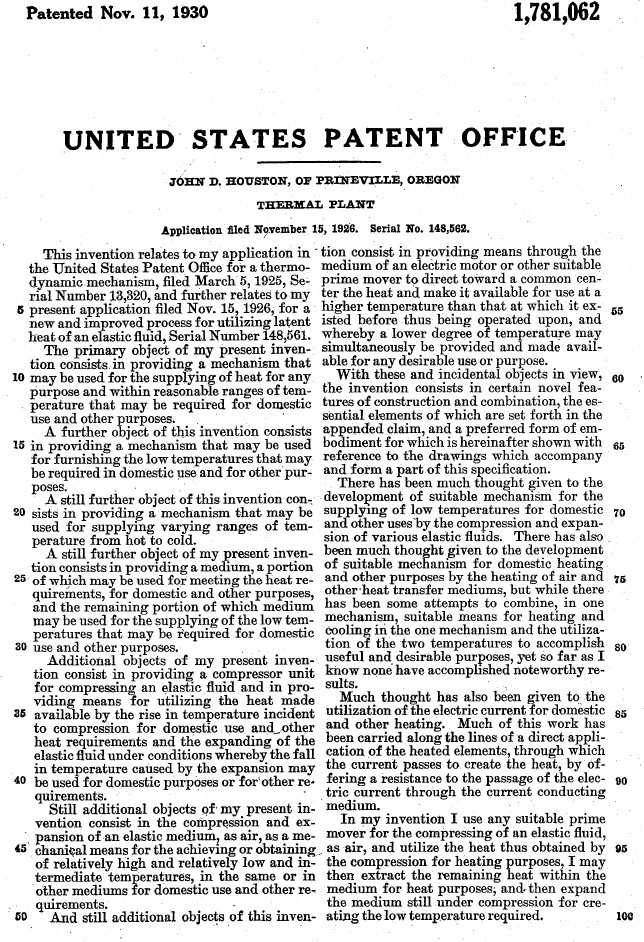
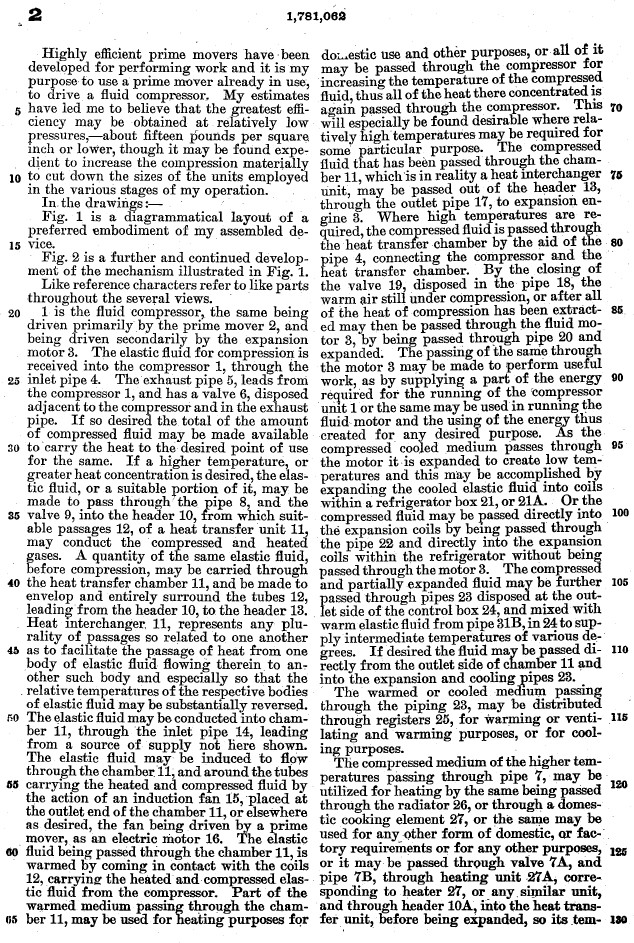
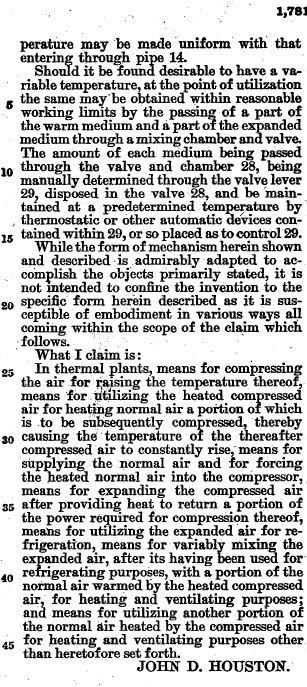
A device that uses condensers to draw thermal energy from the surrounding air, producing hot water (or steam) for heating and, when operated in reverse, providing cooling. The inventor claimed the machine could become hot enough to destroy itself and, when reversed, reach temperatures as low as -250 deg F.
Principles
- heat exchange
- condensation
- thermodynamics
Scientific Domains
Mechanisms of Action
- condensation of atmospheric moisture to release latent heat
- direct heat exchange between ambient air and a working fluid
Energy Sources
Applications
- household heating
- refrigeration
- railroad engines
- steamboats
Claimed Performance
First poorly insulated rig boiled water in 20 minutes; reverse operation could achieve -250 deg F; machine could become hot enough to destroy itself.
Experimental Evidence
The first poorly insulated rig of his device boiled water in 20 minutes.
Replication Status
Demonstrated once by the inventor; no documented independent replication or commercial scaling.
Limitations
- No detailed design or schematics disclosed
- Lack of independent testing or peer-reviewed data
- Patent refused in the USA, limiting commercial development
Red Flags
- Claims made without quantitative data
- Patent denied in the USA, suggesting possible prior art or non-patentable concept
- Economic threat narrative (fuel displacement) may bias reporting