Goal
Convert high-voltage/low-current electrostatic energy into low-voltage/high-current DC power, allegedly achieving over-unity (free-energy) performance.
Problem
Provide electrical power derived from static electric fields with minimal mechanical input, reducing reliance on conventional energy sources.
Concept Summary
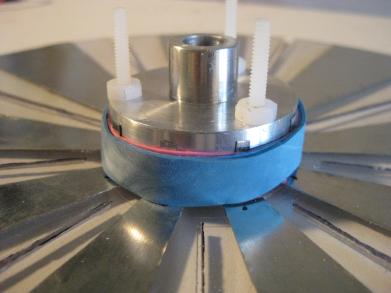
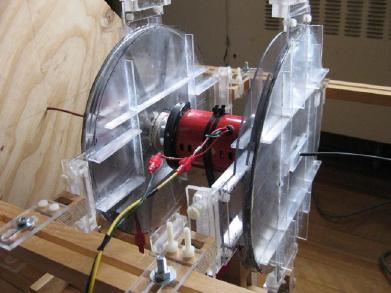
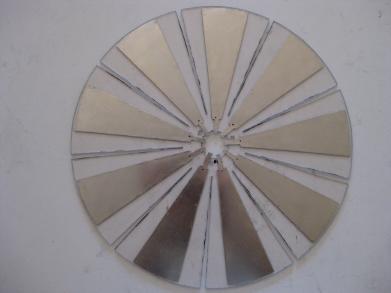
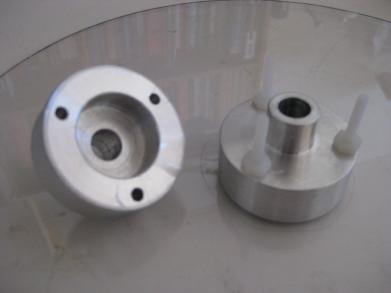
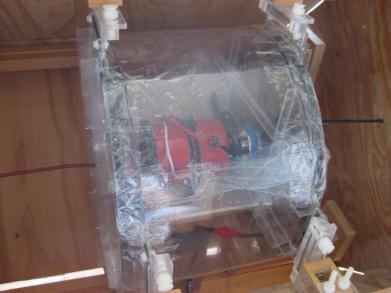
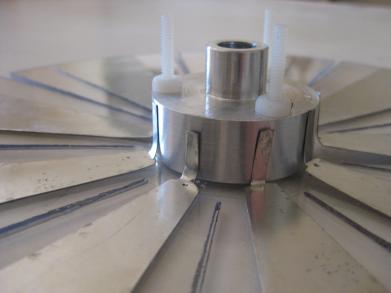
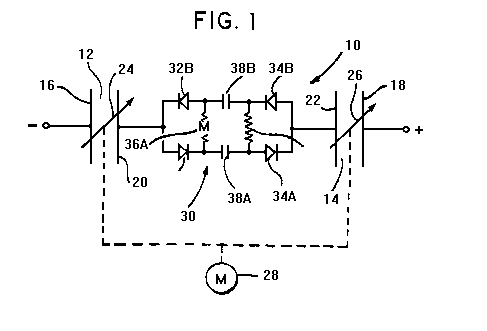
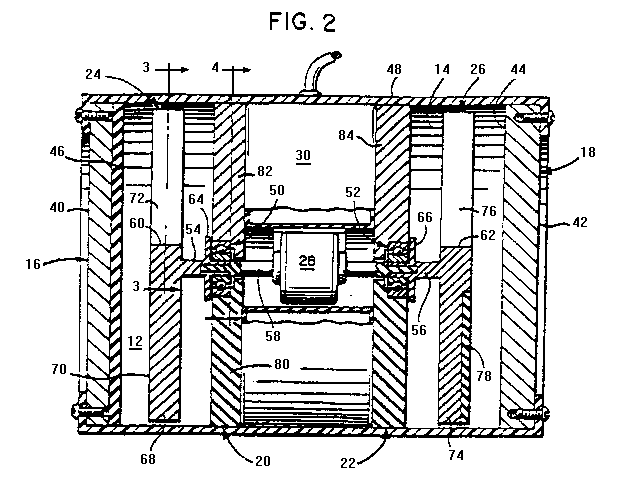
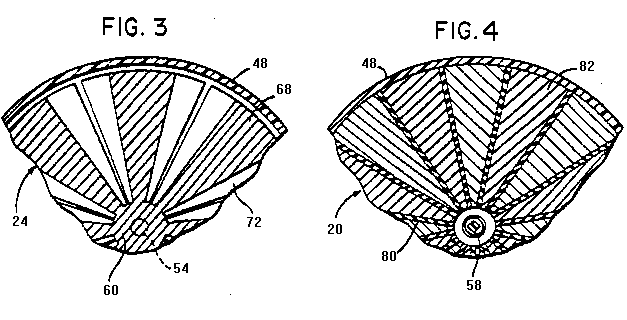
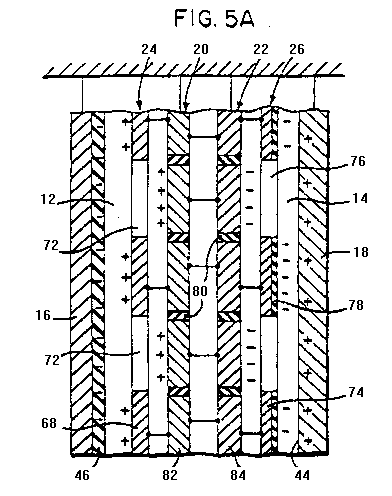
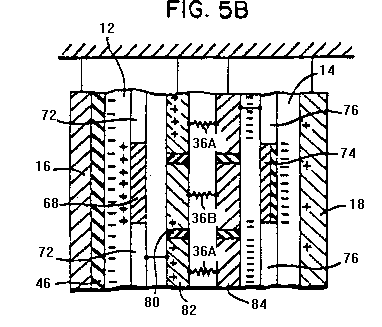
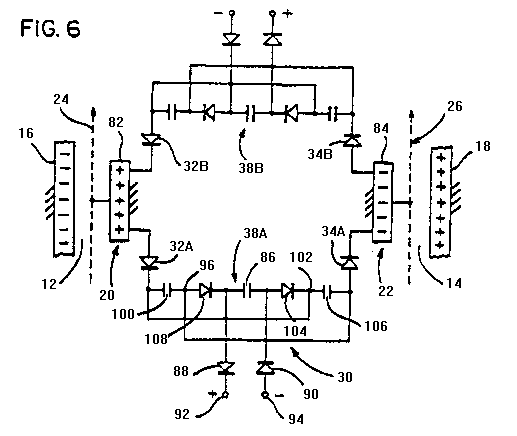
The Hyde Generator uses externally charged electrode plates to create opposing electrostatic fields. Pairs of stator discs with conductive segments are positioned opposite the electrodes. Rotating conductive rotor discs partially shield the stator segments, periodically varying charge linkages between electrodes and stators. This modulation induces a high voltage between the stators, which is stepped down by a diode-capacitor output circuit to deliver low-voltage, high-current DC power to a load. The inventor claims the device outputs more power than the mechanical input, implying over-unity operation.
Principles
- Electrostatic field induction
- Charge shielding by rotating conductive segments
- Capacitive voltage reduction
- Diode rectification
Scientific Domains
Materials
- Conductive metal (electrode plates, rotor and stator segments)
- Dielectric material (dielectric spacers, surface portions)
- Diodes
- Capacitors
Mechanisms of Action
- Rotating conductive rotor segments modulate electrostatic field linkages
- Dynamic shielding/unshielding of stator segments creates changing potentials
- Diode pairs rectify the alternating potentials
- Capacitive networks step down high voltage to usable DC
Energy Sources
Applications
- Power generation
- Free-energy research
Claimed Performance
Prototype (1987) with ~2000 capacitors and diodes reported: Input power 2.4 kW, Output power 22.9 kW, Net output 20.5 kW (over-unity). Rotor speed 6000 rpm, output voltage 602 VDC, output current 38 A.
Experimental Evidence
The article cites a prototype test with specific numeric results (output 22.9 kW, input 2.4 kW, net 20.5 kW) and references US Patent 4,897,592 which documents the design.
Replication Status
Only the original prototype is described; no independent replication or peer-reviewed validation is reported.
Limitations
- Claims lack independent verification
- Potential measurement errors in reported over-unity
- Complex mechanical and high-voltage construction
Red Flags
- Over-unity claim without peer-reviewed data
- No documented independent replication