Confidence
0.73
Practicability
0.81
Evidence
0.32
Fringe Score
0.18
Risk
0.21
TRL
5
Goal
Induce a hypnotic or meditative state and reduce mental stress
Problem
Difficulty achieving hypnosis or deep relaxation using conventional methods
Concept Summary
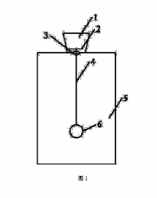
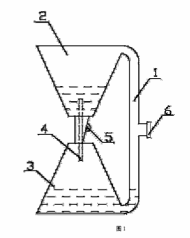
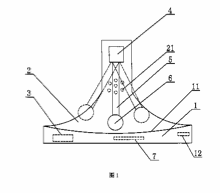
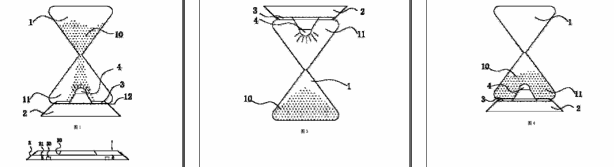
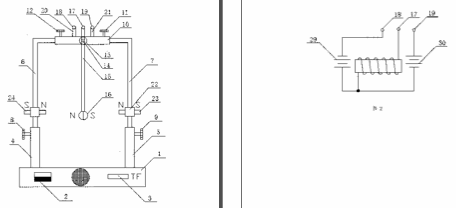
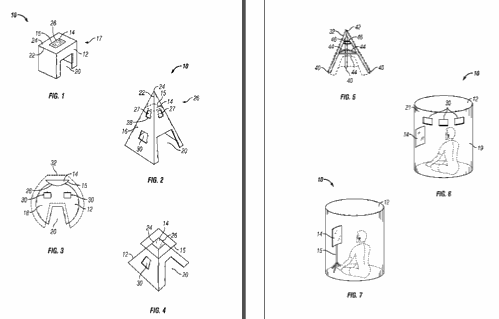
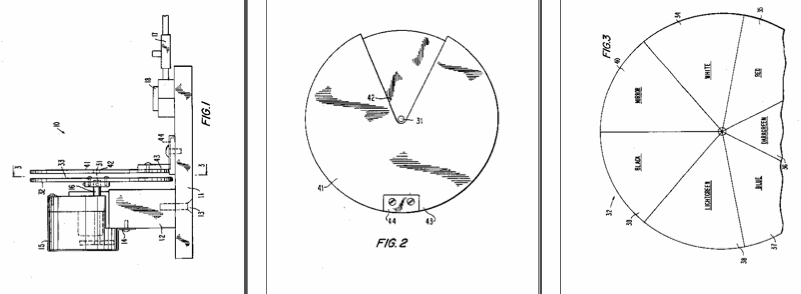
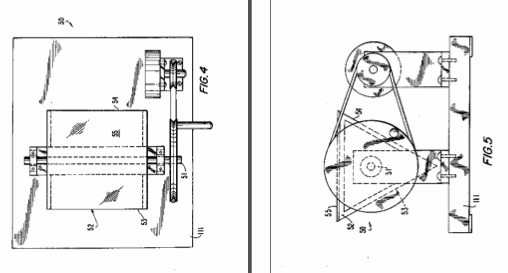
The article describes a family of low-cost devices that combine auditory, visual, tactile, and olfactory stimuli-such as audio players with magnetic components, pendulum-based apparatuses, sand-glass lamps, water-drip sound generators, and aromatic blends-to facilitate hypnosis, meditation, and sleep induction.
Principles
- Auditory stimulation
- Visual entrainment (light dimming, reflective surfaces)
- Pendulum motion for visual focus
- Olfactory sedation via aromatic compounds
- Hydro-acoustic relaxation (water dripping sounds)
- Magnetic field interaction
Scientific Domains
Materials
- Wooden frame
- Metal rods and L-shaped connecting rods
- Spherical pendulum mass (metal or plastic)
- Sand
- Glass bulb
- Plastic or metal base
- Water
- Essential oils (natural)
- Vanillin
- Benzyl acetate
- Cinnamyl aldehyde
- Linalyl acetate
- Linalool
- Orange aldehyde
- Octanal
- Nonanal
- Ethyl butyrate
- Citral
- Ethanol (75 % alcohol)
- Distilled water
Mechanisms of Action
- Auditory relaxation through music or hypnotic recordings
- Visual focus using swinging pendulum or dimming light
- Somatosensory entrainment via pendulum swing
- Chemical sedation through essential-oil aromatics
- Acoustic relaxation from water drip sounds
- Magnetic field influence on brain activity
Energy Sources
Applications
- Clinical hypnosis therapy
- Stress-reduction programs
- Sleep-aid devices
- Meditation training
Claimed Performance
The devices can achieve hypnosis easily, reduce mental stress, and quickly induce sleep or deep relaxation.
Limitations
- Effectiveness depends on individual susceptibility
- Lack of quantitative clinical data
- Potential variability in aromatic composition