Goal
Increase the electrical efficiency of circuits (especially fluorescent lighting) by generating an optical-frequency electrostatic field that reduces the power required by the load.
Problem
Low conversion efficiency of fluorescent lamps and other electrical loads, leading to high power consumption and waste heat.
Concept Summary
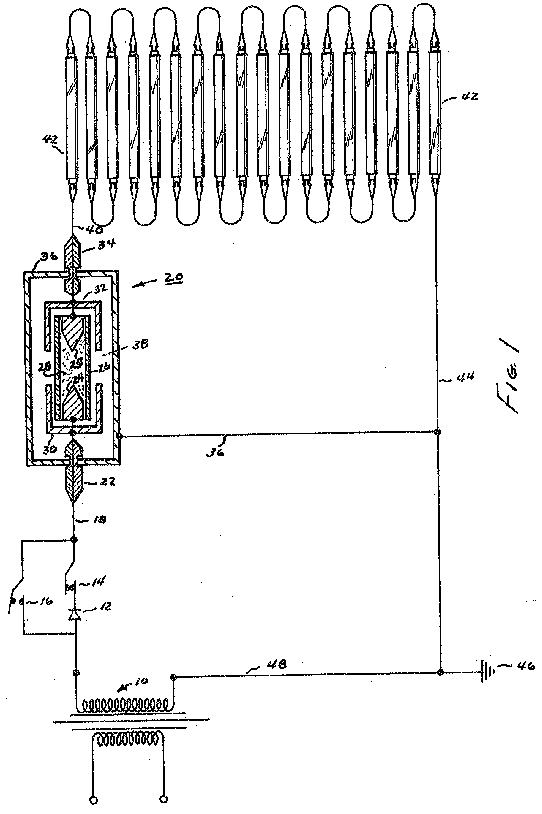
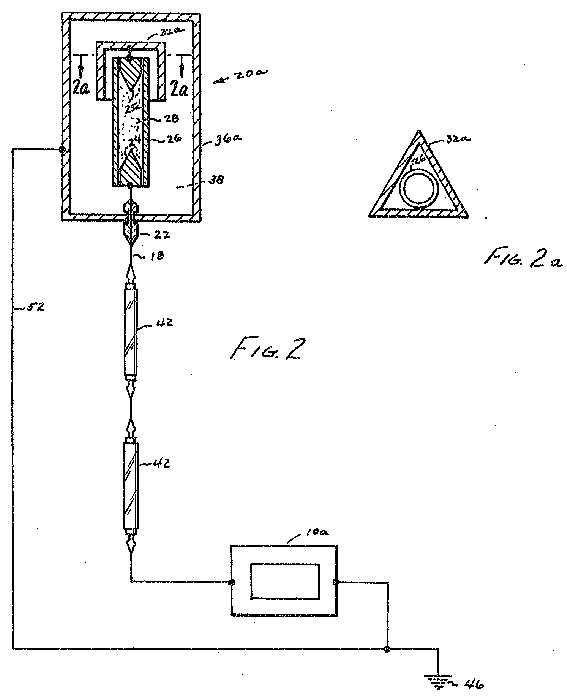
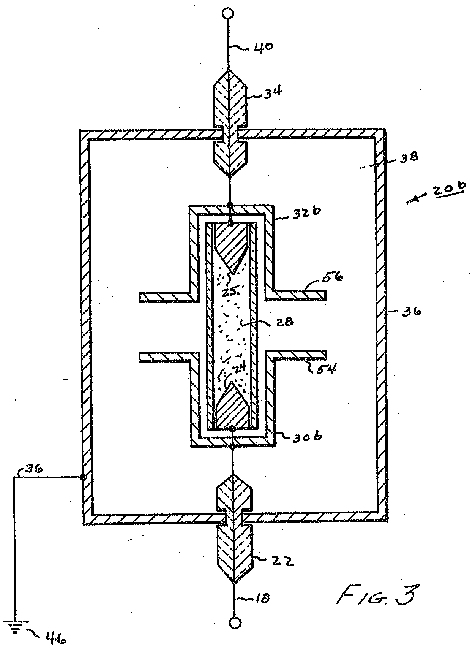
The invention uses a quartz glass tube filled with a high-pressure ionizable gas (e.g., xenon) and two pointed electrodes. A dielectric-filled metal envelope surrounds the tube. The gas discharge creates optical-frequency electromagnetic fields that produce a strong electrostatic field, effectively acting as a high-frequency condenser. This field lowers the electrical power needed by downstream loads, allowing fluorescent lamps to operate at a fraction of their normal input power and claiming output power greater than the total electrical input.
Principles
- Optical-frequency electrostatic field generation
- High-pressure gas discharge (plasma)
- Dielectric enclosure and capacitive coupling
- Resonant oscillation between ionized gas and metal envelope
- Condenser (capacitor) effect with electrode caps
Scientific Domains
Materials
- Quartz glass tube
- Xenon gas (high pressure, up to 5,000 torr)
- Tungsten electrodes (pointed)
- Copper or aluminum metal envelope
- Transformer oil, distilled water, nitrobenzene, or ceramic dielectric
- Condenser plates/caps (metal)
- Optional gases: argon, krypton, neon, nitrogen, hydrogen, mercury vapor, sodium vapor
Mechanisms of Action
- Ionized gas under high pressure emits optical-frequency electromagnetic radiation.
- The radiation induces a strong electrostatic field between the electrodes.
- The field acts as a high-frequency condenser, reducing the voltage/current required by the load.
- Dielectric liquid or solid surrounding the tube stores energy and enhances coupling.
Energy Sources
Applications
- Fluorescent lighting power reduction
- High-efficiency AC/DC circuits
- Electrostatic particle precipitation
- Chemical synthesis (ozone, etc.)
- Laser and high-speed control systems
Claimed Performance
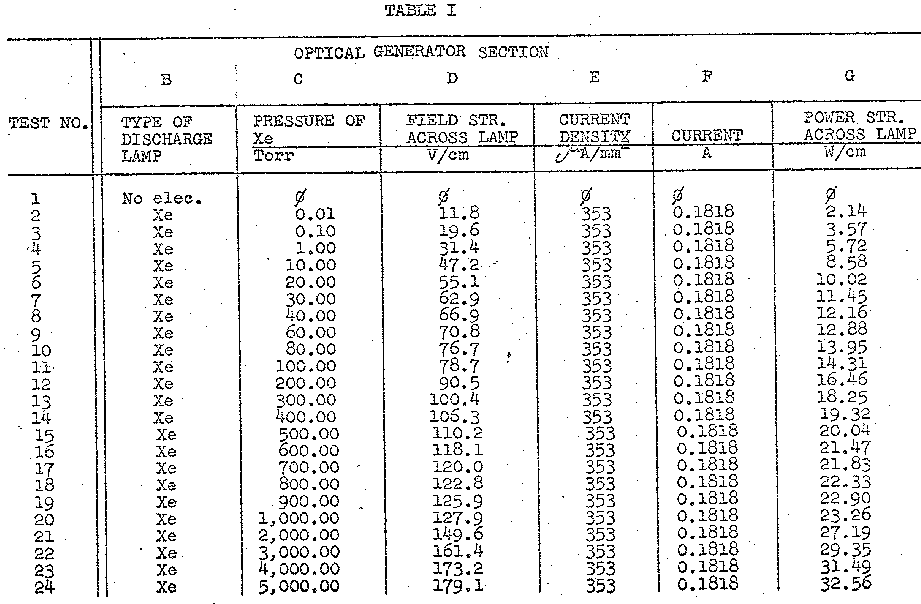
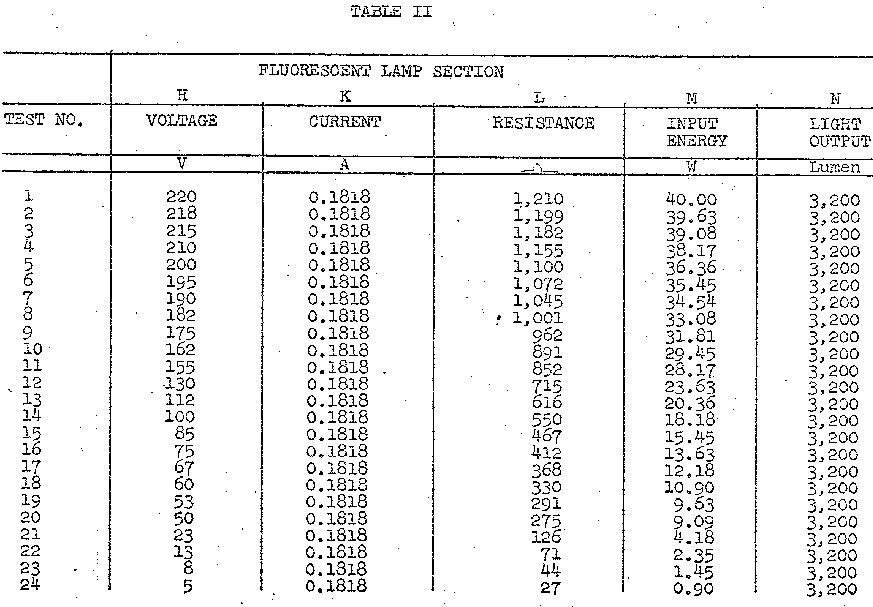
Test 24 (5,000 torr xenon) showed each 40 W fluorescent lamp operating with only 0.9 W input, delivering 8.8 W of light - an efficiency >900 % and total circuit output >9 x input power (~=880 W output for 442 W input).
Experimental Evidence
Test 24 reported: input 0.9 W per lamp, light output 8.8 W per lamp, total input 423.4 W vs. 4,000 W normally, giving >9 x output power. Tables I and II in the patent documentation list voltage, current, power, and lumens for various pressures.
Replication Status
No independent replication reported in the article.
Limitations
- Requires very high gas pressure (up to 5,000 torr).
- Specialized quartz tube and precise electrode geometry.
- Claims of overunity lack peer-reviewed verification.
- Potential scalability and durability issues.
Red Flags
- Extraordinary overunity claims (>900 % efficiency).
- No peer-reviewed publications or independent replication.
- Reliance on anecdotal test data from patent filings.