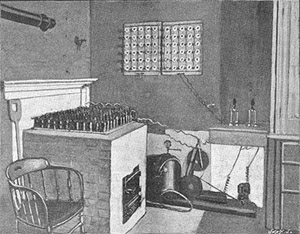
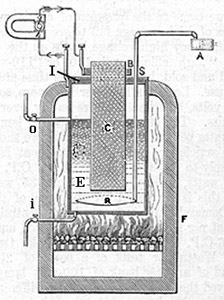
Goal
Generate electrical energy directly from the chemical energy of coal, bypassing steam and dynamos.
Problem
Low overall efficiency of conventional coal-to-electricity conversion (steam engine + dynamo) and waste of heat energy.
Concept Summary
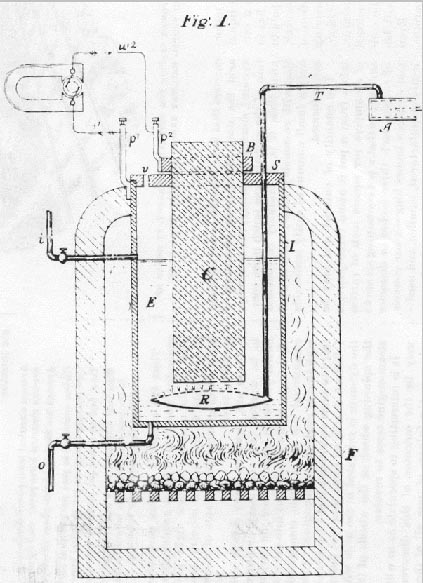
Coal is submerged in a molten electrolyte (e.g., potash) while air is bubbled through the liquid. Oxygen from the air chemically combines with the carbon of the coal through the electrolyte, producing an electric current without significant heat generation. The process is described as an electrochemical conversion of the potential energy of carbon directly into electrical energy.
Detailed Description
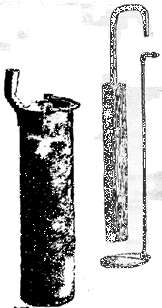
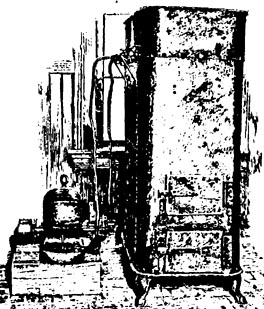
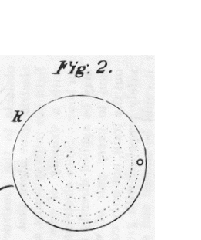
The invention consists of a crucible or pot containing a molten electrolytic carrier (initially potash, later other liquids). A lump of coke or crushed coal is suspended in the liquid. Air is forced through the liquid, allowing oxygen atoms to transiently bind to the electrolyte before reacting with the carbon, producing carbonic acid and an electromotive force of about 1 V. The system can be scaled by using larger pots; currents of several hundred amperes have been reported. The apparatus requires an air pump (often driven by a portion of the generated current) and a heat source to keep the electrolyte molten. Various vessel materials (platinum, gold, iron, etc.) have been tested for durability and conductivity.
Principles
- Electrochemical oxidation of carbon
- Direct conversion of chemical potential to electrical energy
- Use of molten electrolyte as conductive medium
Scientific Domains
Materials
- Coal (coke)
- Potassium carbonate (potash)
- Platinum
- Iron
- Gold
- Silver
- Copper
- Aluminum
- Nickel
- Magnesium
Mechanisms of Action
- Chemical combination of oxygen with carbon (combustion-like reaction) in presence of electrolyte
- Generation of electromotive force by redox reaction
- Electrical conduction through molten electrolyte
Energy Sources
Applications
- Direct generation of electricity from coal in remote or industrial settings
- Potential reduction of waste heat in power generation
Claimed Performance
Measured 2.16 HP electrical output from a 2 HP carbon generator; 1336 Wh per pound of coal (~=32 % of theoretical energy); currents of several hundred amperes; voltage a little over 1 V per pot.
Experimental Evidence
Quantitative tests showed oxygen uptake, carbon consumption, and formation of carbonic acid; electromotive force matched theoretical 1.04 V; larger apparatus confirmed results; independent test reported 2.05 HP net output, 0.223 lb coal per HP-hour, 0.336 lb coal on grate per HP-hour.
Replication Status
Independent experts performed a test on a small two-horsepower unit and confirmed performance; later larger experiments reported similar results.
Limitations
- Requires high-temperature molten electrolyte
- Use of expensive metals (platinum, gold) for vessels
- Scale-up challenges due to material corrosion and electrolyte contamination
- Efficiency still far below theoretical maximum
Red Flags
- Historical claims of high efficiency lack modern peer-reviewed validation
- Potential for misinterpretation of thermoelectric vs. electrochemical effects