Goal
Remove toxic gases, dust, bacteria, viruses and odors from indoor and industrial air while using minimal energy.
Problem
Indoor and industrial air pollution caused by toxic gases, particulate matter, microorganisms and odors.
Concept Summary
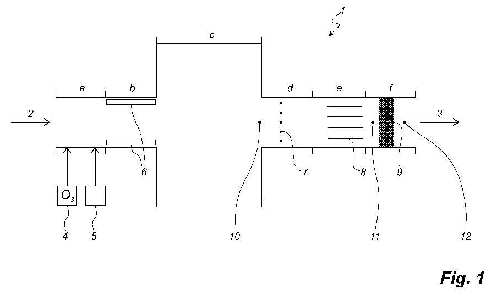
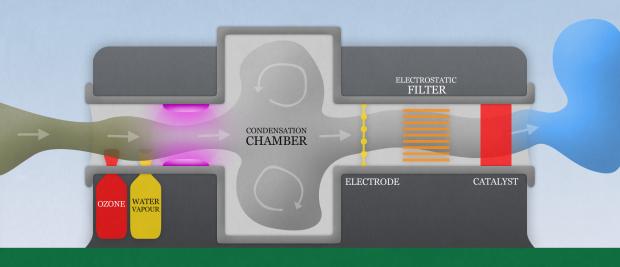
A multi-stage air-cleaning system that mimics atmospheric processes: ozone is added to kill microorganisms, UV light creates hydroxyl radicals, water vapour and ammonia promote aerosol droplet formation, droplets are electrostatically charged and collected on oppositely charged plates, and a catalyst decomposes any residual ozone. The system operates at low energy and can be installed in factories or homes.
Principles
- Ozonolysis
- UV germicidal irradiation
- Aerosol droplet formation
- Electrostatic precipitation
- Catalytic ozone decomposition
Scientific Domains
Materials
- Metal
- Catalyst
Mechanisms of Action
- Ozone kills microorganisms and reacts with odorous compounds
- UV light generates hydroxyl radicals that further oxidize pollutants
- Water vapour and ammonia cause aerosol growth, capturing gases and particles
- Electrostatic charging draws droplets to oppositely charged plates for removal
- Catalyst breaks down residual ozone before air release
Energy Sources
Applications
- Industrial emission control
- Indoor air purification for factories, offices and homes
Claimed Performance
Broad-spectrum removal of toxic gases, organic compounds, microorganisms and particles with low energy consumption.
Experimental Evidence
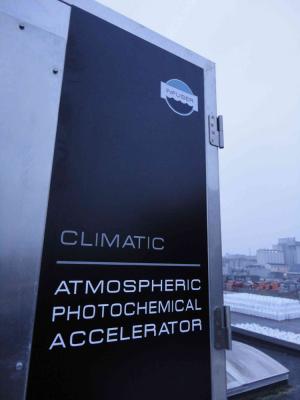
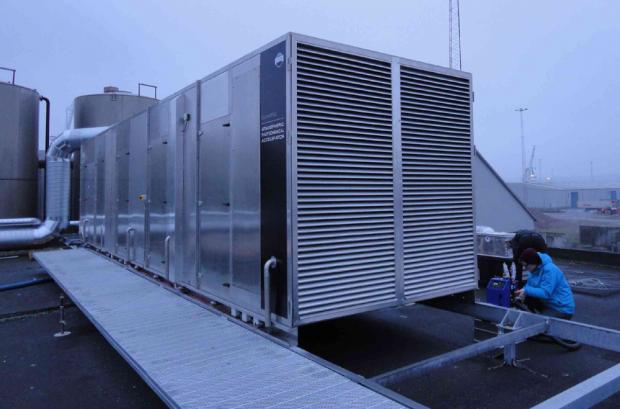
A prototype installed in a shipping container was connected to the chimney of Jysk Miljorens plant; the operator reported that all pollution was removed from the airflow. The first commercial unit was later sold and operated at the plant.
Replication Status
One commercial unit installed and operating; no independent third-party replication reported.
Limitations
- Residual ozone must be removed to avoid health hazards
- Performance depends on correct aerosol growth conditions (humidity, ammonia)
- Energy still required for ozone generator, UV lamps and fans
Red Flags
- Potential ozone exposure if catalyst fails or is bypassed