Goal
Provide a rechargeable battery with dramatically higher specific energy and lower weight than lithium-ion batteries, enabling long-range electric vehicles and other weight-sensitive applications.
Problem
Limited energy density, high weight, and relatively short range of conventional lithium-ion batteries for electric-vehicle and portable-power applications.
Concept Summary
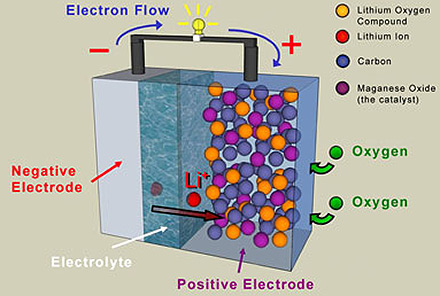
A lithium-air (Li/O_2) battery uses ambient oxygen as the cathode reactant. Lithium metal oxidizes at the anode, while oxygen from the air is reduced at a catalytic air electrode to form oxide or peroxide ions that combine with lithium ions in the electrolyte, delivering very high gravimetric energy density.
Detailed Description
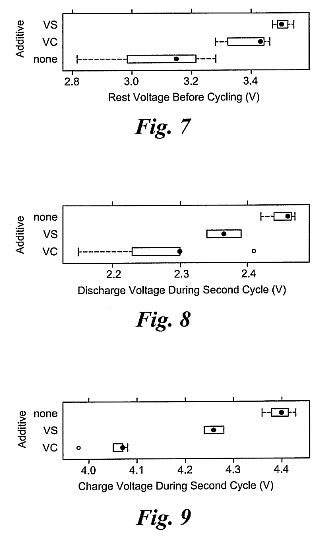
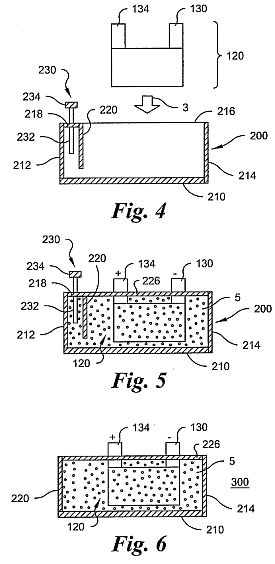
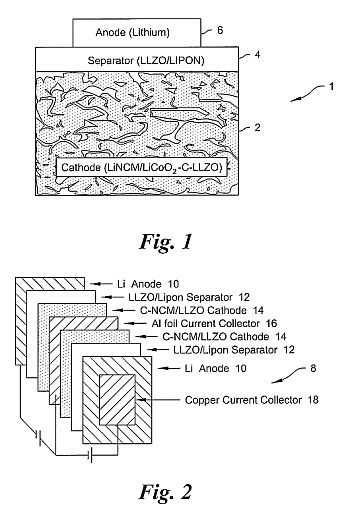
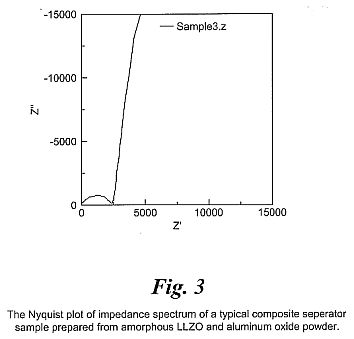
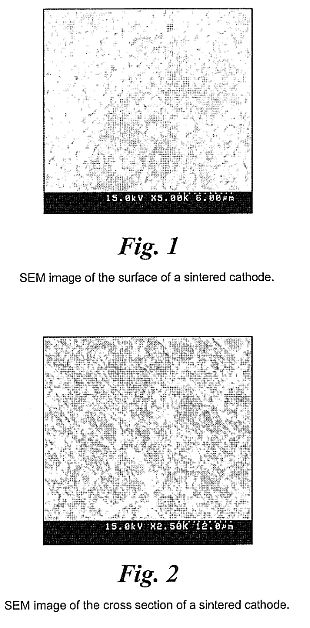
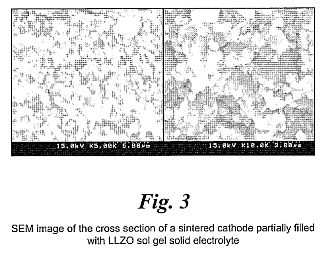
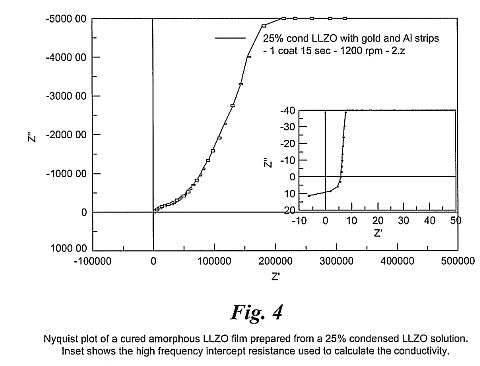
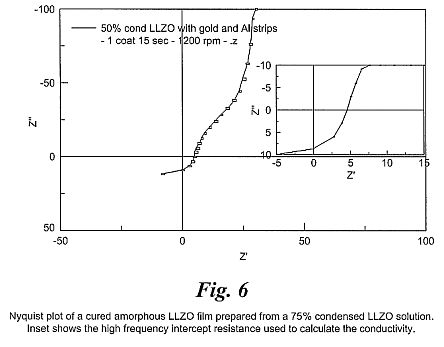
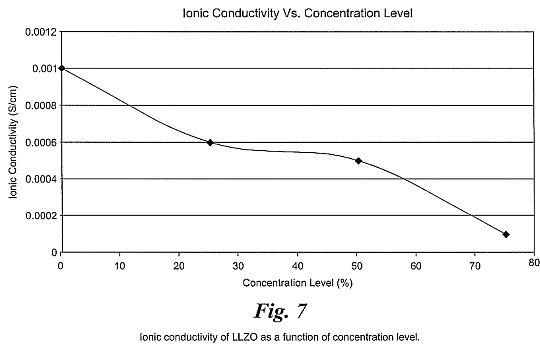
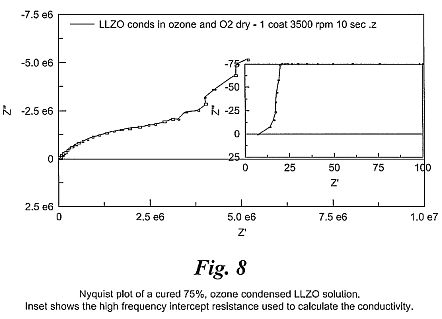
The system consists of a lithium metal anode, a solid-state composite cathode (e.g., lithium lanthanum zirconium oxide or lithium carbon lanthanum zirconium oxide dispersed in an ionically conductive metal oxide matrix), a solid electrolyte or liquid electrolyte, and a porous catalytic air electrode exposed to ambient air. During discharge, lithium is oxidized to Li^+, releasing electrons to the external circuit, while O_2 from the environment is reduced at the air electrode to O_2^-/O_2^2^-, which reacts with Li^+ to form Li_2O or Li_2O_2. The solid-state composite materials aim to suppress corrosion and improve capacity. Demonstrations have powered a remote-control device and sample cells have been delivered to a customer.
Principles
- Electrochemical redox reactions
- Oxygen reduction reaction (ORR) at a catalytic air electrode
- Solid-state ionic conduction
- Lithium metal oxidation
Scientific Domains
Materials
- Lithium metal
- Ambient oxygen (O_2)
- Catalytic air electrode (metal oxides, e.g., MnO_2, Co_3O_4)
- Lithium lanthanum zirconium oxide (LLZO)
- Lithium carbon lanthanum zirconium oxide
- Ionically conductive metal oxide solid electrolyte
- Inorganic powder separator
Mechanisms of Action
- Lithium metal anode oxidation (Li -> Li^+ + e^-)
- Ambient O_2 reduction at air electrode (O_2 + 2e^- -> O_2^- / O_2^2^-)
- Formation of lithium oxide/peroxide (Li^+ + O_2^- -> Li_2O/Li_2O_2)
- Ion transport through solid or liquid electrolyte
Energy Sources
Applications
- Electric vehicles
- Portable electronics
- Aerospace power systems
- Grid-scale energy storage (future)
Claimed Performance
Specific energy up to ~5,200 Wh kg^-^1 (including oxygen) and the potential to power an electric vehicle for >1,000 miles on a single charge.
Experimental Evidence
The team demonstrated a rechargeable Li/O_2 battery that powered a remote-control device and delivered demonstration samples to a customer.
Replication Status
Demonstration samples have been supplied to a customer; no independent third-party replication reported.
Limitations
- Corrosion of air electrode
- Low cycle life due to lithium metal dendrite formation
- Management of oxygen ingress and moisture
- Stability of solid-state electrolyte
- Scalability of manufacturing
Red Flags
- Performance claims (e.g., >1,000 miles) are based on prototype demonstrations without independent validation.