Confidence
0.70
Practicability
0.30
Evidence
0.20
Fringe Score
0.50
Risk
0.10
TRL
2
Goal
Demonstrate the ability to perform multiple distinct mental tasks simultaneously through trained concentration.
Problem
Limited human multitasking capacity and memory performance.
Concept Summary
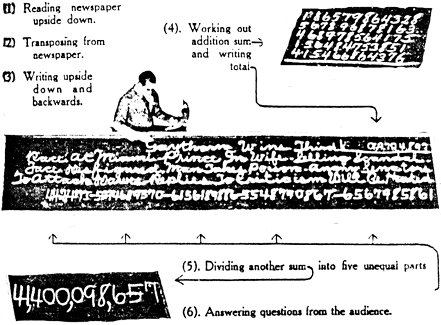
Harry Kahne claims that through extensive mental training he can execute six separate mental operations at once, involving at least 14 distinct cognitive processes. He attributes this to focused attention, mental exercise, and a systematic method of 'forgettery' to clear unwanted thoughts.
Principles
- Focused attention
- Cognitive training
- Mental 'forgettery' (active suppression of irrelevant thoughts)
- Neural plasticity through repeated practice
Scientific Domains
Mechanisms of Action
- Simultaneous processing of auditory, visual, and motor tasks
- Selective concentration on multiple sensory inputs
- Rapid switching between mental sub-tasks
Energy Sources
Applications
- Cognitive training programs
- Educational techniques for multitasking
- Performance arts
Claimed Performance
Performs six distinct mental tasks simultaneously, using mental energy equivalent to an average person's 8-hour workday.
Experimental Evidence
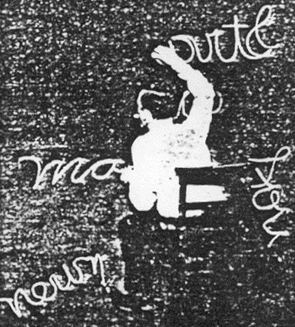
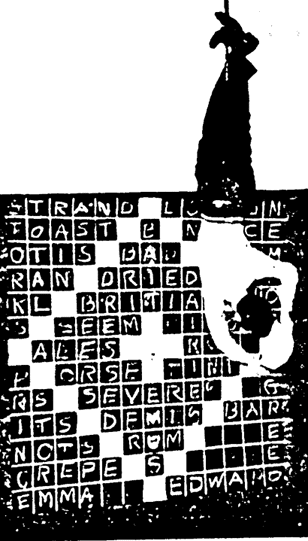
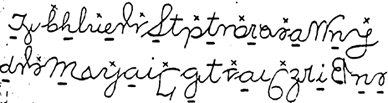
Multiple public performances described in a 1925 Strand Magazine interview, with audience interaction and photographic documentation.
Replication Status
No independent replication reported.
Limitations
- Requires extensive, undocumented training
- Potential mental strain (hair loss reported)
- Lack of scientific validation
Red Flags
- Anecdotal evidence only
- No peer-reviewed studies
- Potential for exaggerated claims