Goal
Provide clean drinking water and electricity to rural communities lacking utilities.
Problem
Lack of access to safe drinking water and reliable electricity for billions of people in developing regions.
Concept Summary
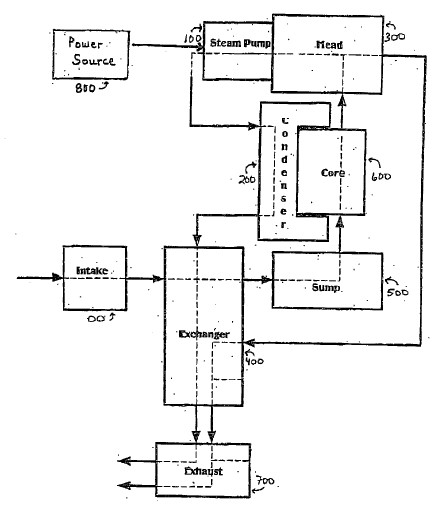
A small, washing-machine-sized system that uses a biomass-fired Stirling engine to generate electricity and waste heat. The electricity powers lights while the waste heat drives a vapor-compression distillation unit that vaporizes contaminated water, condenses the steam into clean water, and expels the residual sludge.
Detailed Description
Dean Kamen's patent describes a dual-utility device. The power generator burns locally available biomass (e.g., cow dung) in a Stirling engine, producing ~1 kW of electricity and a steady stream of waste heat. An integrated vapor-compression distillation unit uses this heat to evaporate incoming contaminated water, including raw sewage. The steam is condensed in a heat-exchange coil, yielding up to 1,000 L of potable water per day. A plastic tube ejects the concentrated sludge. Sensors monitor input fuel and water flow as well as output electricity and water volume; data are telemetered to a remote control site. The system is designed for decentralized deployment, with micro-entrepreneurs operating and maintaining the units in villages.
Principles
- Vapor compression distillation
- Stirling engine heat-to-electric conversion
- Waste-heat utilization
- Closed-loop water purification
- Decentralized utility monitoring
Scientific Domains
Materials
- Cow dung (biomass fuel)
- Stainless steel (heat exchangers, pressure vessels)
- Polyethylene (plastic discharge tube)
- Water (contaminated feedstock)
Mechanisms of Action
- Combustion of cow dung to produce heat
- Stirling engine converts heat to electricity
- Waste heat powers a vapor-compression distiller
- Steam condensation yields clean water
- Sludge is expelled via a plastic discharge tube
Energy Sources
Applications
- Rural clean-water provision
- Off-grid electricity for villages
- Micro-enterprise utility services
Claimed Performance
1,000 L of clean water per day; 1 kW of electricity sufficient to light 70 energy-efficient bulbs.
Experimental Evidence
A six-month field trial in two Bangladeshi villages demonstrated the power generator producing a continuous kilowatt from cow dung and lighting 70 bulbs. Kamen asserts the water purifier works and can handle raw sewage, but no quantitative water-quality data were provided.
Replication Status
Field trial completed for the power generator; water purifier has not been independently replicated.
Limitations
- Requires a steady supply of biomass fuel
- Performance depends on waste-heat availability
- Initial unit cost $1,000-$2,000
- Maintenance of moving parts (Stirling engine, distiller)
Red Flags
- Claims of handling "any water, even raw sewage" without detailed treatment validation
- Reliance on a single field trial with no independent peer-reviewed data