Goal
Selectively ablate residual cancerous tissue during or without damaging surrounding healthy tissue.
Problem
Microscopic tumor remnants left after surgery cause cancer recurrence; current modalities cannot reliably remove these cells.
Concept Summary
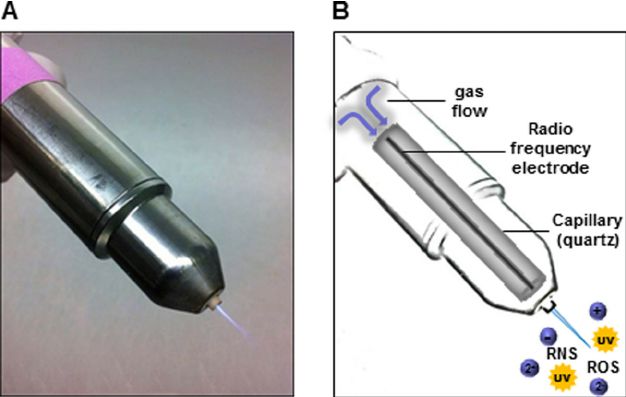
A pen-like electrosurgical scalpel converts a high-frequency generator to emit a cold atmospheric plasma (CAP) jet. The plasma generates reactive oxygen species (ROS) that selectively kill cancer cells while sparing normal tissue. The system is FDA-approved for a Phase I clinical trial.
Detailed Description
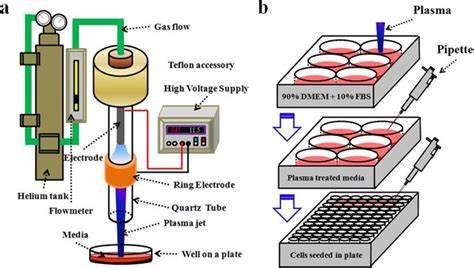
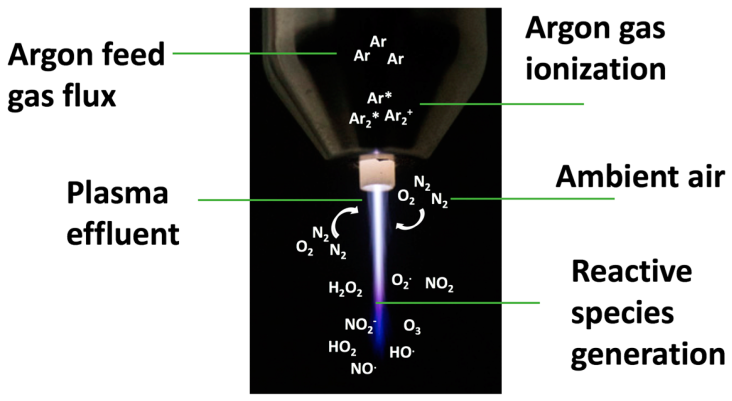
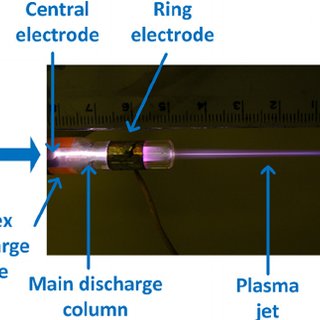
The device integrates a high-frequency electrosurgical generator with a cold plasma jet nozzle. Helium (or helium-oxygen mixtures) are ionized at atmospheric pressure to produce a near-room-temperature plasma containing radicals (OH*), superoxide (O_2^-), hydrogen peroxide (H_2O_2), nitrite (NO_2^-) and UV photons. The jet is applied to the surgical site for 2-7 minutes, delivering ROS that induce oxidative damage and apoptosis in cancer cells. Pre-clinical work demonstrated selective cytotoxicity in vitro (breast, glioblastoma, metastatic bone cancer lines) and in vivo (mouse glioblastoma models). Compassionate-use cases and a planned multi-center Phase I trial (~=20 patients) have been FDA-cleared.
Principles
- Cold atmospheric plasma generation
- Reactive oxygen species mediated cytotoxicity
- High-frequency electrosurgical conversion
- Selective plasma-induced ablation
Scientific Domains
Materials
- Helium
- Oxygen
- Water vapor
- Hydrogen peroxide (as a ROS product)
- Nitrite ions
Mechanisms of Action
- Generation of short- and long-lived ROS
- Oxidative damage to cancer cell membranes and DNA
- Induction of apoptosis in tumor cells
- Preservation of normal tissue due to limited penetration depth
Energy Sources
Applications
- Intra-operative tumor margin ablation
- Adjunct to conventional cancer surgery
- Potential outpatient treatment for superficial tumors
Claimed Performance
Selective killing of cancer cells up to 80 % reduction in viability in vitro; effective tumor ablation in mouse glioblastoma models; FDA-cleared Phase I trial for residual tumor removal.
Experimental Evidence
In-vitro cell death assays on breast, glioblastoma, and metastatic bone cancer lines; animal studies showing tumor growth suppression; compassionate-use clinical cases; FDA Phase I trial approval.
Replication Status
Multiple independent studies published (2013-2018) and a planned multi-center Phase I clinical trial; no commercial scale-up reported.
Limitations
- Limited penetration depth of cold plasma (effective only on surface or near-surface tissue)
- Requires specialized high-frequency generator and gas supply
- Clinical efficacy still under investigation (Phase I only)
- Potential variability in ROS production depending on nozzle geometry and gas flow