Goal
Efficiently charge a secondary battery (e.g., EV battery) in a very short time (approximately five minutes).
Problem
Long charging times for electric vehicles and inefficiency caused by impedance mismatch between generator output and battery load.
Concept Summary
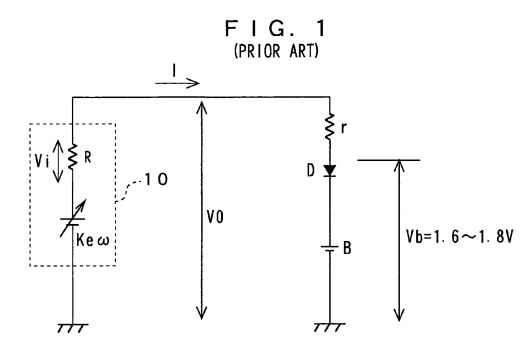
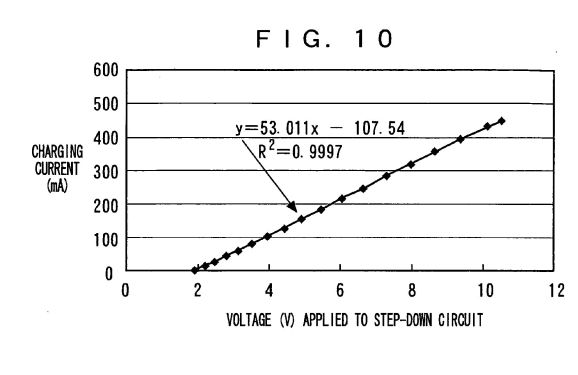
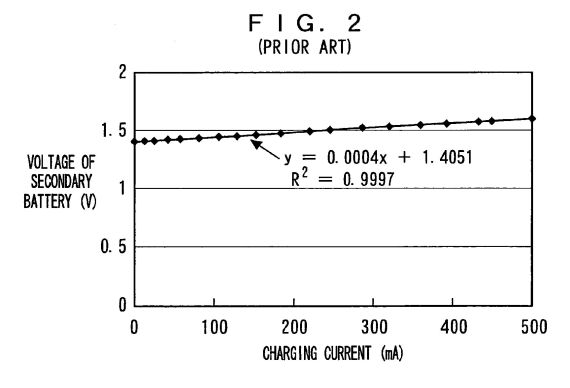
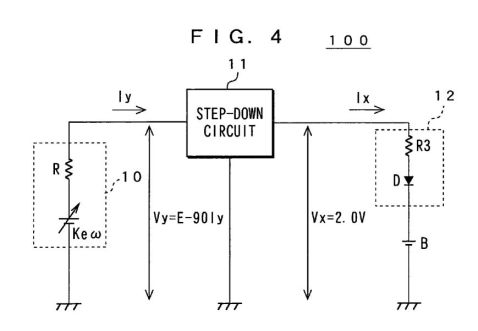
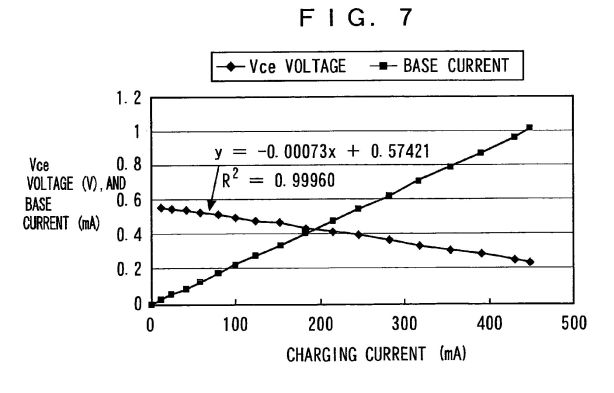
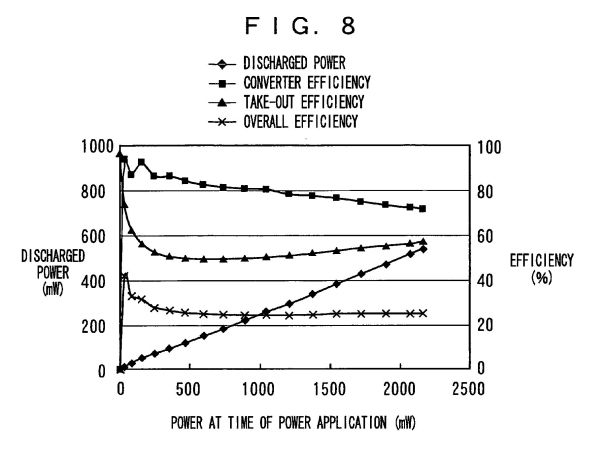
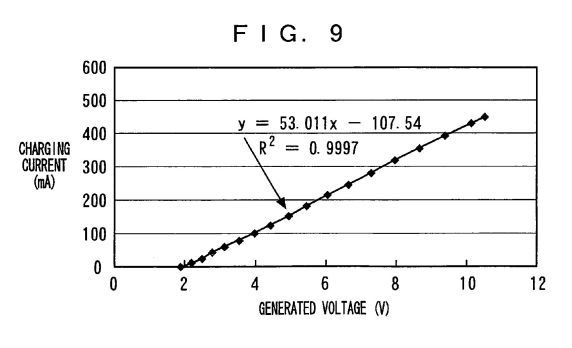
The invention uses a generator (e.g., a small-sized manual or motor-driven generator) whose high-voltage, low-current output is stepped down by a DC-DC converter to a low-voltage, high-current supply for the battery. A current controller adjusts the charging current based on the amount of electricity generated, while a mode selector lets the user choose between a current-preferred or efficiency-preferred charging mode. A monitor circuit tracks stored energy by multiplying current and time.
Detailed Description
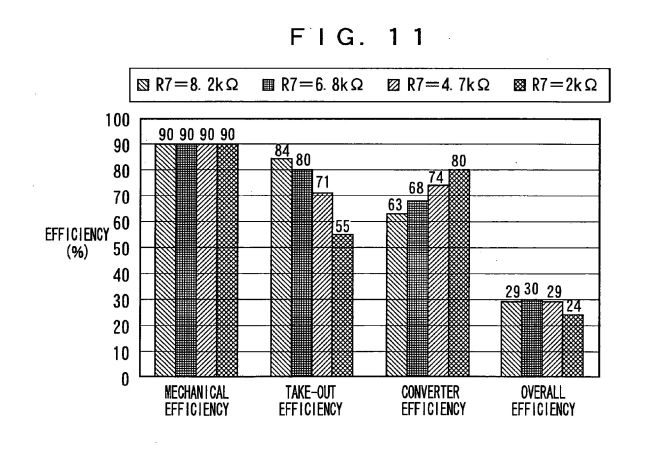
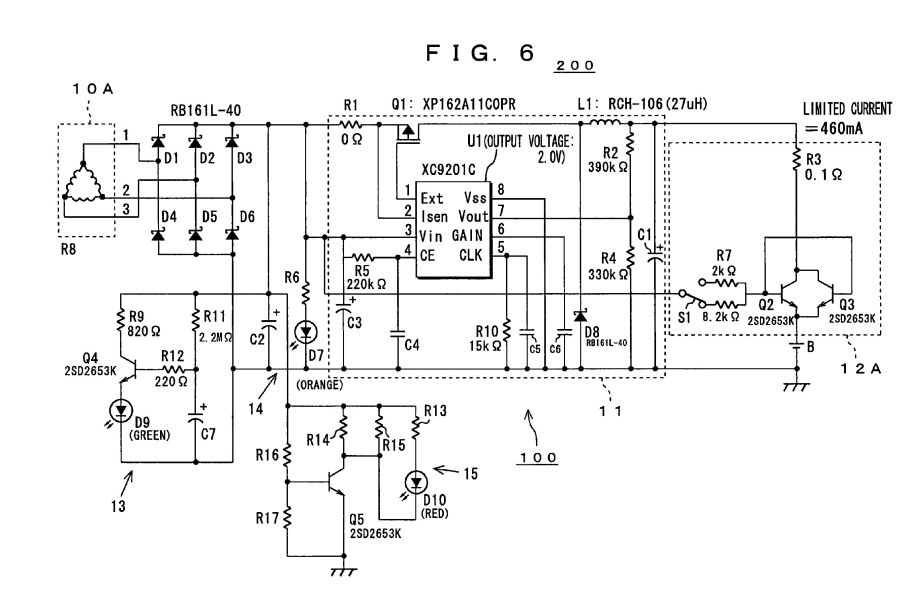
The patented charging circuit comprises: (1) a generator that produces an output voltage; (2) a step-down circuit (DC-DC converter) that reduces this voltage to a predetermined level; (3) a current controller that regulates the charging current supplied to a secondary battery based on the generated electricity; (4) a mode selector that switches between a current-preferred mode (maximizing current) and an efficiency-preferred mode (maximizing power utilization); and (5) a monitor circuit that detects stored electricity by multiplying charging current by charging time. The step-down circuit receives the generator output at high voltage and low current, then delivers low voltage and high current to the battery, achieving impedance matching regardless of the generator's internal resistance. The coil of the generator may be delta-connected to lower output resistance. This architecture enables rapid charging (e.g., five-minute recharge of a Nissan Leaf or Tesla Roadster) while allowing low-noise, low-speed motor operation.
Principles
- Impedance matching
- DC-DC step-down conversion
- Current control based on generated energy
- Mode selection (current-preferred vs efficiency-preferred)
- Energy monitoring (current x time)
Scientific Domains
Materials
- Copper wire (coil)
- Semiconductor devices (transistors, diodes)
- Resistors
- Capacitors
Mechanisms of Action
- Step-down converter reduces generator voltage
- Current controller adjusts charging current
- Mode selector chooses charging strategy
- Monitor circuit calculates stored energy
Energy Sources
Applications
- Electric-vehicle rapid charging stations
- Portable manual chargers for small batteries
- Emergency power generation for mobile devices
Claimed Performance
Device can recharge a Nissan LEAF or Tesla Roadster in about five minutes by delivering high-voltage, low-current generator power to a low-voltage, high-current charging stage.
Limitations
- Charging speed depends on generator size and user effort
- Maximum power limited by generator's internal resistance
- Integration with existing EV battery management may require additional control logic