Goal
Generate electrical power with higher current (more energy) than the supplied input and self-feed the source.
Problem
Need for low-cost, high-output electrical power and over-unity energy generation.
Concept Summary
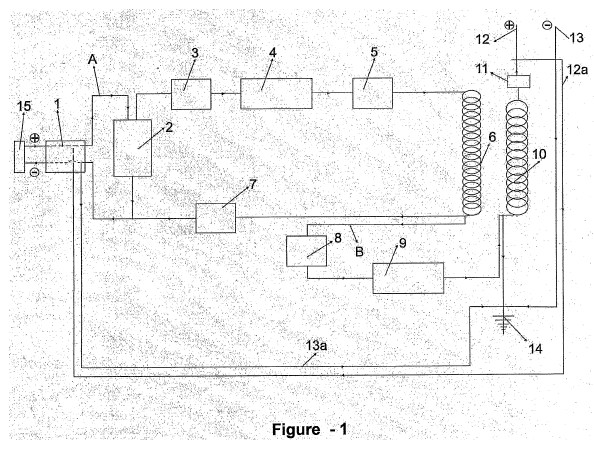
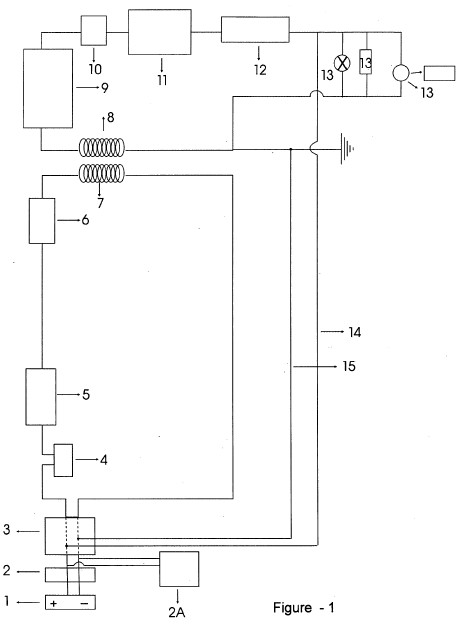
The invention uses a pair of coupled coils (bobbins) with frequency-stabilized high-frequency excitation, current amplification, and filtering to transfer electromagnetic energy from a primary to a secondary circuit. Part of the generated output is fed back to the input, allowing the device to sustain operation and allegedly produce more electrical power than it receives.
Principles
- Electromagnetic induction
- Resonant frequency amplification
- Self-feeding energy loop
- Current amplification
- Phase stabilization
Scientific Domains
Materials
- Copper wire
- Iron/steel magnetic core material
- Aluminum (capacitor plates)
- Dielectric material (capacitor)
- Ferromagnetic core material
Mechanisms of Action
- Transfer of magnetic field between primary and secondary coils
- High-frequency generation to increase induced voltage
- Current amplifier boosts output current
- Filters and frequency adjusters stabilize the waveform
- Self-feeding cables return a portion of output to the input
Energy Sources
Applications
- Standalone power generation
- Self-powered lighting systems
- Low-cost electricity for remote locations
Claimed Performance
Self-running devices reported to light five large Edison-type bulbs (~=5 kW total) and claim over-unity operation (output > input).
Experimental Evidence
Video demonstrations on YouTube show the device lighting five large bulbs; no quantitative measurements or peer-reviewed data are provided.
Limitations
- No independent, peer-reviewed testing
- Lack of detailed schematics and component specifications
- Scalability and efficiency not quantified
- Reliance on unspecified "amplifier" and "filters"
Red Flags
- Extraordinary claim of over-unity without rigorous data
- Evidence limited to self-produced videos
- Potential for scam or unverified commercial claims