Goal
Generate continuous electrical power from ambient environmental heat.
Problem
Need for a perpetual or long-duration power source that can harvest low-grade thermal energy without fuel consumption.
Concept Summary
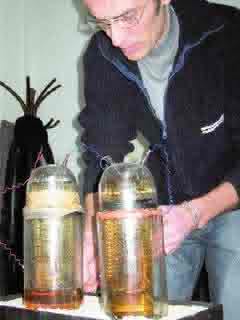
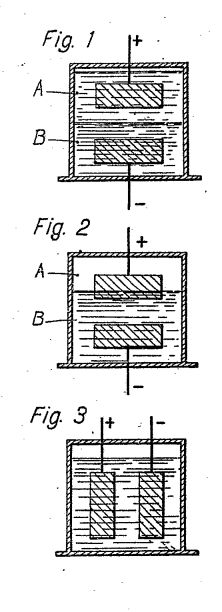
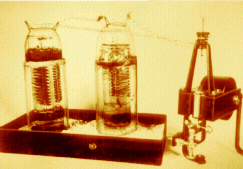
The Karpen pile is a thermoelectric-type battery that uses two immiscible liquid (or liquid-gas) phases in contact with chemically inert electrodes (gold, platinum, carbon, nickel). The temperature of the surrounding medium creates a small electromotive force (0.4-0.8 V) across the electrodes. The device reportedly operates continuously for decades, converting ambient heat into electrical energy without observable degradation.
Principles
- Thermoelectric conversion
- Phase-separation electrolyte
- Electrochemical equilibrium
- Ambient heat harvesting
Scientific Domains
Materials
- Gold electrode
- Platinum electrode
- Carbon (charcoal, graphite) electrode
- Nickel electrode
- High-purity sulfuric acid
- Sodium hydroxide solution
- Water
- Amyl alcohol
- Sodium carbonate
Mechanisms of Action
- Heat from the environment creates a temperature gradient across two immiscible liquid phases.
- Differential chemical potentials across the electrodes generate a steady electromotive force.
- Electrodes are chemically inert, preventing weight or composition change during operation.
Energy Sources
Applications
- Low-power continuous power supply
- Heat-to-electric energy harvesting for remote sensors
Claimed Performance
Produces a steady voltage of 0.4-0.8 V continuously for over 60 years; a 2006 measurement showed the same 1 V output as in 1950.
Experimental Evidence
Museum staff measured the device with a digital multimeter on 27 Feb 2006 and recorded the same voltage as reported in the 1950s. Researchers from the University of Brașov and the Polytechnic University of Bucharest have studied the pile but have not reached a definitive conclusion.
Replication Status
No independent replication documented; only on-site measurements at the museum are reported.
Limitations
- Very low voltage and power output
- Scalability not demonstrated
- Lack of peer-reviewed theoretical justification
Red Flags
- Claims violate the second law of thermodynamics
- No independent, peer-reviewed replication
- Potential overunity claim without quantitative energy balance