Goal
Produce synthetic liquid fuel (oil) and useful by-products from coal and other carbonaceous materials at low temperature, reducing dependence on petroleum and minimizing pollutants.
Problem
Environmental hazards and high cost of burning raw coal; reliance on imported oil; expensive and water-intensive hydrogenation processes such as Bergius.
Concept Summary
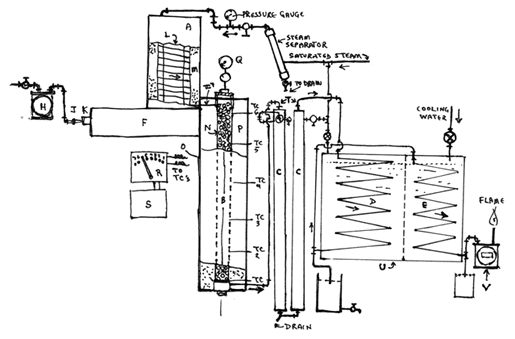
LTC is a pyrolysis process that heats coal, shale, lignite, or other carbonaceous feedstock to about 800 deg F in the absence of oxygen. The material thermally decomposes ( yielding a barrel of oil per ton of coal, rich fuel gas, and smokeless char. The retort is self-cleaning, has no moving parts, and can be continuously fed. Co-generated electricity can be produced from the waste heat.
Detailed Description
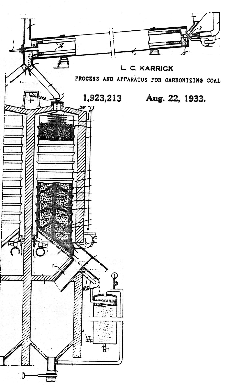
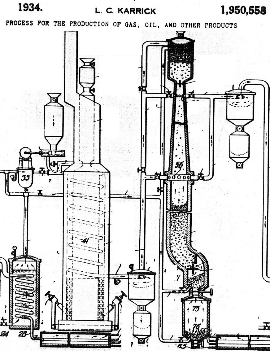
The Karrick LTC retort operates by loading carbonaceous material into a sealed vessel that is heated externally to ~800 deg F while oxygen is excluded. As the material reaches an incandescent state, volatile compounds are driven off and condensed into a distillate (synthetic oil). The remaining gases (rich fuel gas) are collected, and the solid residue (semi-coke or smokeless char) can be used as a high-heat-value fuel or converted to water-gas. The process is self-cleaning; the char can be removed without mechanical parts. Pilot plants at the University of Utah and commercial plants operated by the National Coal Carbonizing Co. in England demonstrated daily capacities of 1 000 tons of coal, producing up to 750 tons of char, 3 million cu ft of gas, and 650-700 barrels of oil. The heat released can drive a turbine to generate ~100 000 kWh day^-^1 of electricity at no additional fuel cost.
Principles
- Low-temperature carbonization (pyrolysis)
- Thermal distillation
- Self-cleaning retort design
- Continuous feeding
- Co-generation of electricity from waste heat
Scientific Domains
Materials
- Coal
- Shale
- Lignite
- Garbage (carbonaceous waste)
- Char (semi-coke)
- Synthetic oil
- Fuel gas
Mechanisms of Action
- Thermal decomposition of carbonaceous material
- Distillation of volatile hydrocarbons
- Gasification of char to fuel gas
- Heat recovery for electricity generation
Energy Sources
Applications
- Synthetic fuel production
- Industrial electricity generation
- Smokeless fuel for boilers
- Feedstock for chemical industry (phenolics, plastics)
Claimed Performance
Up to 1 barrel of oil per ton of coal, 3000 cu ft of fuel gas, 1500 lb of char; a 1000-ton-per-day plant can generate 100 000 kWh of electricity at no extra fuel cost; oil cost claimed to be zero dollars per barrel under certain market assumptions.
Experimental Evidence
Pilot plant operation at the University of Utah demonstrated successful continuous LTC processing. Commercial plants operated by the National Coal Carbonizing Co. in England (Snibston plant) produced 650-700 barrels of oil, 3 million cu ft of gas, and 750 tons of char daily from 1000 tons of coal. Historical records of five LTC retorts in England and limited operations in Estonia are cited.
Replication Status
Demonstrated in university pilot plant (Utah) and commercial scale in England (NCCC). Additional plants operated in Estonia and other countries, though many are now obsolete.
Limitations
- Requires external heat source
- Yield depends on feedstock quality
- Char handling and disposal
- Historical data; modern regulatory compliance not demonstrated
Red Flags
- Claims of "free oil" and suppression by oil cartels
- Lack of recent peer-reviewed data
- Potential bias in historical accounts