Goal
Produce liquid hydrocarbon fuel (shale oil) from coal at lower cost than conventional oil extraction.
Problem
High cost and limited supply of conventional petroleum; need for alternative fuel sources.
Concept Summary
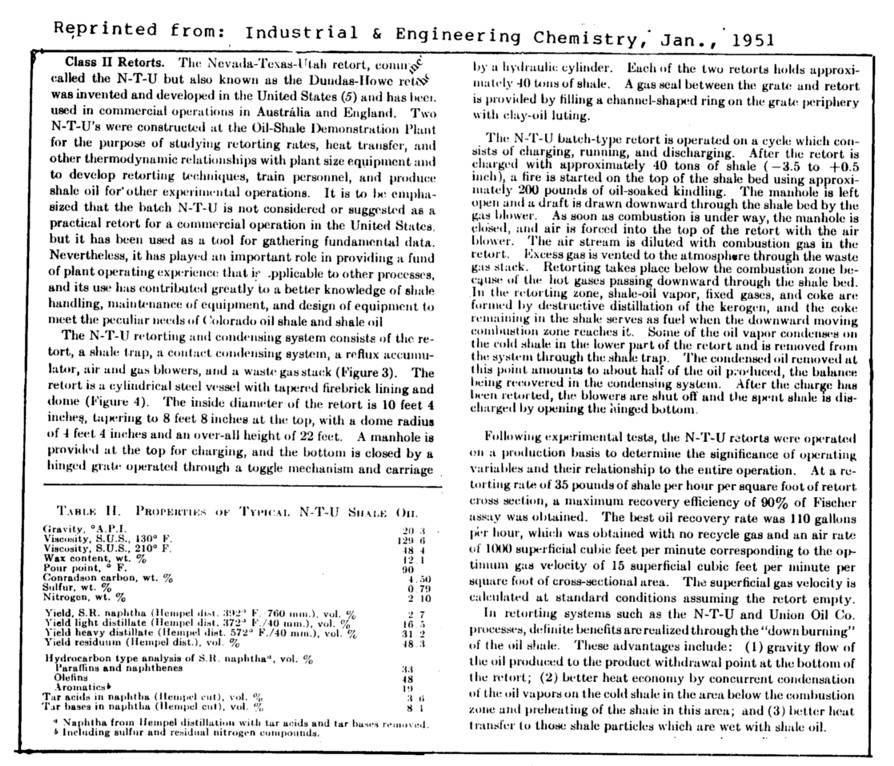
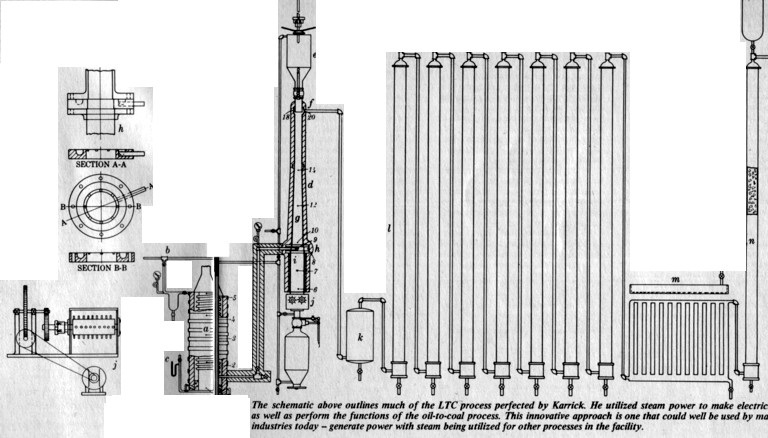
The Karrick low-temperature carbonization (LTC) process heats coal in NTU retorts at moderate temperatures to volatilize hydrocarbons, which are then condensed into shale oil while producing char and gases as by-products.
Detailed Description
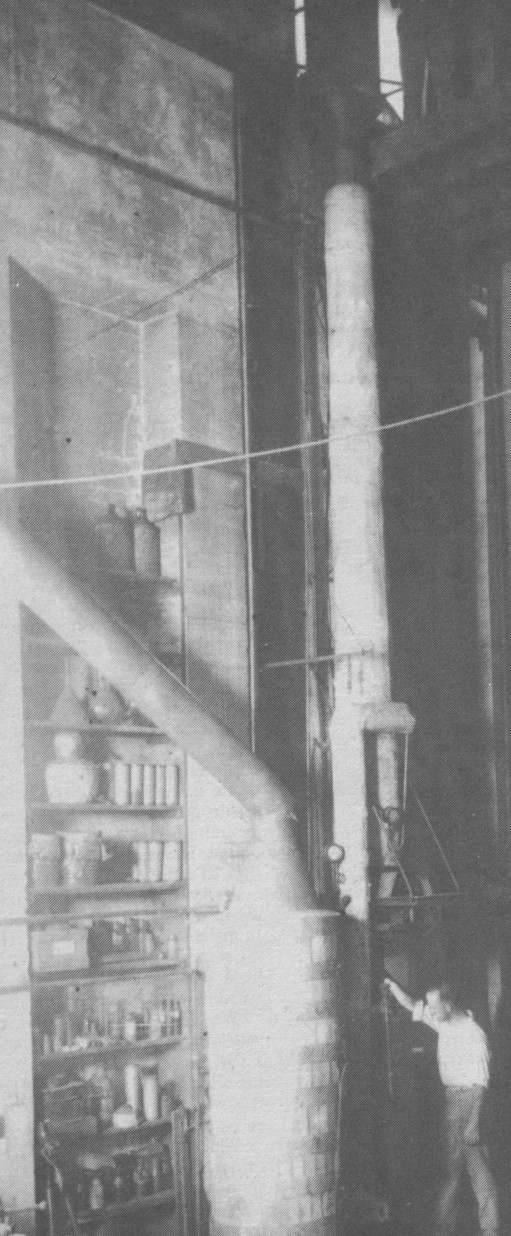
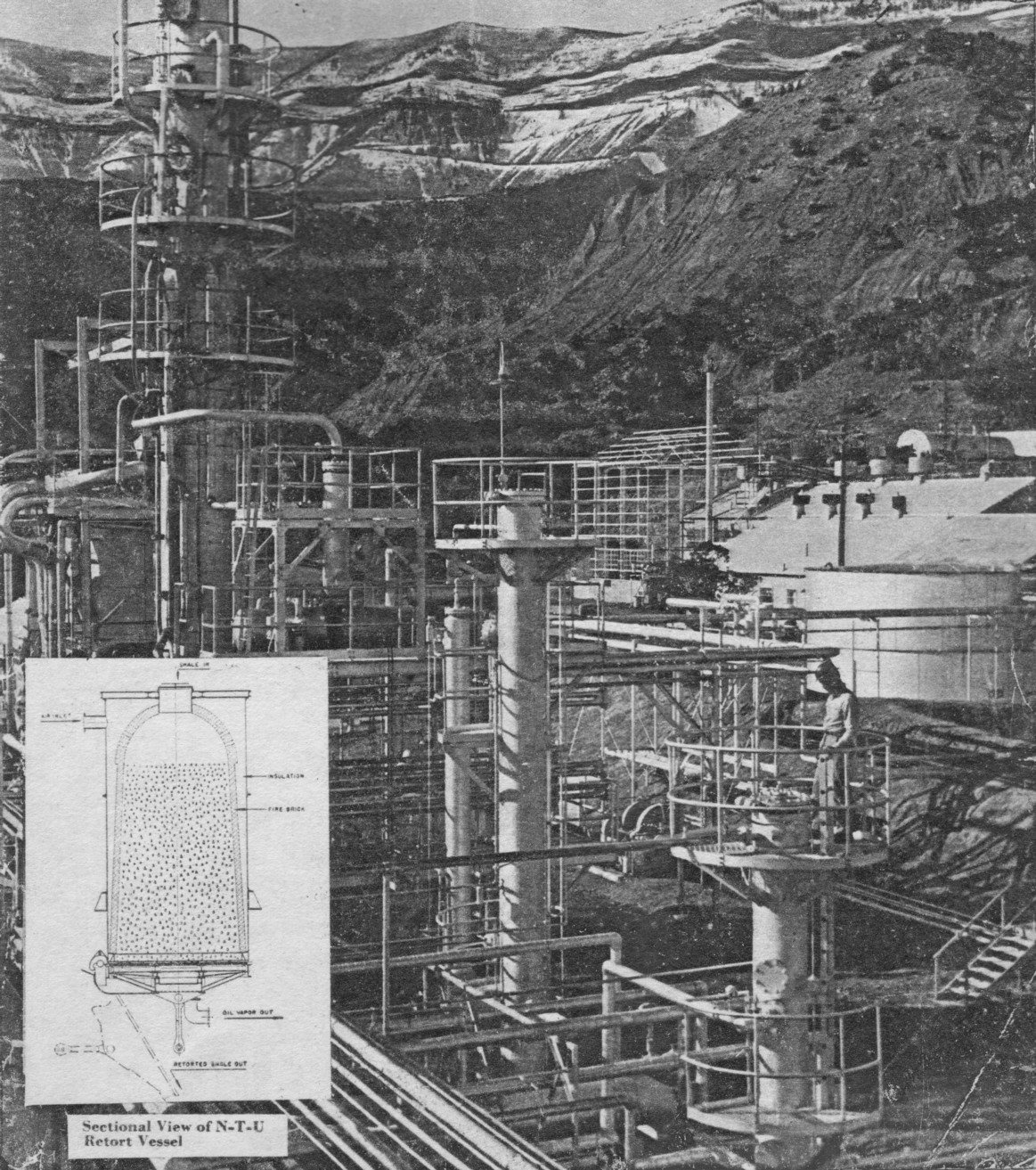
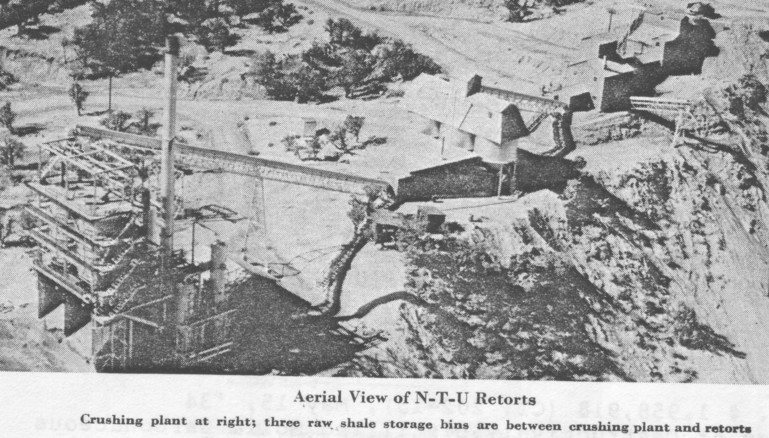
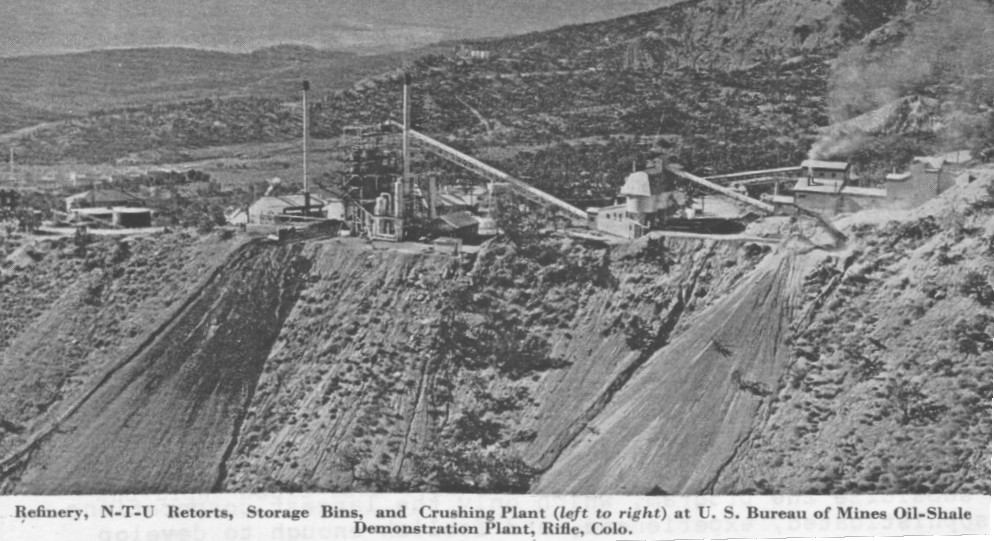
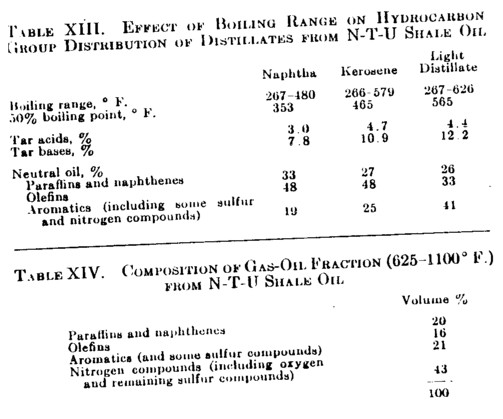
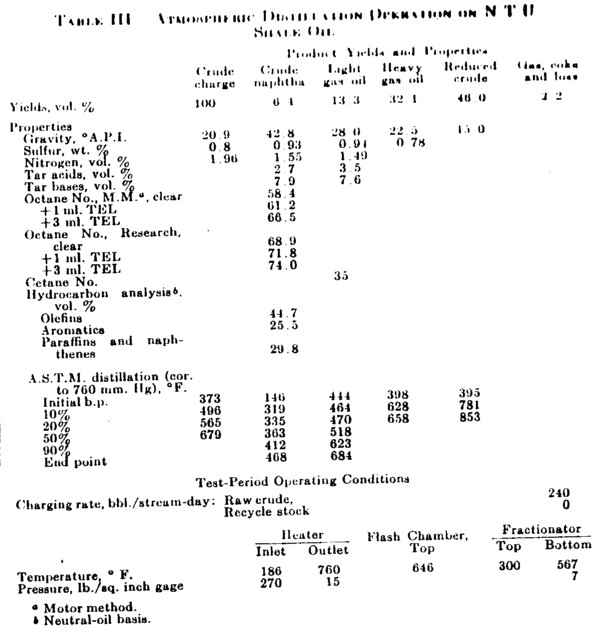
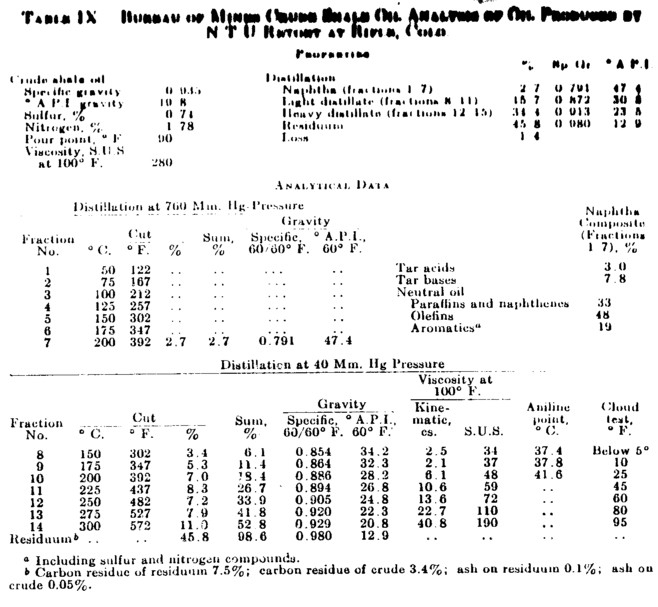
In the NTU (Nevada-Texas-Utah) retort system, coal is fed into a sealed furnace and heated to temperatures typically between 500 deg C and 600 deg C under controlled atmospheric conditions. The thermal decomposition causes the release of volatile organic compounds, which are routed through a series of condensers to produce a liquid oil fraction. The remaining solid residue (char) can be used as a fuel or further processed. The process was demonstrated at the US Bureau of Mines Oil-Shale Demonstration Plant at Rifle, Colorado, with analytical tables documenting oil composition and boiling range distribution.
Principles
- Thermal decomposition
- Carbonization
- Distillation
Scientific Domains
Materials
- Coal
Mechanisms of Action
- Thermal cracking of coal macromolecules
- Volatilization of hydrocarbons
- Condensation of oil fractions
Energy Sources
Applications
- Synthetic fuel production
- Alternative energy generation
- Chemical feedstock supply
Claimed Performance
Oil production claimed to be cheaper than conventional oil wells can pump.
Experimental Evidence
Tables from the US Bureau of Mines (e.g., Table III, Table IX, Table XIII) provide analytical data on oil yield, composition, and boiling range from the NTU retorts, demonstrating the feasibility of the process.
Replication Status
Demonstrated at the Rifle, Colorado Oil-Shale Demonstration Plant using NTU retorts.
Limitations
- Requires substantial heat input
- Lower overall efficiency compared with modern refining
- Carbon emissions from combustion