Goal
Increase vehicle fuel efficiency, reduce emissions, provide regenerative energy storage, and improve overall performance of internal-combustion-engine vehicles.
Problem
Low fuel-to-motion efficiency of conventional transmissions, high emissions, limited hybrid-battery solutions, and the need for a compact, high-efficiency power-train.
Concept Summary
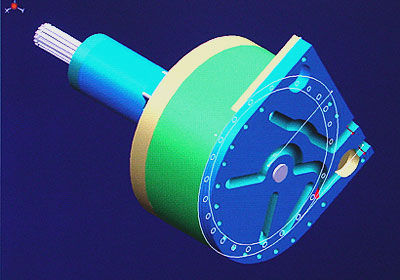
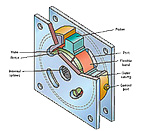
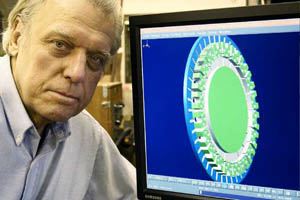
The Hydristor is an infinitely-variable hydraulic pump/motor that functions as a continuously-variable transmission (CVT). It uses a flexible-band-controlled vane pump to store and release hydraulic energy, can incorporate compressed-air storage, and harvest waste-heat via a heat-pump to generate electricity. The system replaces the conventional transmission and torque converter, allowing the engine to run at its optimal speed, thereby improving fuel economy and reducing emissions.
Principles
- Variable-displacement hydraulic vane pump/motor
- Regenerative hydraulic energy storage
- Compressed-air energy storage
- Waste-heat recovery via heat-pump electricity generation
Scientific Domains
Materials
- Steel
- Aluminum
- Rubber (flexible band)
- Hydraulic fluid
- High-pressure air (compressed-air tank)
Mechanisms of Action
- Variable-volume hydraulic chamber controlled by a flexible band
- Hydraulic motor drives wheels while engine runs at low RPM
- Regenerative braking stores kinetic energy as hydraulic pressure
- Compressed-air tank stores pneumatic energy for auxiliary propulsion
- Heat-pump converts exhaust/radiator heat to electricity
Energy Sources
Applications
- Passenger-vehicle hybrid powertrain
- Construction equipment
- Delivery trucks
- Garbage haulers
- Small cars and bicycles (conceptual)
Claimed Performance
Up to 80% fuel-to-motion efficiency (vs. ~30% today), double or triple mileage per gallon, 75% emission reduction, 0-60 mph in ~3 seconds using stored energy, 40-50 mi travel on a 10-gal, 5 000 psi air tank.
Experimental Evidence
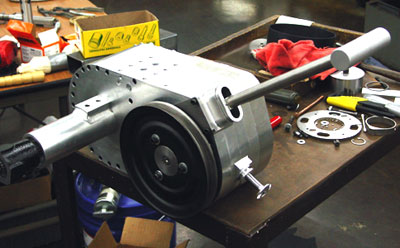
Prototype lawn-tractor equipped with a Hydristor; a Ford Expedition being fitted for field testing; press coverage and expert opinions; no publicly available quantitative test data.
Replication Status
Prototype built and demonstrated on a lawn tractor and a Ford Expedition; no independent third-party replication reported.
Limitations
- Noise levels compared to conventional transmissions
- High-pressure component durability
- Lack of independent, peer-reviewed performance data
- Commercial scaling and financing challenges
Red Flags
- Claims of 80% efficiency and 0-60 mph in 3 s lack independent verification
- Reliance on anecdotal prototype demonstrations
- Absence of peer-reviewed publications or third-party test data
- Potential for over-optimistic marketing