Goal
Develop a low-cost, mass-produced satellite launch vehicle.
Problem
High cost of conventional launch systems and limited accessibility of space.
Concept Summary
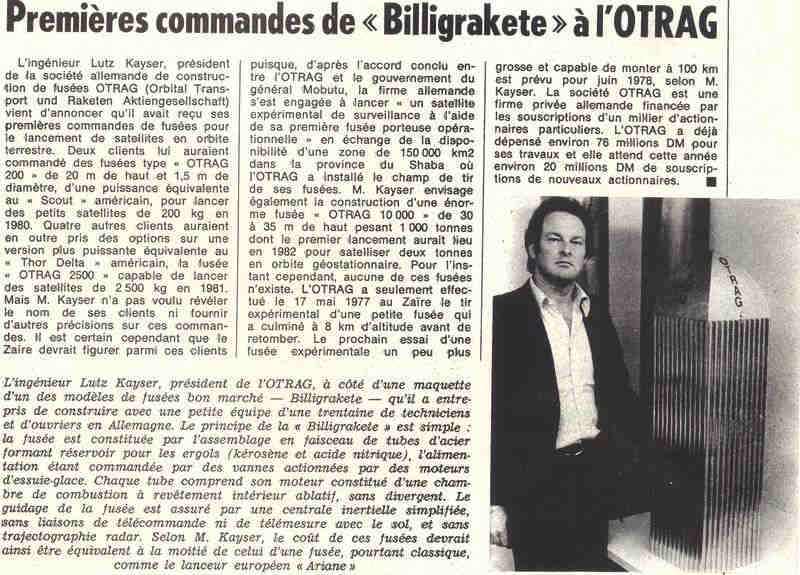
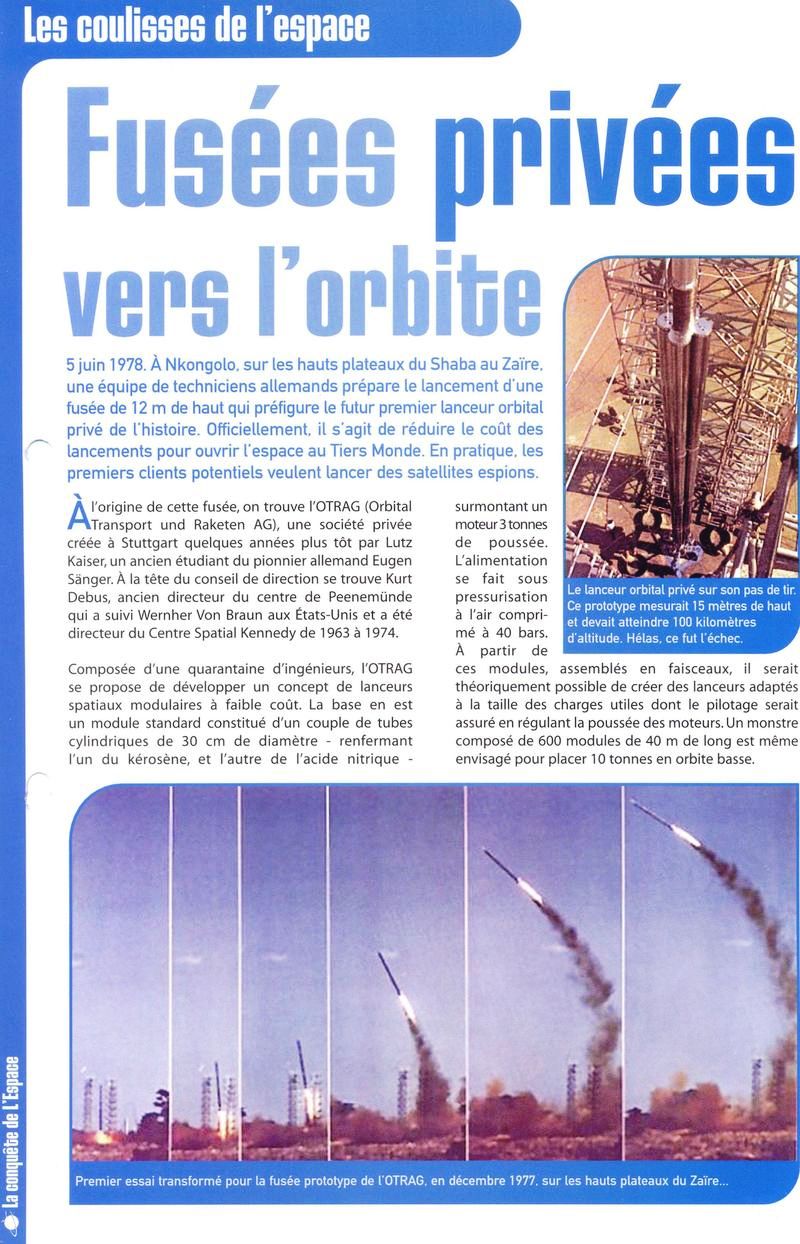
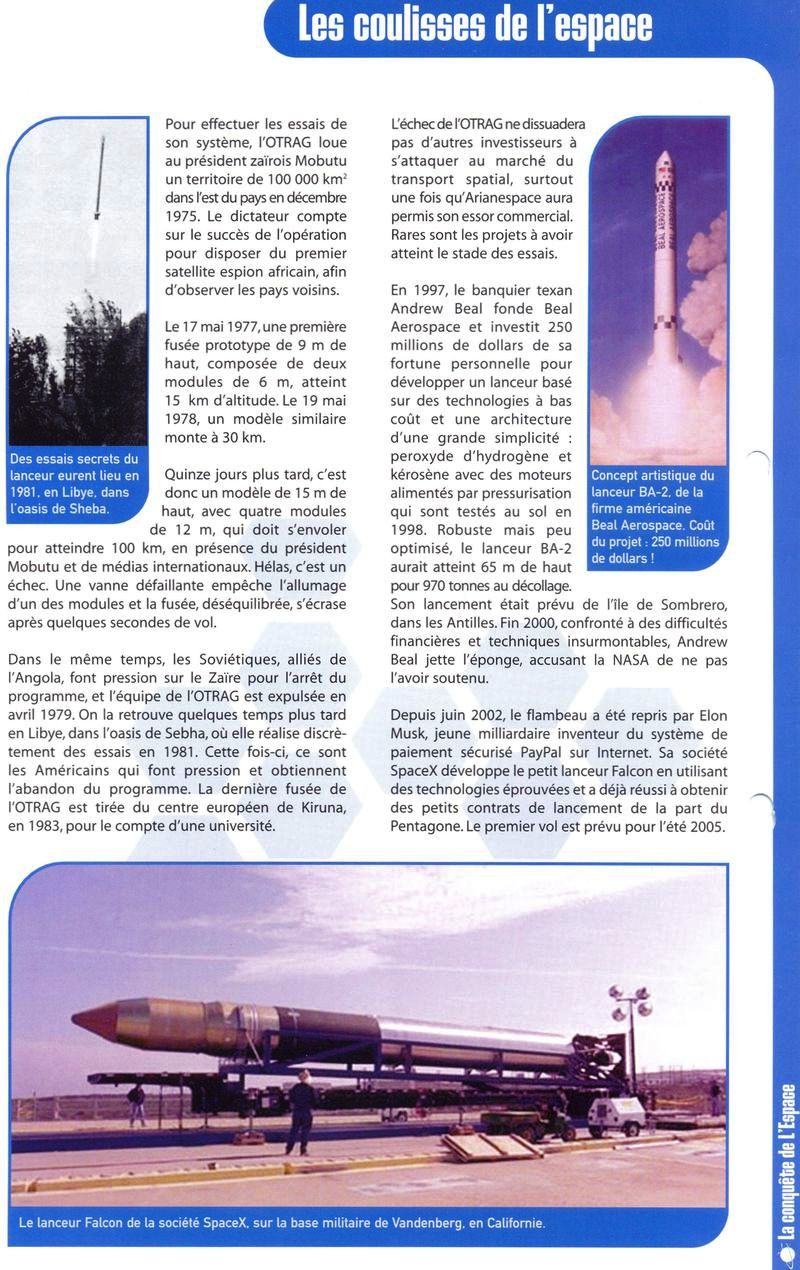
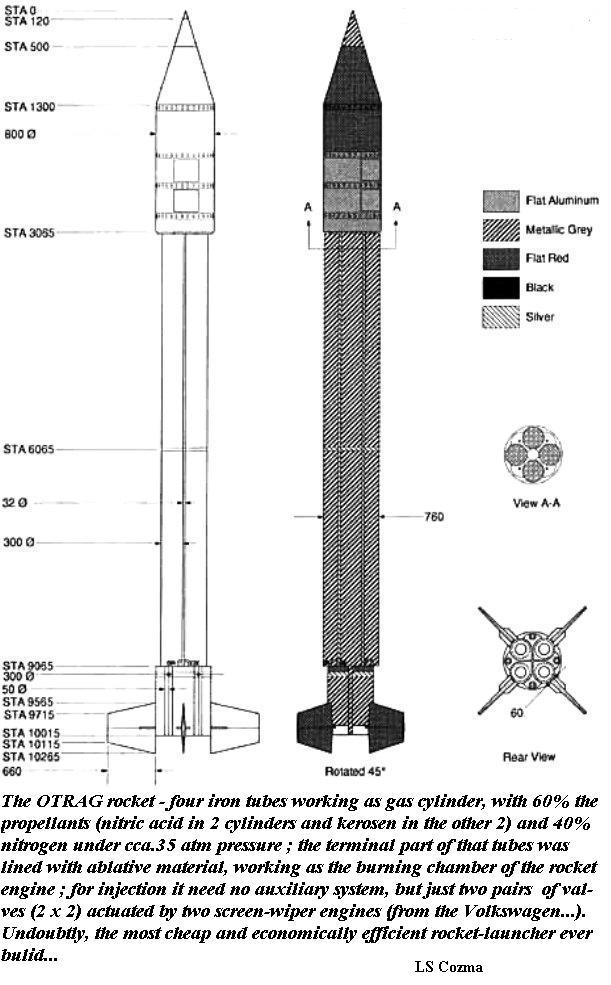
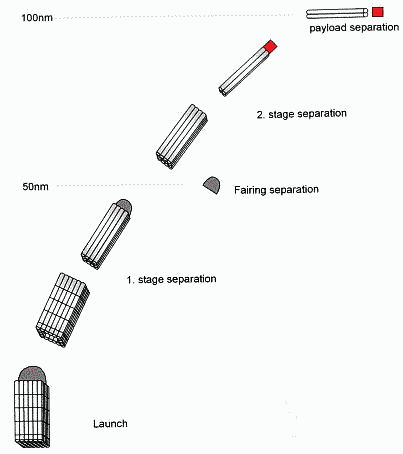
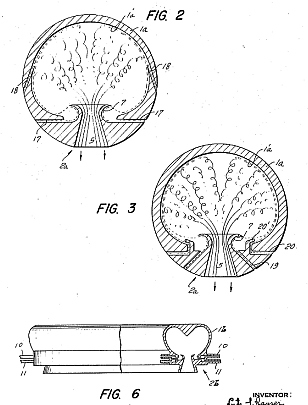
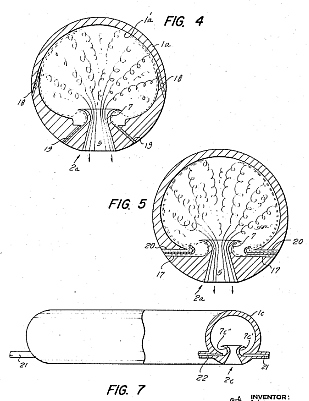
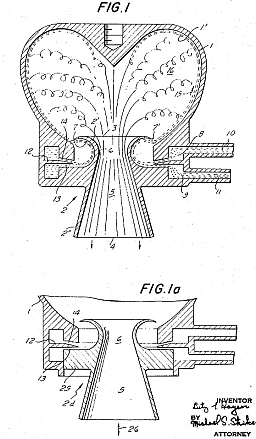
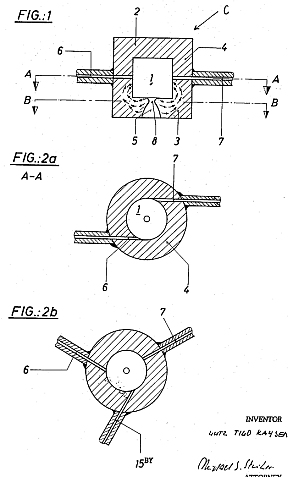
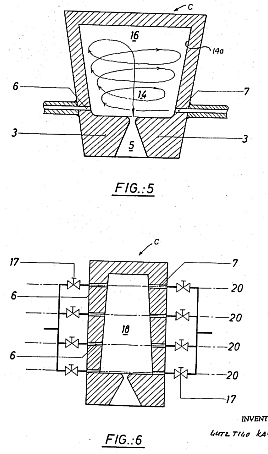
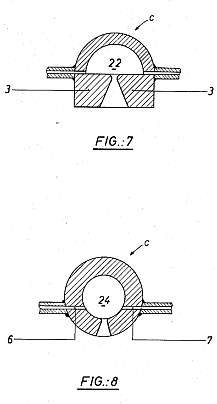
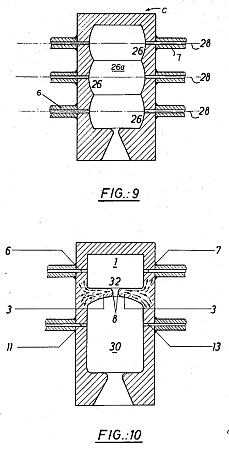
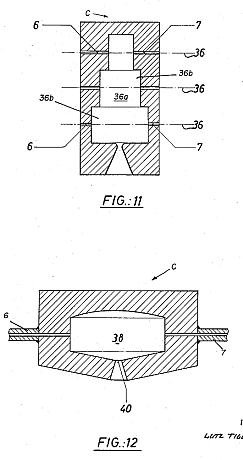
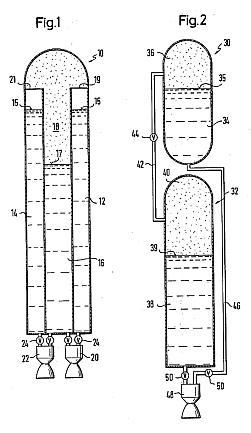
OTRAG proposed a modular rocket architecture built from many identical low-cost liquid-propellant units (CRPU). Each unit is a simple steel pipe containing kerosene fuel and a nitric-acid/N2O4 oxidiser, pressurised by compressed air and ignited hypergolically with furfuryl alcohol. Parallel clustering of these units provides thrust, while thrust vectoring is achieved by differential throttling of electromechanical valves. The design aims for cheap mass production, reduced labor, and a launch cost roughly one-tenth of traditional rockets.
Principles
- Parallel clustering of identical propulsion modules
- Hypergolic ignition
- Pressurised feed using compressed air
- Electromechanical valve throttling for thrust control
- Differential throttling for pitch and yaw control
Scientific Domains
Materials
- Kerosene
- Nitric acid
- Dinitrogen tetroxide (N2O4)
- Furfuryl alcohol
- Steel (pipes and bulkheads)
- Ablative coating (unspecified)
Mechanisms of Action
- Hypergolic reaction between fuel and nitric acid/N2O4
- Compressed-air pressurisation pushes propellants into ablatively cooled combustion chamber
- Electromechanical valves regulate propellant flow
- Differential throttling creates torque for attitude control
Energy Sources
Applications
- Satellite launch
- Low-cost space transport
Claimed Performance
Estimated launch cost ~= 1/10 of conventional rockets; 6 000 static engine tests and 16 single-stage qualification tests reported.
Experimental Evidence
6,000 static rocket engine tests and 16 single-stage qualification tests were made to prove the concept as feasible.
Replication Status
Modules were flight-tested in Zaire and Libya; no full orbital vehicle assembled.
Limitations
- Political and export-control restrictions
- Dual-use concerns (missile technology)
- No full orbital vehicle demonstrated
Red Flags
- Political pressure from France and USSR
- Risk of technology proliferation for weapons