Goal
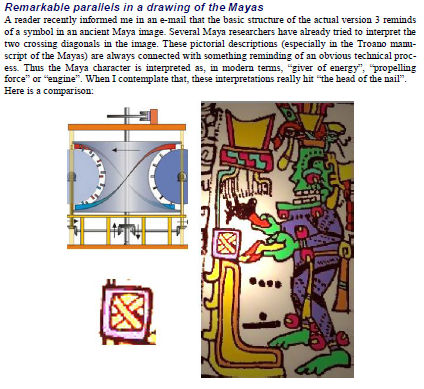
Create a very compact, high-power rotary engine inspired by a Mayan glyph that can operate on combustion, compressed air or steam.
Problem
Need for a high-power-density, low-vibration engine that can replace conventional piston engines and reduce emissions.
Concept Summary
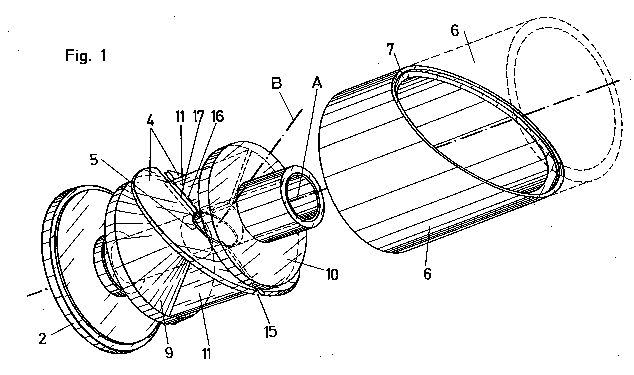
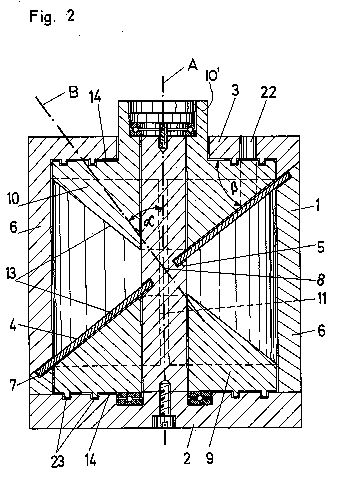
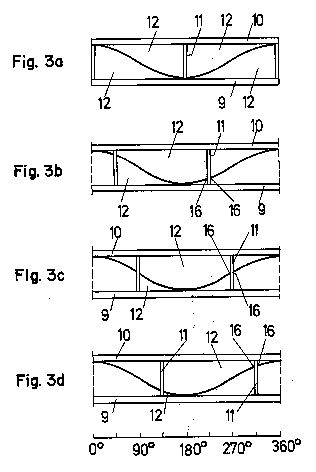
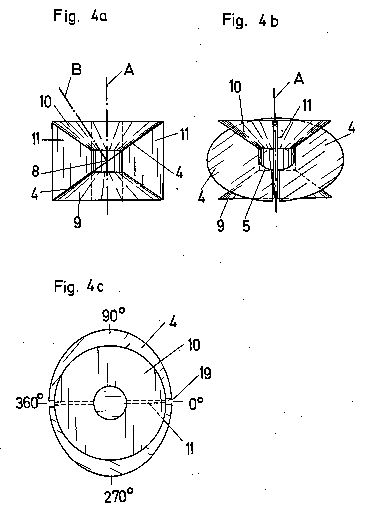
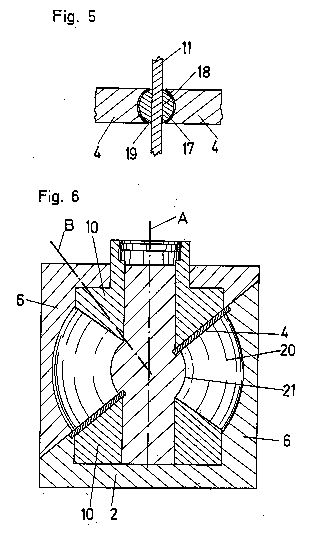
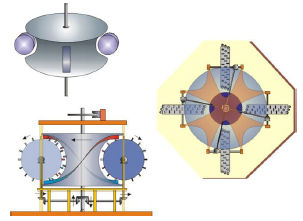
The Maya Motor uses two mutually penetrating inclined planes of rotation that share a common centre point. The inclined rotary plate and the conical rotor members form variable-volume chambers whose expansion and compression generate torque. The device can be powered by combustion, compressed air or steam.
Detailed Description
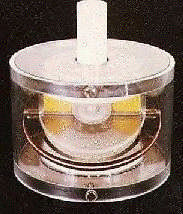
The engine consists of a hollow cylindrical housing, a main shaft, a rotary plate inclined to the shaft, and two conical rotor members linked by partition walls. As the rotor-plate assembly rotates, the geometry creates continuously changing chamber volumes that draw in a working fluid, compress it, and release power. The design claims vibration-free operation and a very high power-to-size ratio.
Principles
- Variable-volume chambers
- Inclined rotating planes
- Rotary combustion
- Compressed-air actuation
- Steam actuation
Scientific Domains
Mechanisms of Action
- Pressure differentials in rotating chambers produce torque
- Expansion and compression of working fluid within variable chambers
Energy Sources
Applications
- Vehicle propulsion
- Portable power generation
- Hydraulic or pneumatic pumps
Claimed Performance
480 hp from a 40 cm^3 engine at 500 rpm and 10 atm pressure (vs. ~200 hp for a conventional engine of the same size).
Experimental Evidence
The article states that "self-critical tests by professionals large industrial companies, such as the Tyrolean company Swarovski Optik KG, was held" and that "calculations by experts have shown that the developed combustion engine at a size of 40 cubic centimeters and an operating pressure of 10 atmospheres already at 500 rpm with a performance of more than 480 hp emits." No quantitative test data are provided.
Replication Status
No independent replication or commercial production reported.
Limitations
- No peer-reviewed data or independent testing
- Claims of performance far exceeding conventional engines
- Potential sealing and wear issues in rotating chambers
Red Flags
- Unsubstantiated performance claims
- Alleged suppression by multinational lobbies without evidence
- Lack of detailed technical specifications or test results