Goal
Reversal of age-related diseases and extension of lifespan through telomerase activation and endocrine regulation
Problem
Aging, age-related diseases, telomere shortening, loss of fertility and endocrine dysregulation
Concept Summary
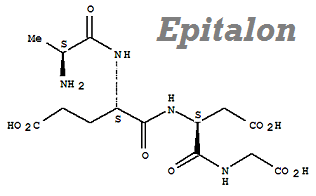
Epitalon is a synthetic tetrapeptide (Ala-Glu-Asp-Gly) that, when administered by injection, nasal spray or transdermal route, stimulates telomerase activity, elongates telomeres, restores melatonin and circadian rhythms, and exerts broad endocrine, antioxidant and anti-inflammatory effects. Reported outcomes include restored fertility in aged mice, increased lifespan in rats, reduced mortality in elderly humans, and improved organ function.
Principles
- Telomerase activation
- Telomere elongation
- Endocrine regulation
- Antioxidant activity
- Anti-inflammatory action
Scientific Domains
Materials
- L-alanine-L-glutamyl-L-aspartyl-glycine (Ala-Glu-Asp-Gly)
- Salts of the peptide (acetate, hydrochloride, oxalate, sodium, potassium, calcium, lithium, zinc, magnesium, ammonium, triethylammonium)
Mechanisms of Action
- Stimulates production of telomerase enzyme
- Elongates telomeres in somatic cells
- Restores normal melatonin production
- Normalizes circadian rhythm of cortisol
- Modulates endocrine and autonomic nervous systems
- Neutralises free radicals
Applications
- Anti-aging therapy
- Geroprotective treatment
- Fertility restoration in elderly
- Endocrine and neuro-endocrine regulation
Claimed Performance
Mortality reduced 1.8-fold over 6 years in aged humans; rat lifespan increased 10-25 % with 0.1-0.5 mg daily doses; telomerase activity induced in human fibroblasts; fertility restored in geriatric female mice after two weeks of treatment
Experimental Evidence
Rat study showed 10 % (0.1 mg) and 25 % (0.5 mg) lifespan increase; human fibroblast cultures exhibited telomerase activation and telomere elongation after Epitalon addition; clinical observation of 266 elderly subjects reported 1.6-1.8-fold mortality reduction with Epithalamin; aged monkeys showed restored neuro-endocrine regulation after peptide treatment
Replication Status
Data primarily from the inventor's own research groups; no independent peer-reviewed replication reported
Limitations
- Lack of independent clinical trials
- Not approved by regulatory agencies (e.g., FDA)
- Unclear long-term safety profile
- Dosage regimen not standardized
Red Flags
- Claims based largely on author-owned studies
- No peer-reviewed randomized controlled trials
- Potential over-statement of anti-aging effects