Goal
To experimentally evaluate the claim that the Sunburst homopolar generator can produce electrical output power without a corresponding increase in mechanical input power (i.e., "free-energy" generation).
Problem
The alleged ability of a homopolar generator to extract latent spatial energy, producing output power that is not reflected as mechanical load on the drive source.
Concept Summary
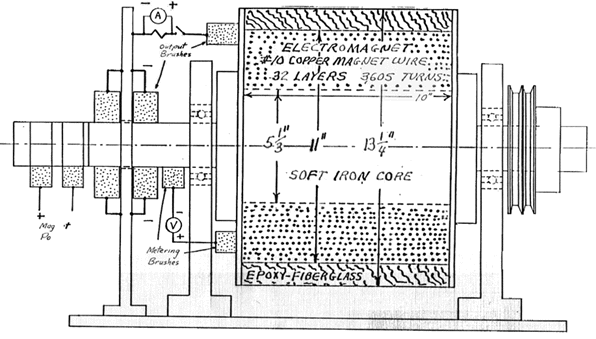
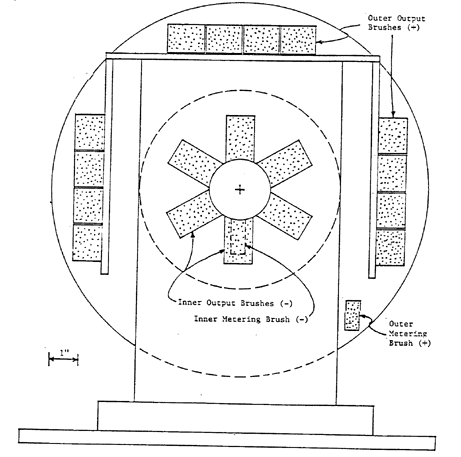
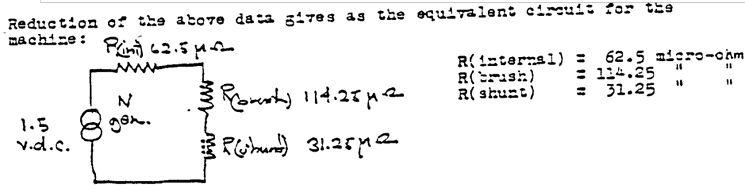
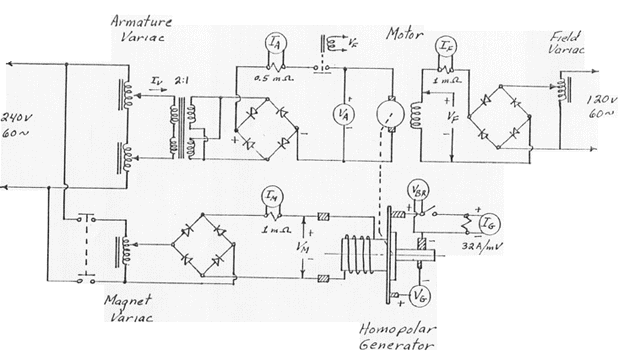
The Sunburst N-Machine is a homopolar generator consisting of a rotating electromagnet (3605-turn copper coil on a soft-iron core) with bronze end plates and graphite brushes for extracting current. The test aimed to measure input motor power and electrical output under load to see if the generator exhibits over-unity behavior.
Principles
- Electromagnetic induction (Faraday's law)
- Lorentz force on moving conductors
- Homopolar generator operation
- Torque interaction between rotating magnet and induced current (claimed to bypass Lenz's law)
Scientific Domains
Materials
- Copper wire (#10)
- Soft iron core
- Bronze cylindrical plates
- Graphite brushes
- Epoxy-impregnated fiberglass windings
Mechanisms of Action
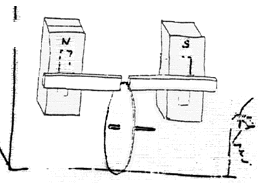
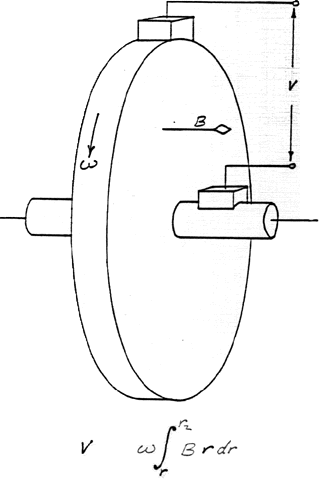
- Rotating conductive disk (or cylinder) in an axial magnetic field induces a radial voltage
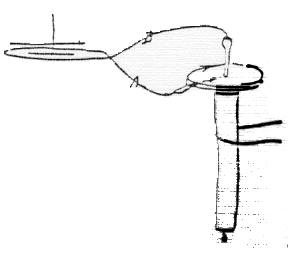
- Extracted current via sliding brushes creates torque that allegedly does not feed back to the drive source
- Magnetic field generated by the electromagnet and the field produced by output current interact
Energy Sources
Applications
- Experimental validation of free-energy concepts
- High-current power generation research
Claimed Performance
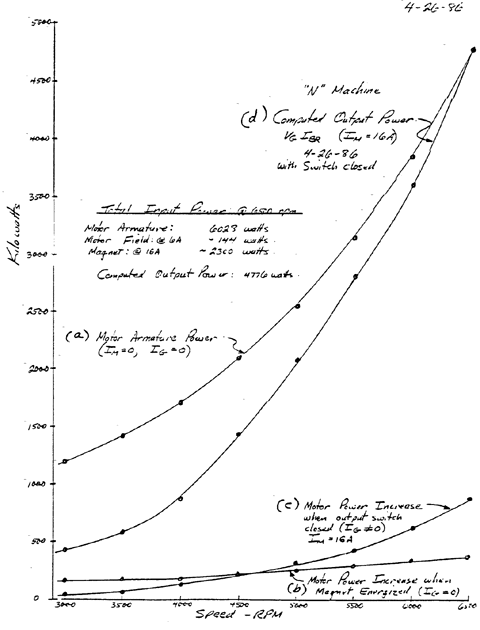
During testing, an increase in input power when output was extracted was reported as about 13 %-20 % of the maximum computed generated power; earlier unpublished data claimed output power 28.2 x the incremental input power.
Experimental Evidence
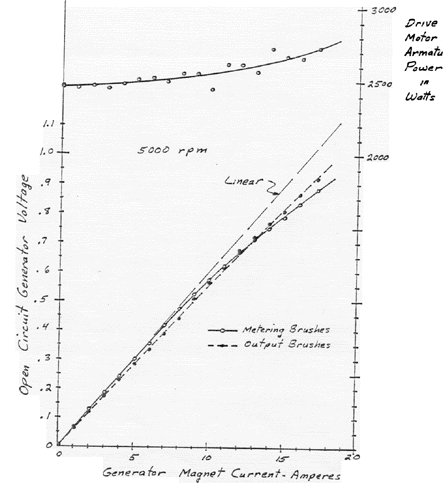
Repeatable measurements were taken with calibrated digital meters, a variable-speed DC drive motor, and speed monitoring; data showed anomalous input-power increases when load was applied, but the magnitude depended on interpretation of the measurements.
Replication Status
Tested by the author; no independent replication reported in the article.
Limitations
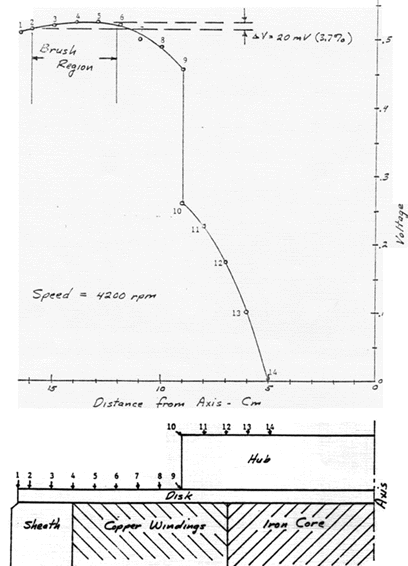
- Low generated voltage due to magnetic field concentration near axis
- High power (~=4 kW) required to energize magnet, limiting duty cycle
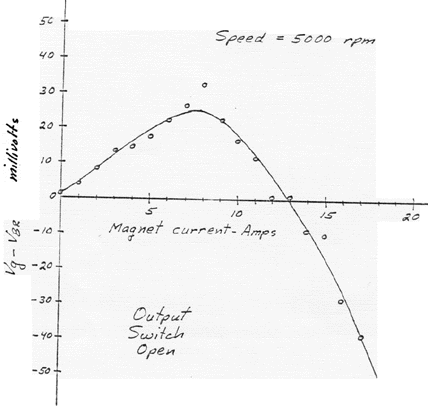
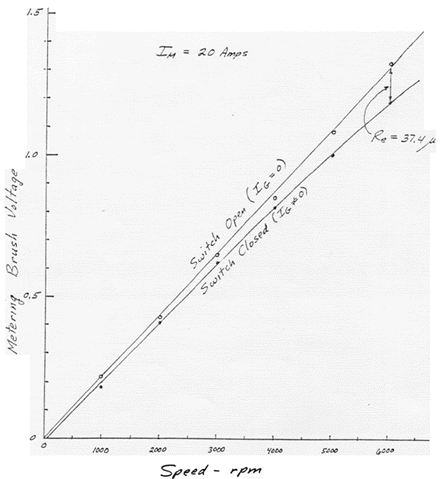
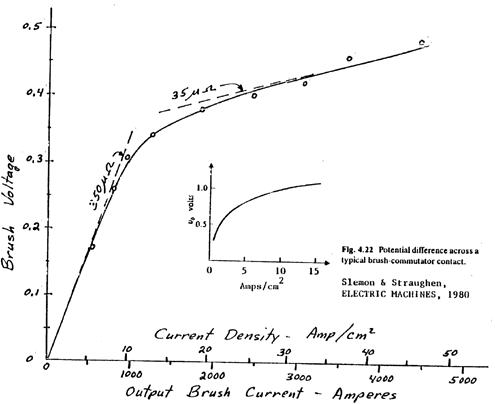
- Graphite brush voltage drop comparable to output voltage
- Large brush contact area causing significant friction losses
Red Flags
- Claims of free-energy and over-unity without independent verification
- Potential measurement uncertainties in AC power factor and current sensing
- Historical reliance on unpublished reports