Goal
Destroy insects, larvae, eggs, and germ life harmful to plants and trees using electrically generated gases.
Problem
Pest infestation in soil and on plants that damages crops and orchards.
Concept Summary
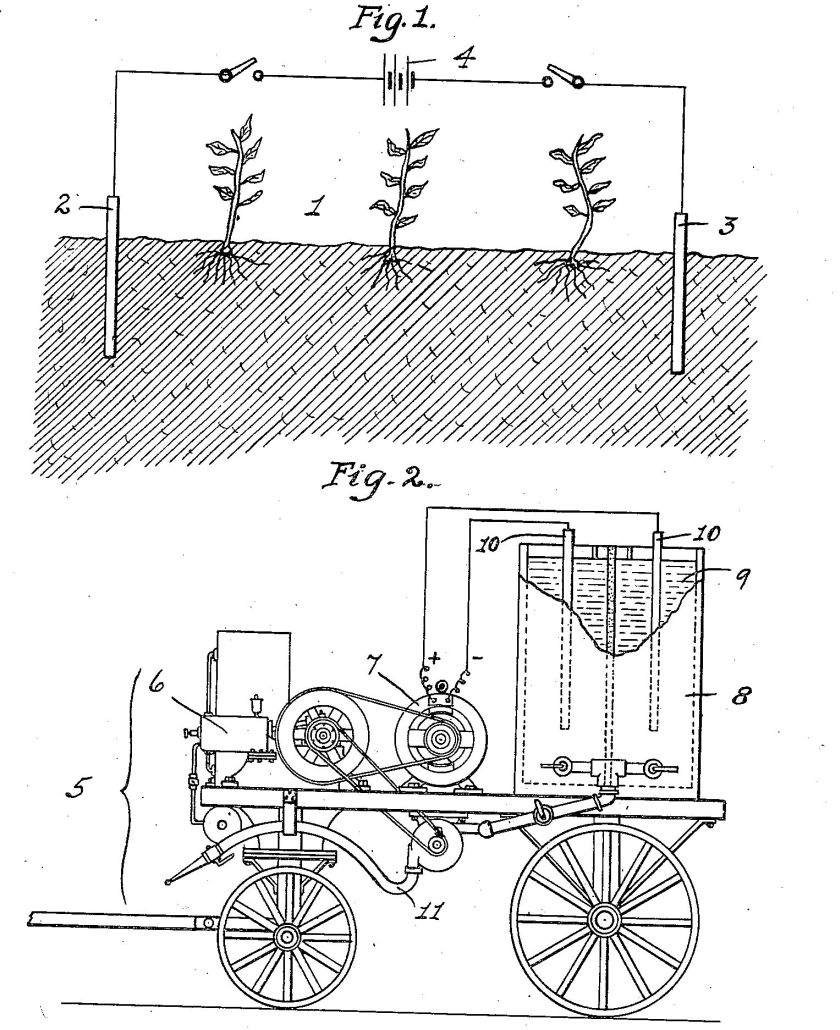
A saline or other electrolyte solution is applied to soil or plant foliage and then electrolyzed with an electric current, producing germicidal gases (e.g., chlorine, ammonia) that eradicate insects and microbes without harming vegetation. The system can be mounted on a vehicle with a generator to treat larger areas.
Principles
- Electrolysis
- Generation of germicidal gases
- Electrical soil treatment
Scientific Domains
Materials
- Sodium chloride (NaCl)
- Ammonium carbonate
- Ammonium chloride
- Ammonium nitrate
- Iron salts
- Copper salts
Mechanisms of Action
- Electrolytic oxidation of NaCl to produce chlorine gas
- Electrolysis of ammonium salts to release ammonia gas
- Diffusion of generated gases into soil/plant tissue to kill pests
Energy Sources
Applications
- Agricultural pest management
- Orchard and tree health maintenance
Claimed Performance
Effective destruction of insects, larvae, and eggs in soil and on plants (e.g., weevils, scales, mosquitoes) with minimal injury to vegetation.
Experimental Evidence
Qualitative observations reported in the patent description that the method rid soil of germs, larvae, and insects; no quantitative data provided.
Replication Status
Patented; no independent replication reported in the text.
Limitations
- Requires reliable electricity source
- Improper electrolyte concentration can damage plant roots
- Generation of chlorine gas poses handling hazards
Red Flags
- Potential toxicity of chlorine gas to humans and non-target organisms
- Risk of plant root damage if electrolyte strength is too high