Goal
Create an airfoil that resists stalling and maintains lift at high angles of attack.
Problem
Conventional wings stall at high angles of attack, causing loss of lift and crashes.
Concept Summary
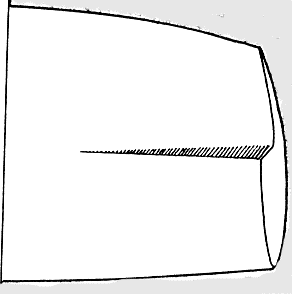
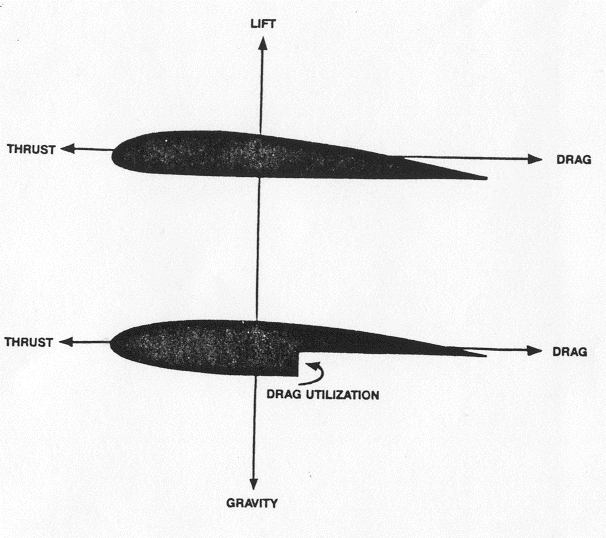
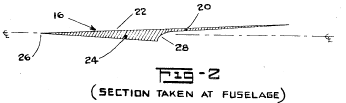
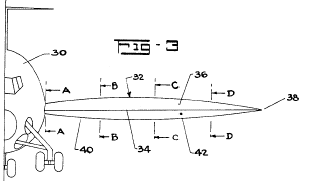
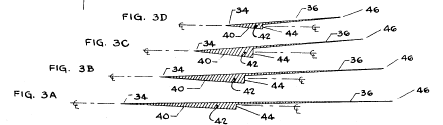
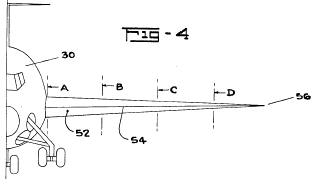
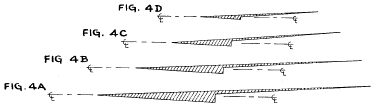
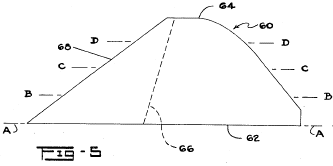
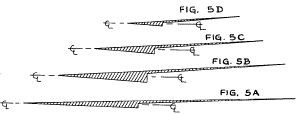
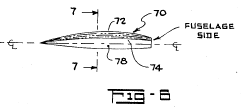
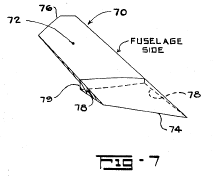
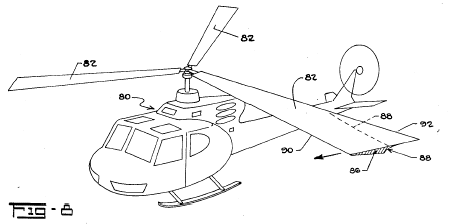
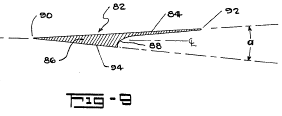
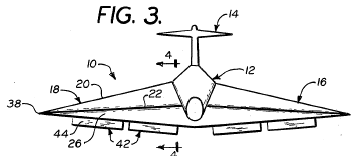
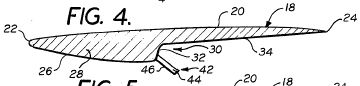
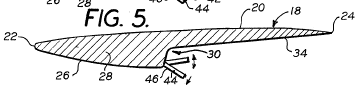
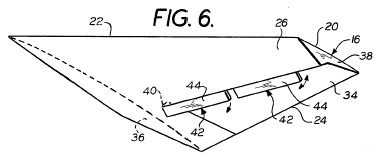
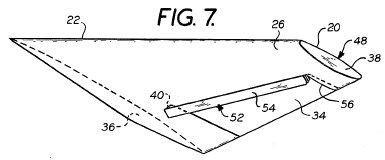
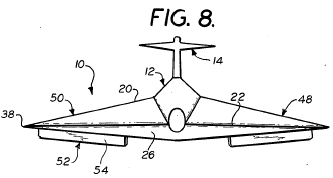
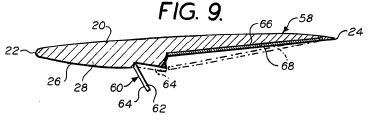
The Kline-Fogleman wing uses a flat top and a notched, partially hollowed underside to trap air pockets, which alters pressure distribution and allows the wing to generate lift while resisting stall even at very high angles of attack.
Principles
- stall resistance
- lift generation at high angle of attack
- air-pocket turbulence
Scientific Domains
Materials
- paper
Mechanisms of Action
- Notches on wing underside create trapped air pockets
- Altered pressure distribution
- Reduced tendency to stall
Applications
- model aircraft
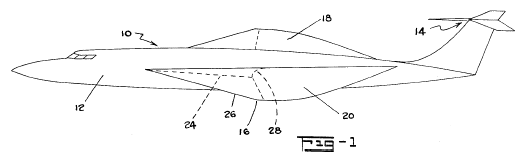
- small aircraft wings
- gliders
Claimed Performance
Resists stall up to 45 deg angle of attack; improves lift by 44% in notch-up mode; L/D ratio improved by ~30% in notch-up mode.
Experimental Evidence
Wind-tunnel tests by NASA, the Air Force, and the Navy showed stall resistance up to 45 deg , but a poor lift-to-drag ratio. Hobbyist and radio-controlled model tests reported long glides and resistance to spin.
Replication Status
Limited testing by hobbyists and small companies; no large-scale adoption or independent replication reported.
Limitations
- Poor lift-to-drag ratio
- Not suitable for full-size aircraft without redesign
- Limited testing data
Red Flags
- Lack of independent peer-reviewed studies
- Potential bias in anecdotal reports