Goal
Reduce ship frictional drag and greenhouse-gas emissions while increasing speed and cargo capacity.
Problem
High frictional drag of ship hulls causing fuel waste and pollution.
Concept Summary
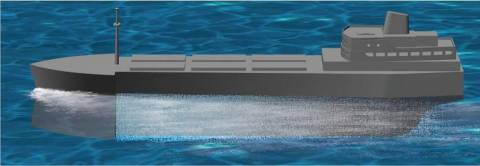
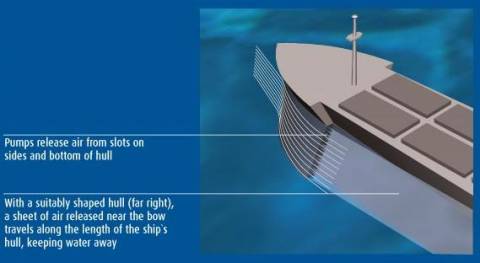
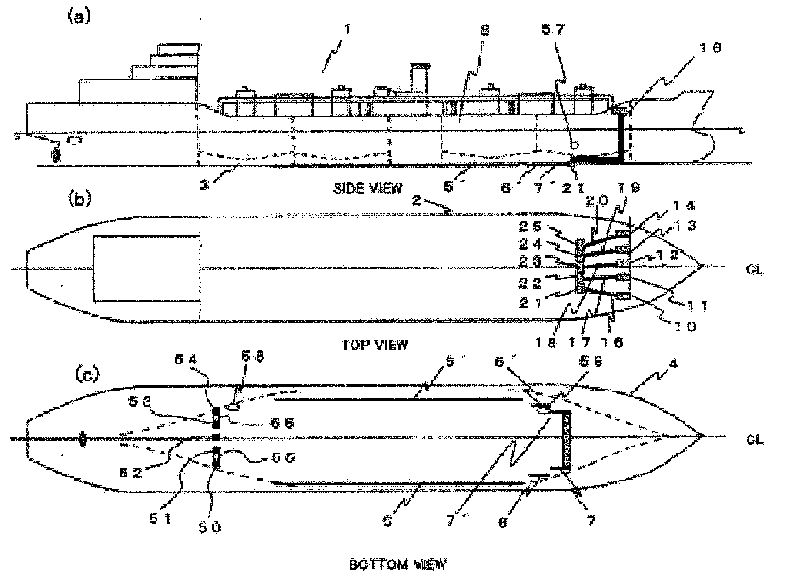
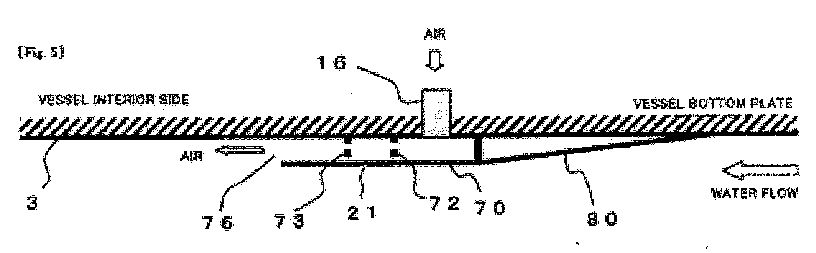
A carpet of micro-bubbles is injected beneath a ship's hull, forming a thin air layer that lowers the effective viscosity of the boundary layer and modifies turbulence, thereby reducing frictional drag.
Principles
- Boundary-layer air lubrication
- Viscosity reduction via air layer
- Turbulence modification by deformable bubbles
Scientific Domains
Materials
- Air
- Water
- Hydrogen (generated by electrolysis, optional)
Mechanisms of Action
- Micro-bubbles create a sheet of air between hull and water, reducing shear stress
- Deformed bubbles dampen turbulent eddies in the near-wall region
Energy Sources
Applications
- Commercial cargo ships
- Naval vessels
- High-speed ferries
Claimed Performance
Laboratory tests showed up to 80 % drag reduction; model tank tests <10 %; sea-trial on a 6000-tonne cargo ship gave a net 3 % drag drop.
Experimental Evidence
Sea trials on a 6000-tonne cargo ship and a 10 000-tonne cement carrier reported a 3 % reduction in drag; MARIN model tests reported <10 % reduction; earlier bench tests with hydrogen bubbles reported up to 80 % reduction but were hard to replicate on full-scale vessels.
Replication Status
Limited replication - a few sea-trials and model experiments, but no large-scale commercial deployment reported.
Limitations
- Effectiveness drops sharply at high ship speeds
- Energy required to generate bubbles can offset drag savings
- Bubble stability and retention under hull are problematic
- Potential interference with propellers
Red Flags
- Early-stage experimental results with modest real-world drag reductions
- Potential over-statement of fuel-saving percentages