Goal
Reduce deaths from mosquito-borne illnesses such as malaria, dengue fever and West Nile virus.
Problem
Mosquito-borne diseases that cause high mortality, especially in tropical and subtropical regions.
Concept Summary
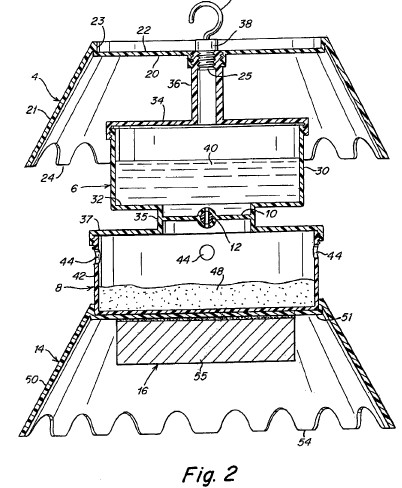
The ProVector is an artificial-flower mosquito trap made of durable plastic that attracts adult mosquitoes with colored decals and a sugar-based nectar bait. Mosquitoes feed through a fine metal screen and ingest a Bacillus thuringiensis israelensis (Bt) biopesticide (ProVector Bt) which kills the insect, or a formulation (ProVector M) that blocks malaria parasite development while allowing the mosquito to survive. The device is low-cost, refillable, and designed for indoor use in homes and field settings.
Detailed Description
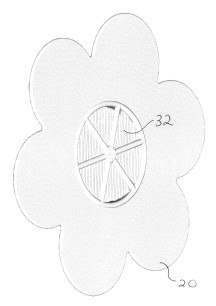
The device resembles a flower and is constructed from the same type of impact used for football helmets. A four-color decal attracts mosquitoes. A metal screen with openings sized for mosquito mouthparts allows the insects to feed on an artificial nectar that contains sugar and the Bt biopesticide. Two models exist: ProVector Bt, which kills mosquitoes within days after ingestion, and ProVector M, which kills the malaria parasite inside the mosquito without killing the insect. The bait is refilled every three months at a cost of about $1. The device is sold for roughly $10 and is intended for use in homes, schools, and field camps in malaria-endemic regions. Field trials have been conducted in Puerto Rico, Afghanistan, Kenya, Thailand, and Uganda, and the technology has been independently validated by MIT Holding, Inc.
Principles
- Visual attraction using colored decals
- Sugar-based nectar bait
- Ingestion of Bacillus thuringiensis israelensis (Bt) biopesticide
- Targeted killing of adult mosquitoes
- Parasite interference (ProVector M) to block malaria development
Scientific Domains
Materials
- Durable plastic (football-helmet grade)
- Metal screen (fine mesh)
- Sugar solution
- Bacillus thuringiensis israelensis (Bt) biopesticide
- Color decals (pigments)
- Chemical attractants (unspecified)
Mechanisms of Action
- Mosquitoes feed on bait containing Bt, which produces toxins that kill the insect after ingestion
- ProVector M delivers a compound that interferes with the life cycle of the malaria parasite inside the mosquito
Applications
- Home indoor mosquito control
- School and community vector control
- Public health disease-reduction programs in tropical regions
- Field deployments for humanitarian and military settings
Claimed Performance
Blind trials by Walter Reed Army Institute of Research reported 50-100 % mosquito mortality within days. MIT validation showed >80 % kill rate in 24 h and 100 % within a week in laboratory conditions. Device cost ~= $10, bait refill ~= $1 every three months.
Experimental Evidence
Blind field trials (Walter Reed Army Institute of Research), laboratory kill-rate data (MIT Holding validation), field deployments in Puerto Rico, Afghanistan, Kenya, Thailand, and Uganda, and presentations at scientific conferences.
Replication Status
Patented, licensed to Medical Infusion Technologies, Inc., and independently validated by MIT Holding, Inc.; ongoing field trials in multiple countries.
Limitations
- Requires regular bait refills
- Efficacy depends on mosquito species attraction to color and sugar bait
- Field efficacy data still limited to pilot studies
- May not affect larvae or non-target insects
Red Flags
- Potential over-statement of field efficacy without large-scale independent trials