Goal
Store solar energy as heat in a molecular material and release it on demand for heating, cooking, or power generation.
Problem
Need for clean, renewable, transportable energy storage that can provide heat when sunlight is unavailable, especially in off-grid or low-income settings.
Concept Summary
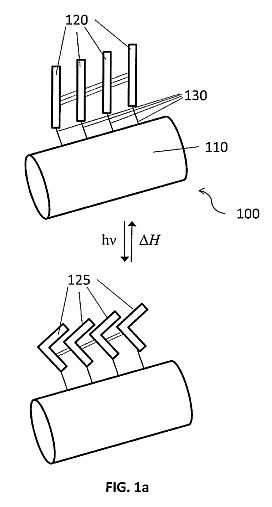
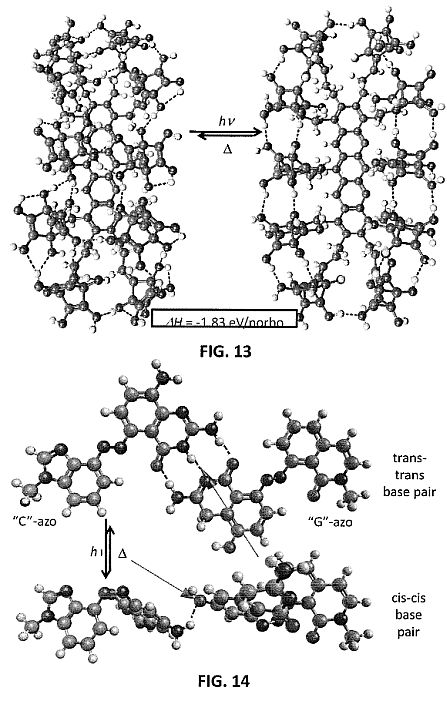
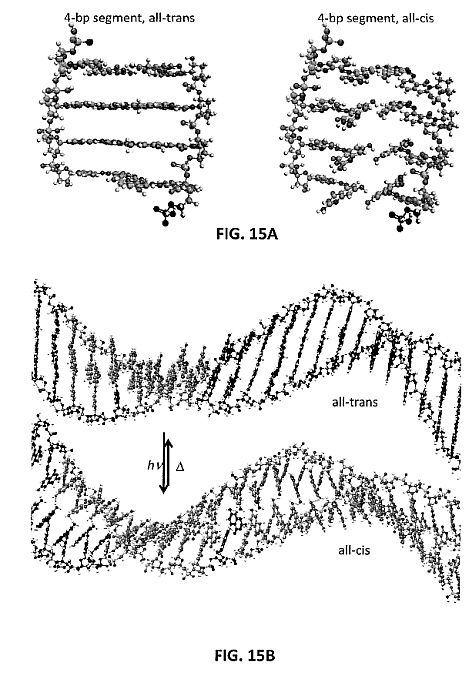
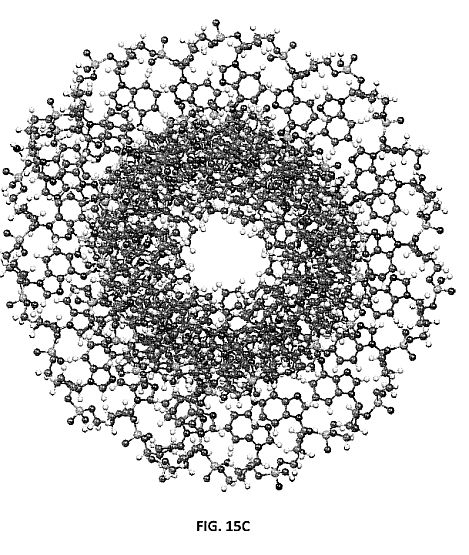
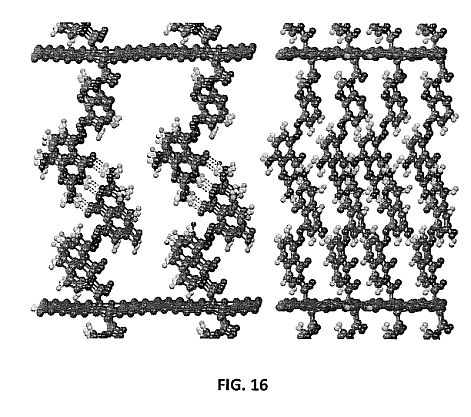
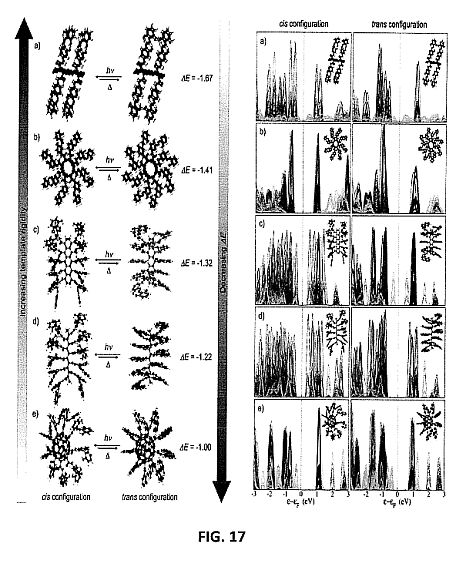
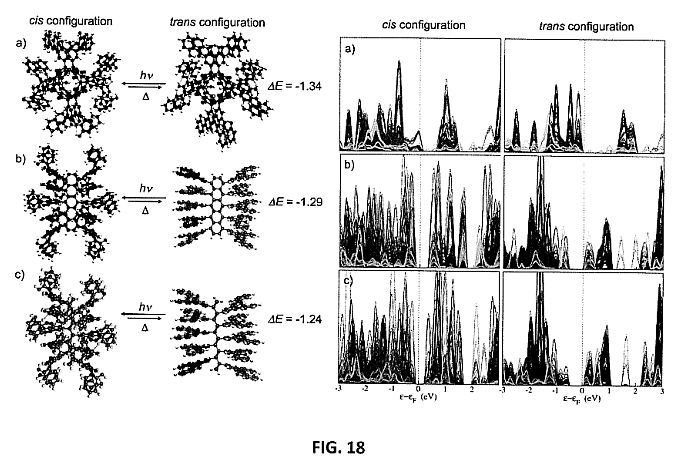
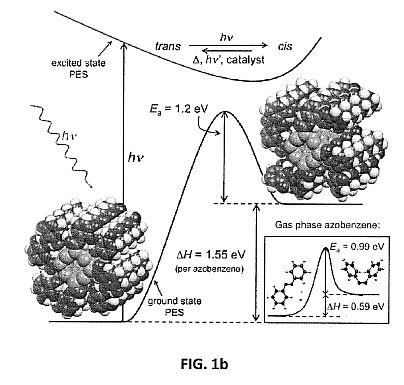
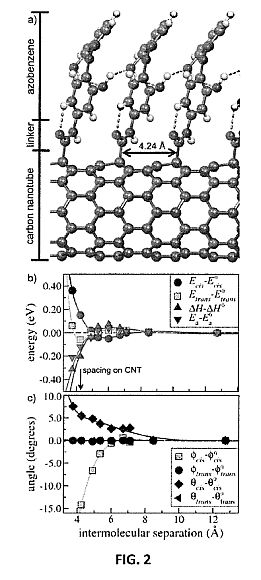
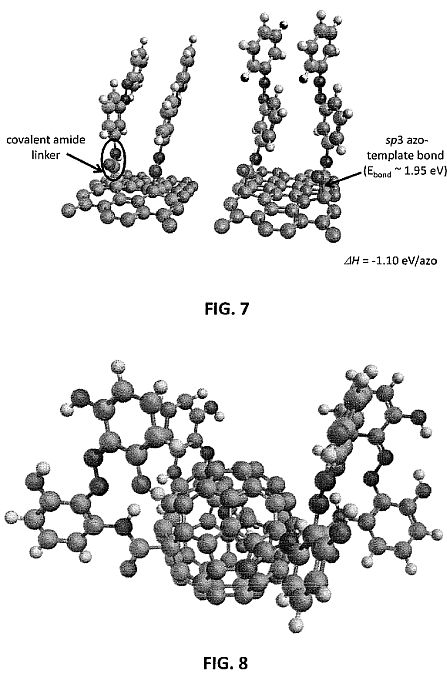
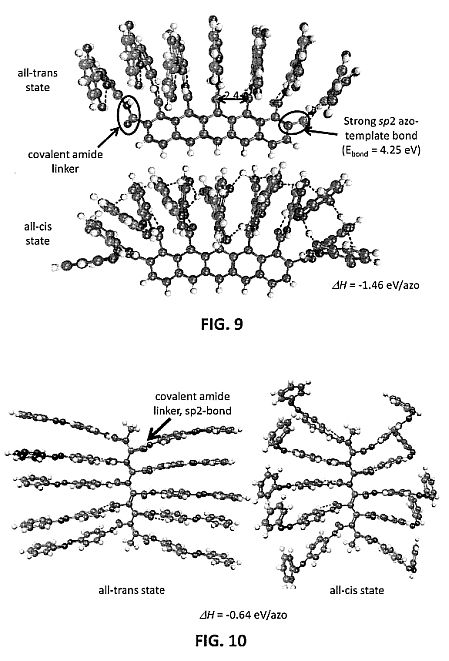
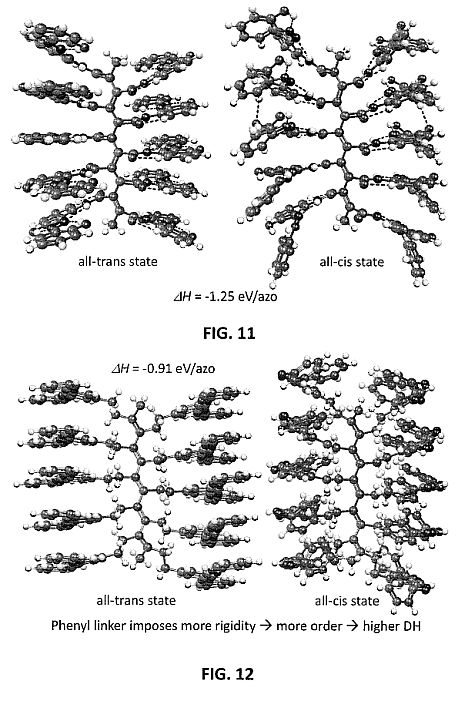
Molecules of azobenzene are covalently attached to bundles of carbon nanotubes. Light induces a reversible isomerization of the azobenzene, storing energy in a high-energy metastable state. The nanotube bundles act as a nano-template that forces dense packing and steric strain, dramatically increasing the stored energy per molecule. The charged material can be flowed through a transparent conduit to absorb sunlight, stored in tanks, and later triggered (by light, heat, or electricity) to release the stored heat.
Principles
- Molecular photoswitching (azobenzene isomerization)
- Nano-templated steric strain
- Photonic energy capture
- Thermal release on trigger
Scientific Domains
Materials
- Azobenzene
- Carbon nanotubes (single-walled)
- Covalent linkers (various R-groups)
Mechanisms of Action
- Photon absorption -> azobenzene trans-cis isomerization
- Metastable high-energy state stores solar energy
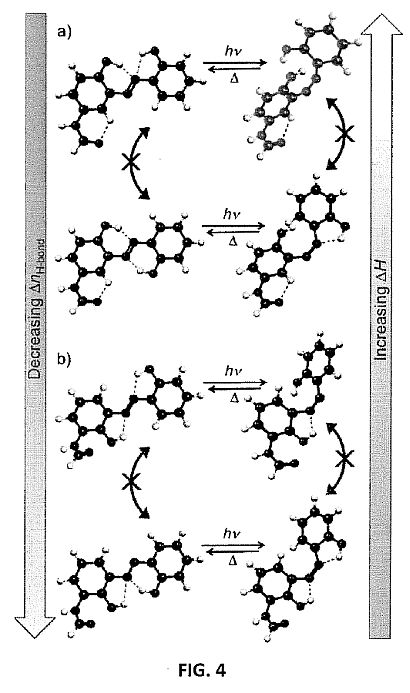
- Trigger (light, heat, voltage) induces reverse isomerization, releasing heat
Energy Sources
Applications
- Solar cooking
- Building heating
- Portable heat source for off-grid locations
Claimed Performance
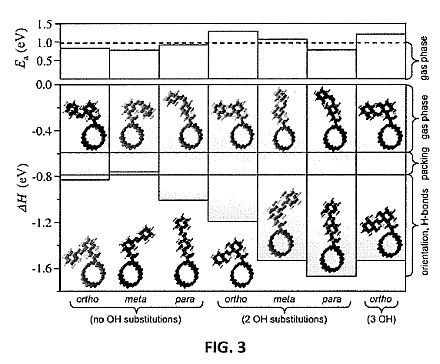
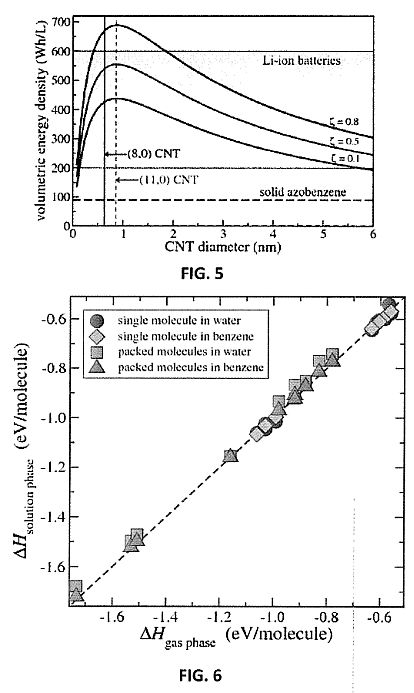
Energy density per azobenzene molecule increased from 58 kJ mol^-^1 to 120 kJ mol^-^1 (~=200 % increase); volumetric energy density comparable to or greater than Li-ion batteries.
Experimental Evidence
Laboratory demonstration of a 200 % increase in stored energy on carbon-nanotube bundles, with robust cyclability and stability reported in Nature Chemistry (2014).
Replication Status
Only reported in the original MIT/Harvard study; no independent replication documented.
Limitations
- Current energy density still lower than conventional fossil fuels
- Scaling up nano-templated assembly may be costly
- Long-term material stability under repeated cycles not fully proven