Goal
Increase the power output of existing hydroelectric installations by extracting rotational kinetic energy from water flow using the Coriolis-induced vortex effect.
Problem
Conventional hydroelectric turbines rely solely on the gravitational head of falling water and waste the kinetic energy associated with water rotation and vortex formation, especially at low-head sites.
Concept Summary
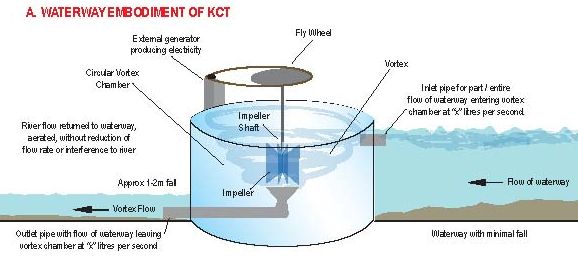
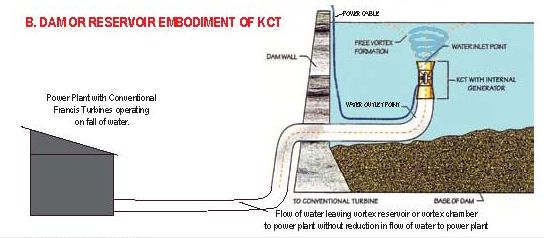
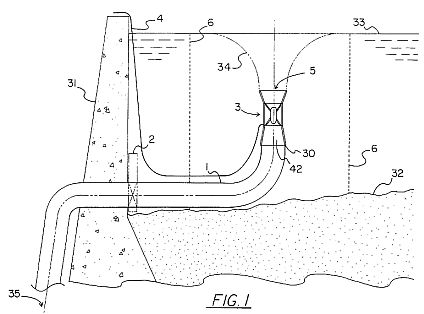
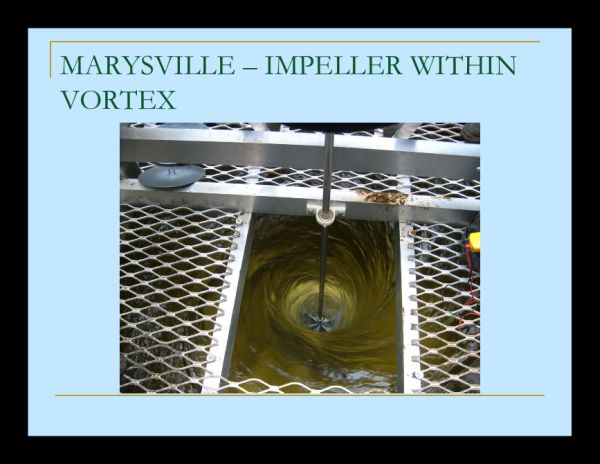
The invention adds a secondary turbine at the reservoir inlet that creates a free-vortex in the water column. The vortex, driven in part by the Earth's Coriolis force, spins a rotor inside an outer housing tube. The rotor is coupled to a generator, producing additional electrical power without reducing the flow to the primary turbine. The system can operate with very low heads (well under 3 m) and can be retro-fitted to existing dams or river installations.
Detailed Description
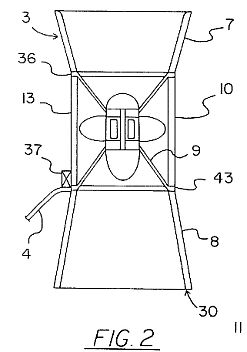
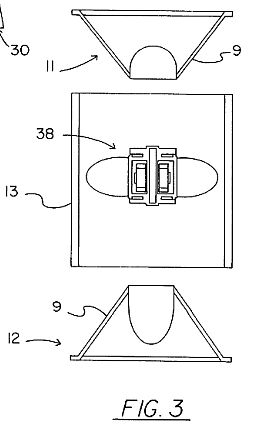
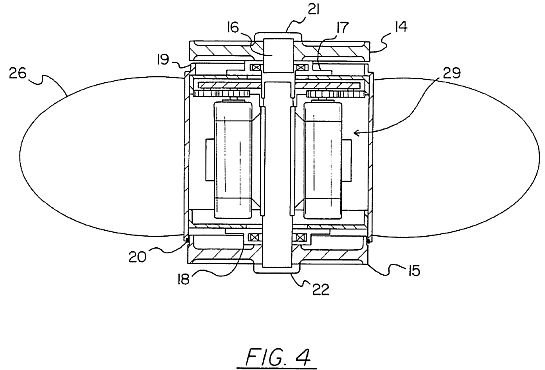
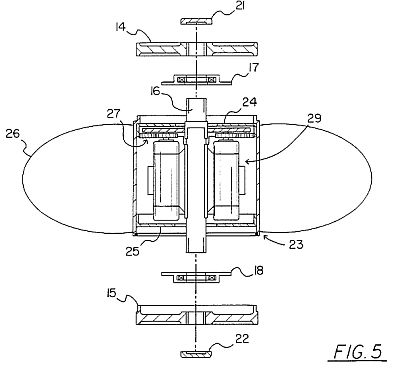
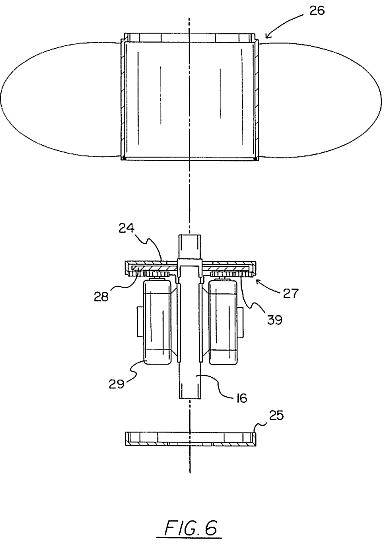
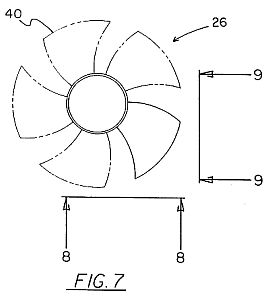
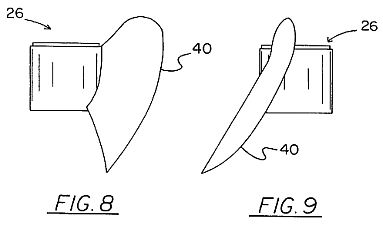
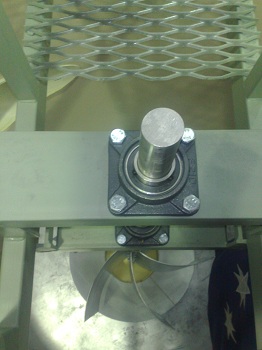
A vertical water inlet pipe extends into the reservoir and is positioned to generate a free vortex as water enters. An outer housing tube with an inlet cone collects the vortex flow and channels it past a rotor-turbine assembly. The rotor drives one or more generator units that convert the rotational kinetic energy into electricity. The design permits water to continue downstream to the conventional turbine, allowing simultaneous operation. Prototype tests (2004 small-scale tank, 2010 Marysville field trial) reported a 27 % increase in energy output compared with a standard turbine under identical flow conditions. The turbine is patented (USP 6114773) and has been reviewed by renewable-energy experts.
Principles
- Coriolis force
- Vortex dynamics
- Rotational kinetic energy extraction
- Fluid dynamics
- Hydraulic turbine operation
Scientific Domains
Materials
- steel
- concrete
- copper
Mechanisms of Action
- Inlet free-vortex formation
- Rotor driven by vortex flow
- Electrical generation via coupled generator units
Energy Sources
Applications
- Retrofit existing hydroelectric dams
- Low-head river power generation
- Increasing overall plant output without additional damming
Claimed Performance
Additional 27 % energy over traditional turbines; field test reported >9.5 kWh per day from 110 L/s flow with a 60 cm vortex depth.
Experimental Evidence
University of Ballarat tests showed vortex effect produced extra power beyond gravity-fall alone. 2004 small-scale tank test claimed 27 % extra energy. Marysville KCT outlet (13 Jul 2010) demonstrated >9.5 kWh/day from 110 L/s flow.
Replication Status
Pilot installation completed at Marysville, Victoria; university tests performed; no independent third-party replication reported.
Limitations
- Requires suitable reservoir geometry to form a stable vortex
- Performance data limited to prototype and pilot scale
- Potential site-specific constraints on flow rate and head
Red Flags
- Performance claims (27 % increase) lack peer-reviewed verification
- Limited independent replication
- Potential over-estimation of Coriolis contribution