Goal
Promote new bone formation in skeletal defects and support bone regeneration.
Problem
Insufficient bone healing in defects, osteoporosis, and post-surgical bone loss.
Concept Summary
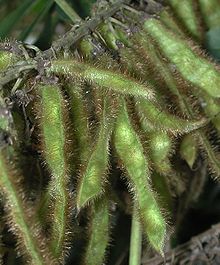
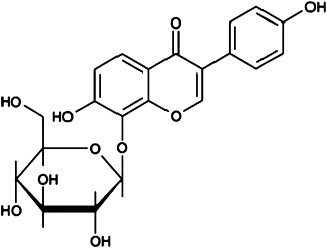
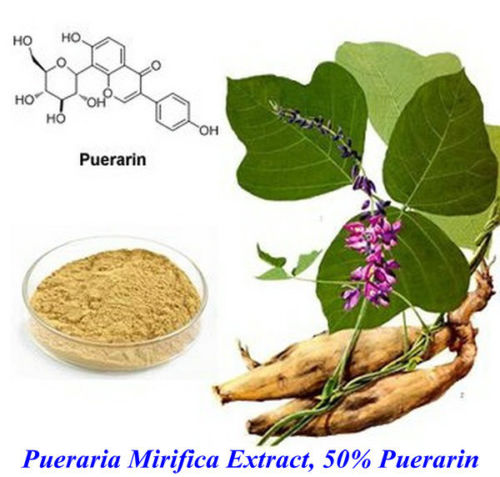
Puerarin, a phytoestrogen isolated from Kudzu (Pueraria lobata), when mixed with a collagen matrix, markedly increases new bone formation in rabbit cranial defects. The compound also exhibits estrogen-receptor modulation and is investigated for various cardiovascular, metabolic and oncological indications.
Detailed Description
In a controlled animal study, 18 parietal bone defects (5 mm x 10 mm) were created in nine New Zealand White rabbits. Six defects received a graft of puerarin solution mixed with a collagen matrix, six received collagen matrix alone, and six were left empty. After 14 days, histological analysis showed a 554 % increase in new bone volume in the puerarin-collagen group compared with the collagen-only control. The authors conclude that puerarin in a collagen scaffold can serve as an effective bone-inducing graft. Additional sections of the article discuss broader medical uses of Kudzu extracts, including estrogen-blocking activity, cardiovascular protection, alcoholism treatment, and intravenous puerarin for ischemic stroke, but these claims are largely based on preliminary or anecdotal evidence.
Principles
- Phytoestrogen activity
- Estrogen receptor antagonism
- Scaffold-mediated osteogenesis
- Collagen matrix as carrier
Scientific Domains
Materials
- Puerarin (C12H20C9, phytoestrogen)
- Collagen matrix (biopolymer scaffold)
Mechanisms of Action
- Binding to estrogen receptors, modulating hormonal pathways
- Stimulation of osteoblast proliferation via phytoestrogen signaling
- Provision of a collagen scaffold for cell attachment and matrix deposition
Applications
- Bone grafting in orthopedic surgery
- Treatment of osteoporosis or bone-loss conditions
- Adjunct therapy for cardiovascular and metabolic disorders (investigational)
Claimed Performance
554 % more new bone formation in defects grafted with puerarin-collagen compared with collagen alone.
Experimental Evidence
In a rabbit model (n=9), 18 cranial defects were treated; quantitative histological analysis after 14 days showed a 554 % increase in new bone volume for the puerarin-collagen group versus the collagen-only control.
Limitations
- Evidence limited to a single animal study
- No large-scale human clinical trials reported
- Potential side effects such as intravascular hemolysis with intravenous use