Goal
Increase injection pressure, reduce fuel consumption, and lower emissions in diesel engines.
Problem
Conventional diesel injectors rely on external high-pressure pumps, leading to lower efficiency, higher fuel use, and greater pollutant emissions.
Concept Summary
A hydraulically operated, super-high-pressure diesel injector that uses engine cylinder compression to drive a piston, creating a high-pressure fuel chamber. Fuel pressure in a low-pressure chamber is regulated to control the piston and injection valve, allowing pressures up to 160,000 psi and improving combustion efficiency.
Detailed Description
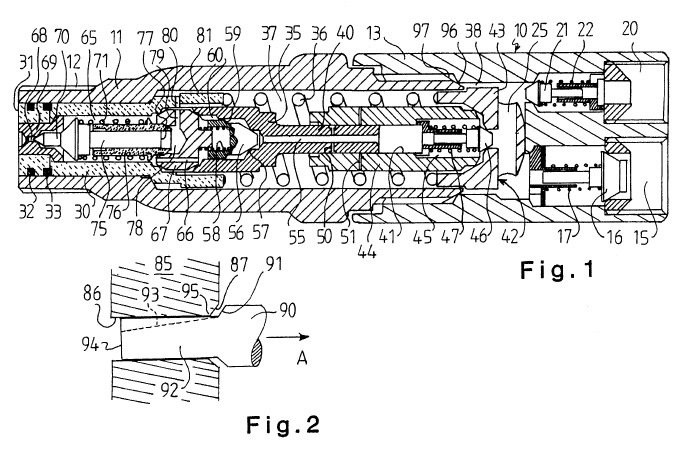
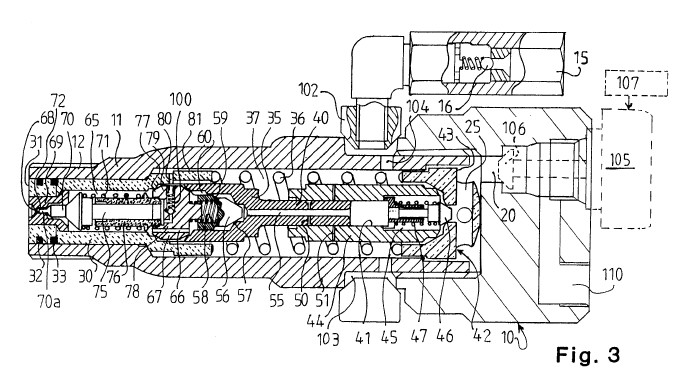
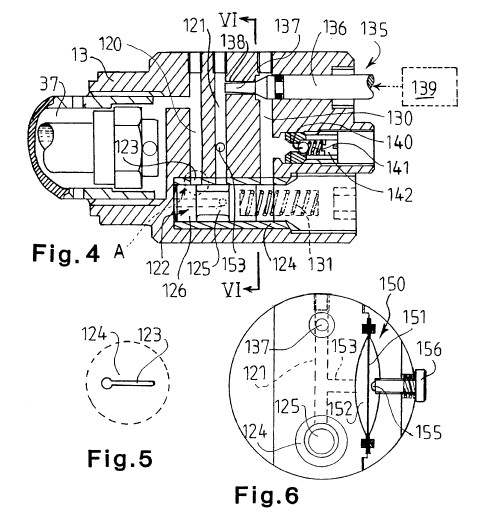
The injector replaces the standard unit and consists of a body with a piston movable by cylinder compression pressure against a spring. The piston compresses fuel in a high-pressure chamber (~=160,000 psi) which feeds an injection orifice via a delivery chamber and a non-return valve. Fuel pressure in a low-pressure chamber is controllable, allowing precise timing and volume control through a valve and a governor system that may include solenoids, flow restrictors, and pressure-compensating mechanisms. The design eliminates the need for a separate high-pressure pump, reducing cost, weight, size, noise, and vibration.
Principles
- Hydraulic actuation by cylinder compression
- Spring-loaded pistons
- Pressure differentials for valve control
- Electronic regulation of low-pressure chamber
- Non-return valve operation
Scientific Domains
Materials
- Steel
- Aluminum
- Rubber (seals)
- Spring steel
Mechanisms of Action
- Cylinder compression pressure pushes piston
- Piston compresses fuel in high-pressure chamber
- Low-pressure chamber pressure regulates piston movement
- High-pressure fuel released through injection valve
- Electronic/solenoid control of valve timing
Energy Sources
Applications
- Automotive diesel engines
- Heavy-duty diesel machinery
- Marine diesel propulsion
Claimed Performance
30% higher injection pressure, 30% less fuel consumption, dramatic increase in horsepower and torque, reduction in all pollutants, and lower cost, noise, vibration, weight and size.
Experimental Evidence
Durability tested for over 10,000 hours by Prof. Eric Milkins (Dept. Mechanical Engineering, Melbourne University). Testing results reported dramatic increases in horsepower, torque, bandwidth, durability, and reductions in specific fuel consumption and pollutants.
Replication Status
Durability test performed (>10,000 h) but no independent replication or commercial scaling reported.
Limitations
- Requires integration with existing engine cylinder pressure dynamics
- Potential redesign of engine control systems
- Cost of retrofit not fully quantified
Red Flags
- Claims primarily from inventor and affiliated company
- Limited independent verification
- Potential bias in performance reporting