Goal
Create a propulsion system that reduces apparent weight or provides thrust without conventional fuel, enabling spacecraft and vehicle lift-off.
Problem
Dependence on large fuel masses for propulsion, limited range and maneuverability, noise from conventional propellers, and the need for quieter marine propulsion.
Concept Summary
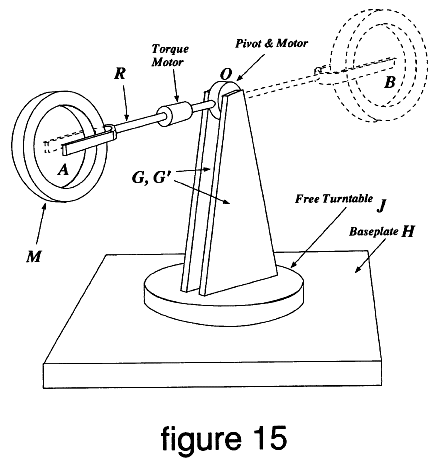
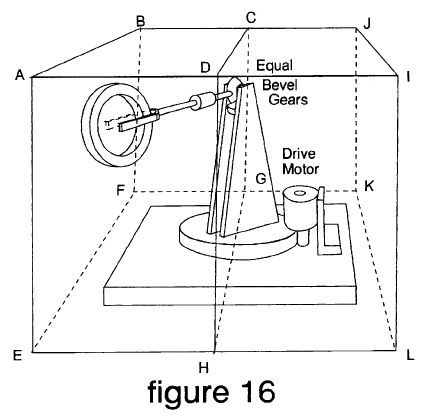
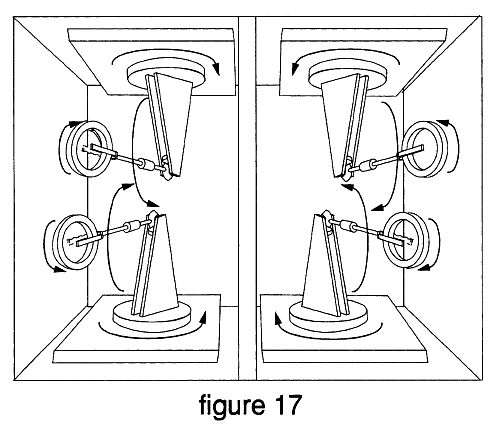
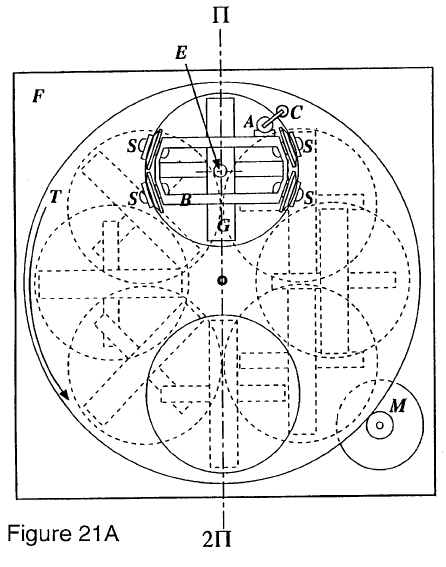
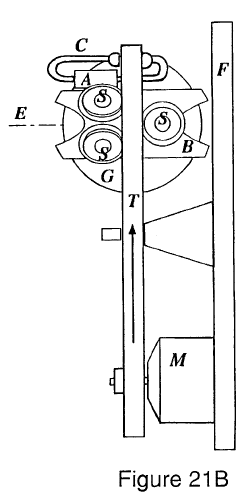
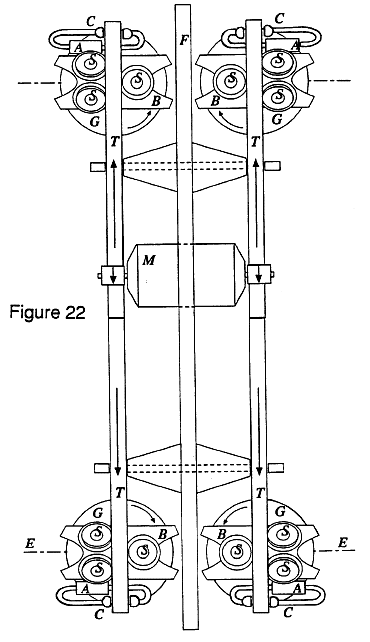
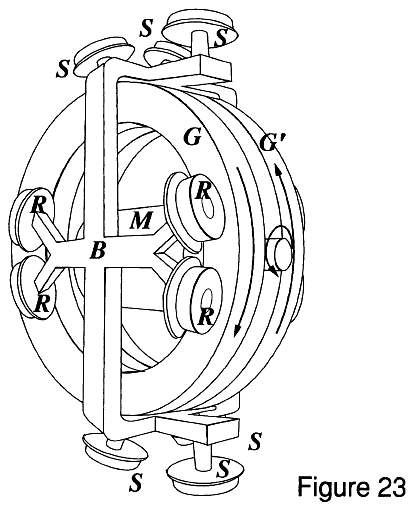
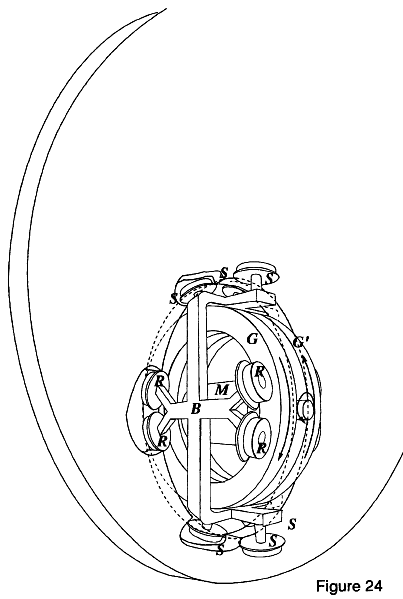
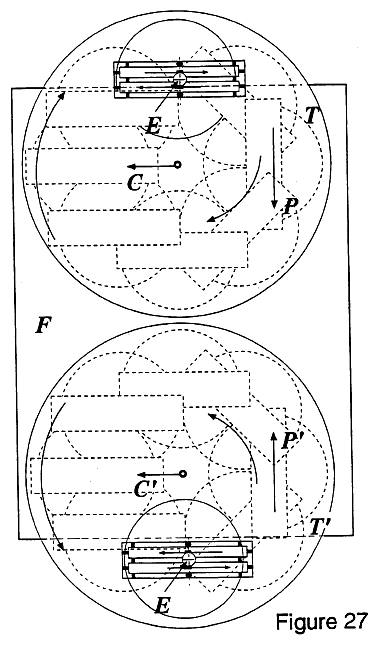
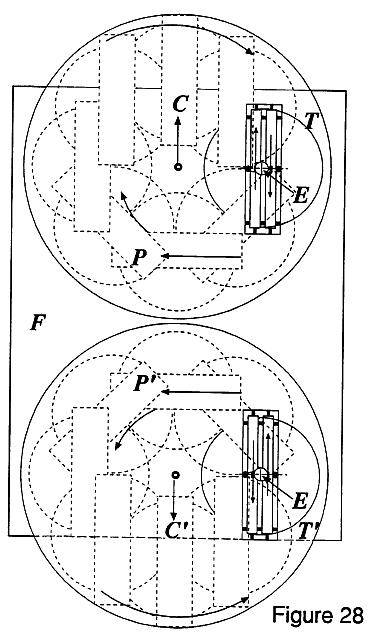
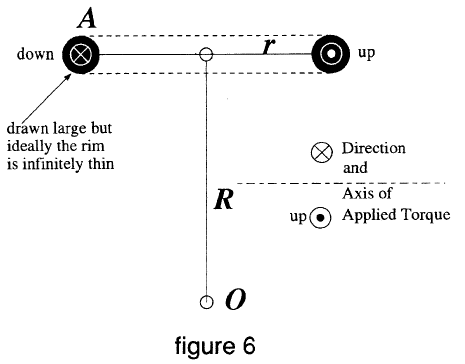
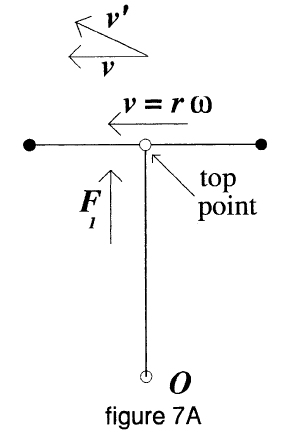
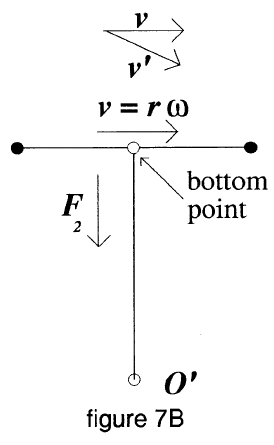
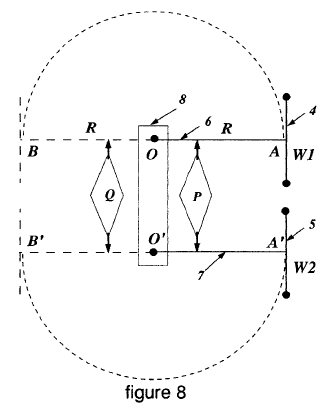
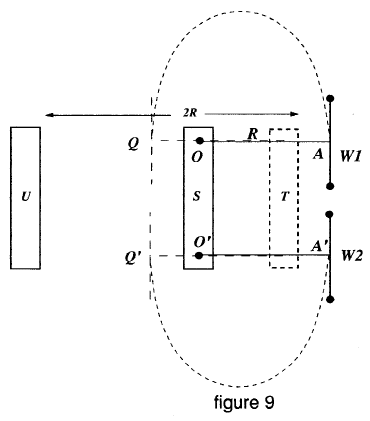
The invention uses electrically driven, rapidly spinning gyroscopes mounted on pivots remote from their centers. By exploiting gyroscopic precession and controlled translation of the gyroscope mass, the system claims to produce a net upward force (apparent weight loss) and, in theory, full weightlessness, which could be used for spacecraft thrust or silent vehicle propulsion.
Detailed Description
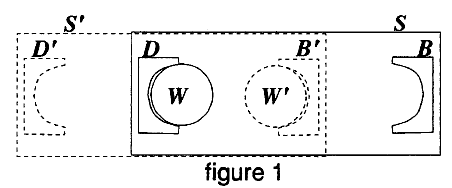
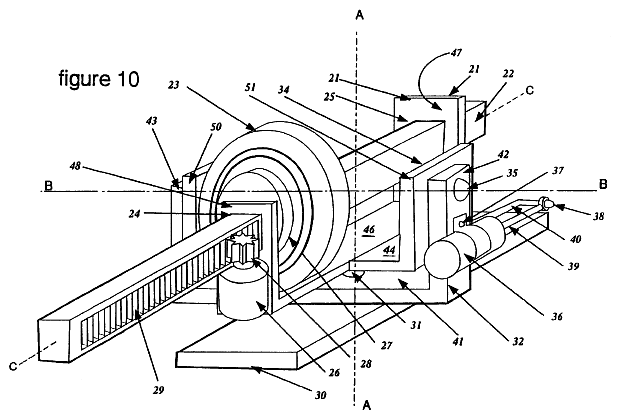
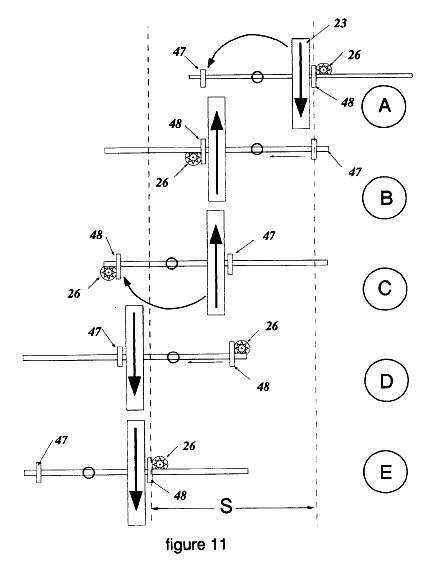
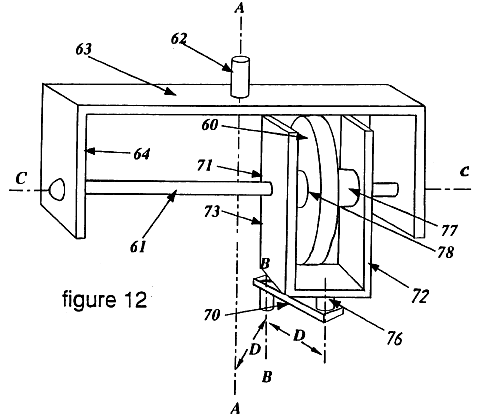
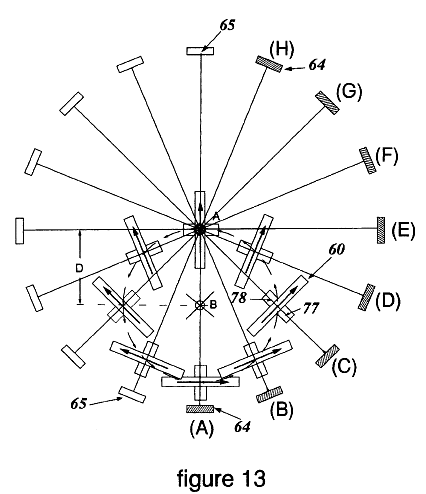
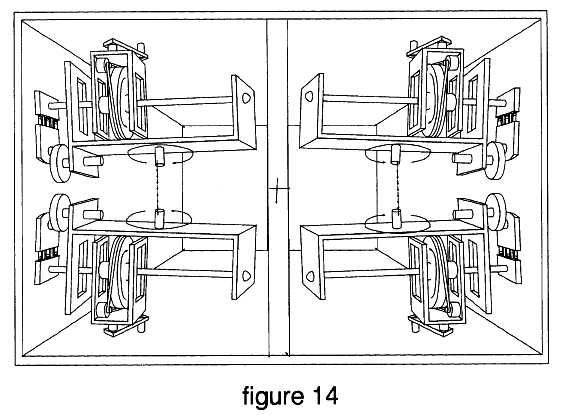
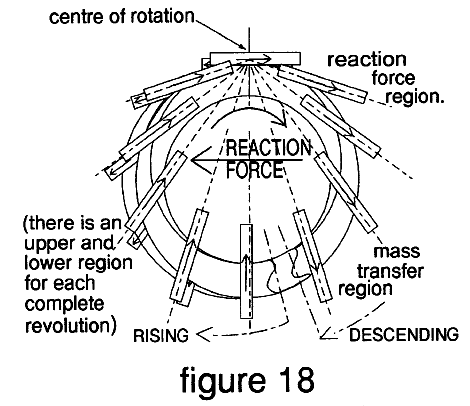
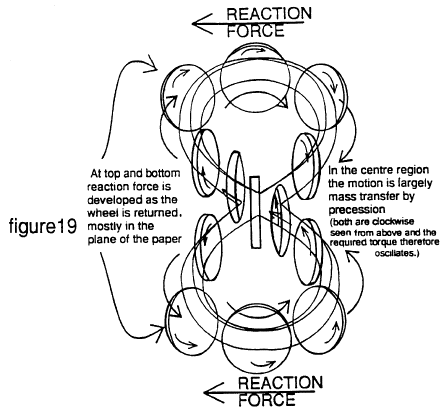
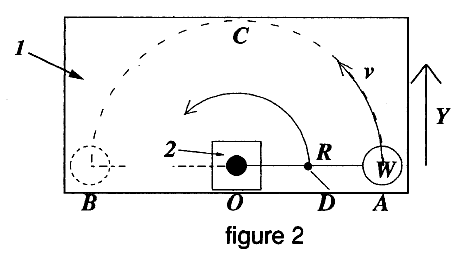
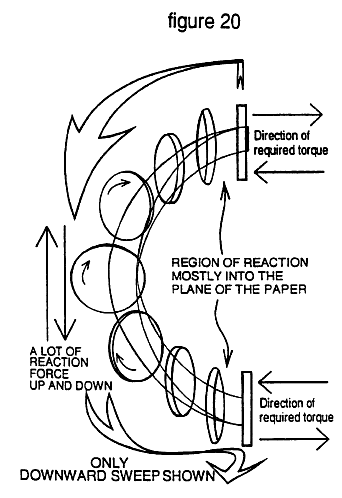
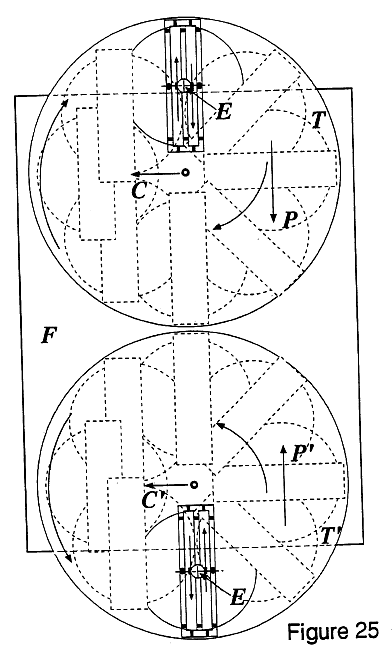
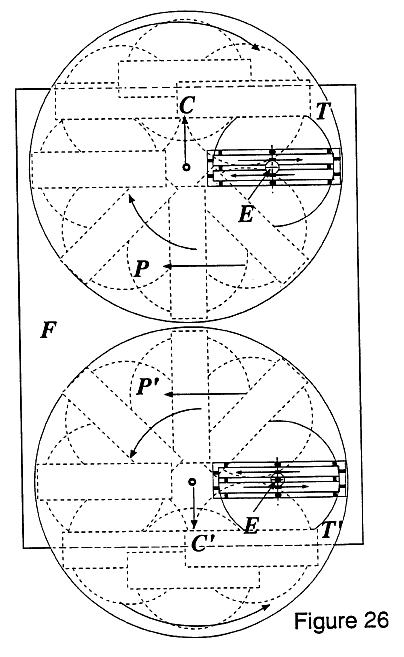
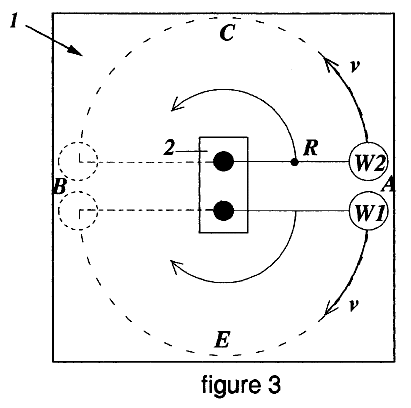
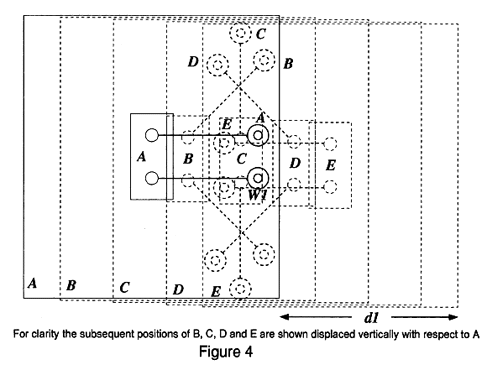
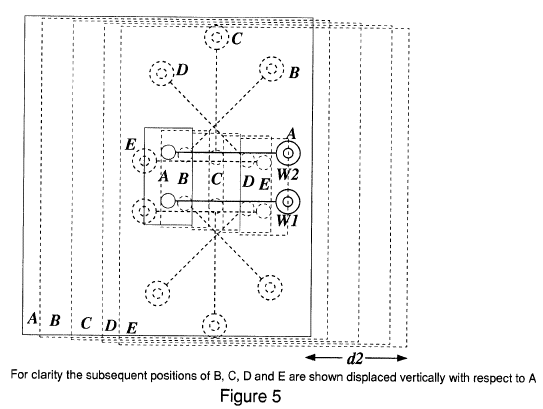
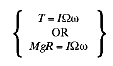
Two gyroscopes are placed on a central pivot inside a box. When spun at high speed they rise along curved rails and then are forced back down, repeating the motion. The box's weight drops from 20 lb (static) to 15 lb (spinning), indicating a 25 % reduction in apparent weight. The patent describes a propulsion system where a gyroscope undergoes a precession-dominated portion of motion followed by a translation-dominated portion; the translation portion moves the vehicle more than the precession portion, resulting in net thrust. The mechanism relies on electromagnetic torque to spin the gyroscopes and on the vector multiplication of angular momentum to generate the thrust.
Principles
- Gyroscopic precession
- Conservation of angular momentum
- Vector multiplication of angular momentum
- Electromagnetic torque
Scientific Domains
Materials
- Metal gyroscope rotor (steel/aluminum)
- Lightweight pivot rod (aluminum or composite)
- Electrical motor windings (copper)
- Support structure (metal frame)
Mechanisms of Action
- Precession-induced reaction forces
- Mass redistribution during gyroscope translation
- Centrifugal force modulation
- Electromagnetic driving of gyroscope spin
Energy Sources
Applications
- Spacecraft launch and maneuvering
- Silent marine propulsion
- Quiet ground vehicle propulsion
Claimed Performance
Demonstrated a 25 % reduction in apparent weight (20 lb -> 15 lb) in a laboratory demo; theoretically capable of producing full weightlessness and continuous thrust for spacecraft.
Experimental Evidence
A live demonstration at the Royal Institution showed two electrically driven gyroscopes rising on curved rails and a measured weight drop of the apparatus from 20 lb to 15 lb while the gyroscopes were spinning.
Replication Status
No independent replication reported; only the original demonstration by Laithwaite is described.
Limitations
- Weight reduction demonstrated only on a small bench-scale device
- Scalability to vehicle-size thrust not proven
- Requires high-speed gyroscopes and precise control
- No peer-reviewed data or independent validation
Red Flags
- Extraordinary claim of antigravity without rigorous scientific evidence
- Lack of quantitative performance data beyond a simple weight measurement
- No independent replication or peer-reviewed studies
- Potential for hype or misinterpretation in media