Goal
Increase aircraft speed, fuel efficiency, climb performance and safety by decoupling aileron and flap sizing and providing mixed-function trailing-edge control.
Problem
Conventional ailerons and flaps compete for limited trailing-edge space, causing adverse yaw, limited roll authority, higher drag and reduced fuel economy.
Concept Summary
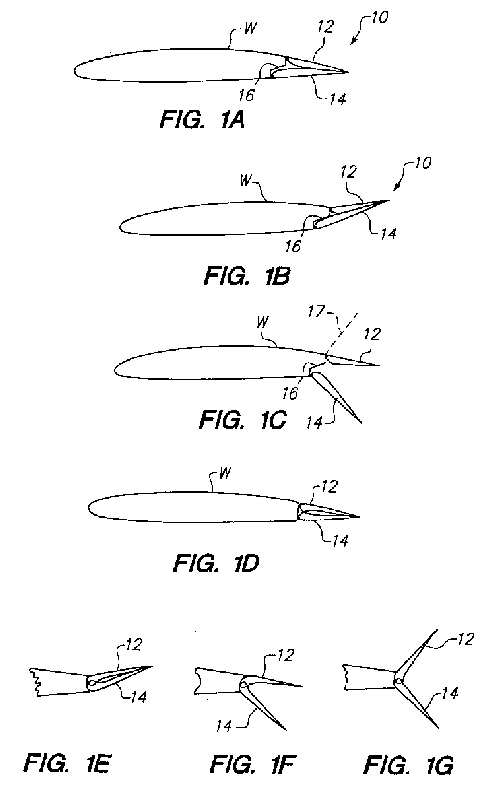
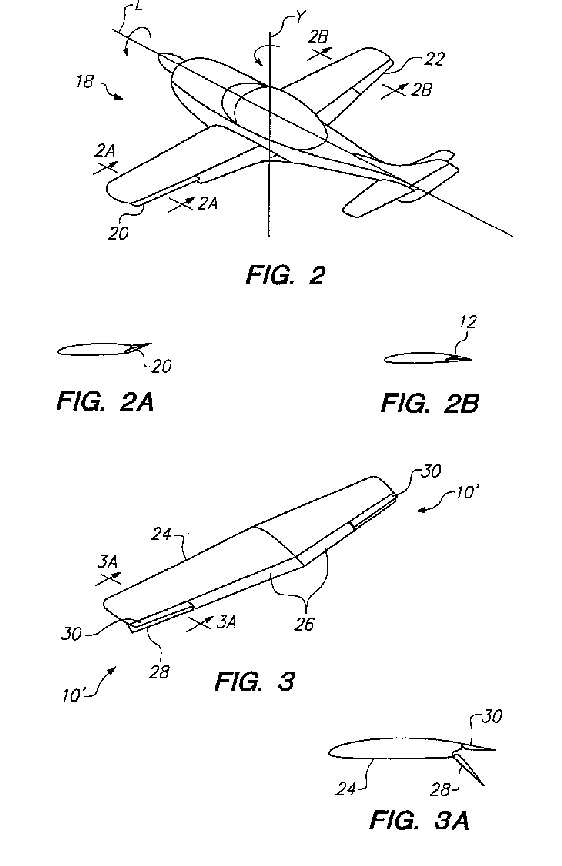
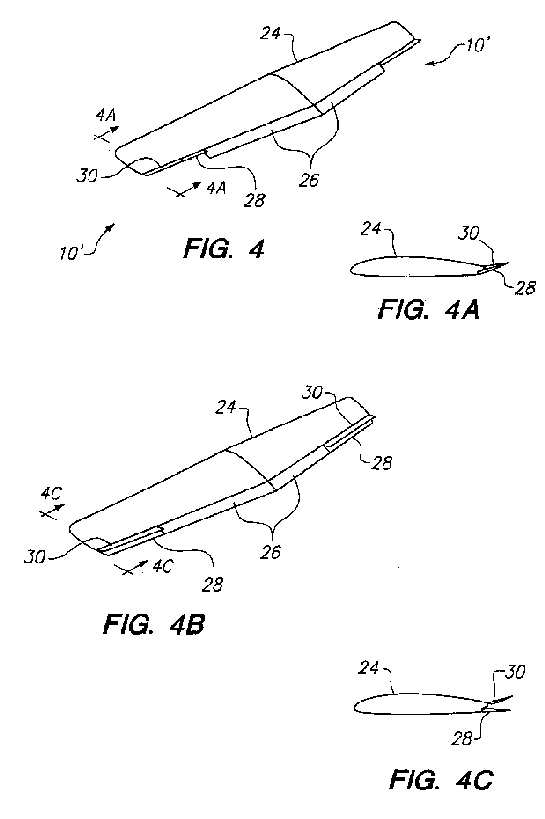
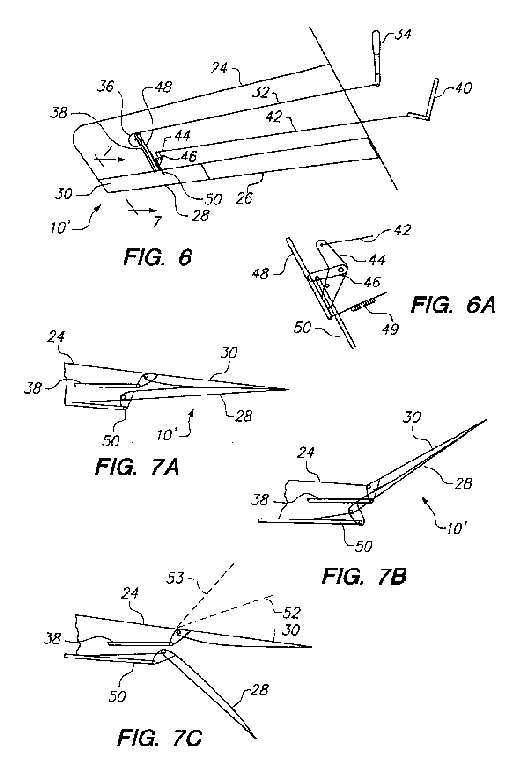
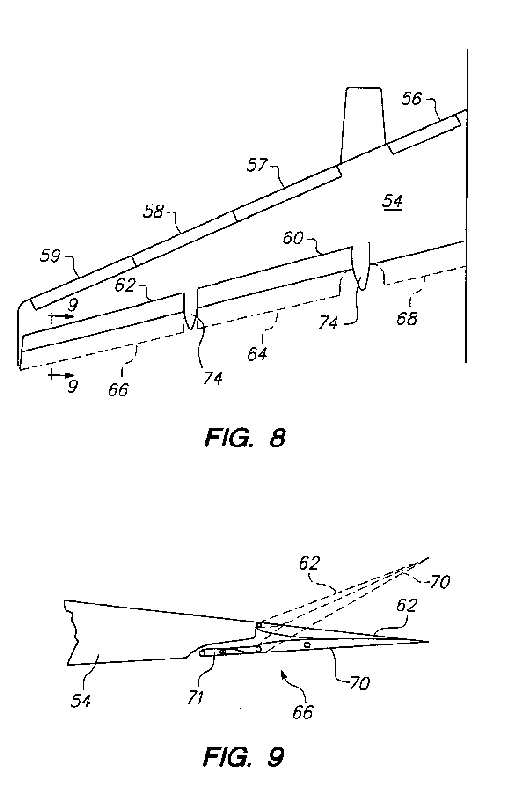
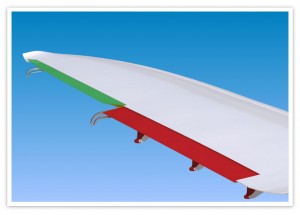
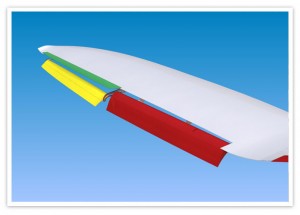
The Lam Aileron replaces a single aileron with two stacked panels on the wing's trailing edge. The upper panel moves only upward for roll control; the lower panel can move up or down to act as an auxiliary flap. By allowing independent or combined deflection, the system lets designers use larger flaps and full-span ailerons without the usual trade-offs, providing additional modes such as speed brakes and drag rudders.
Detailed Description
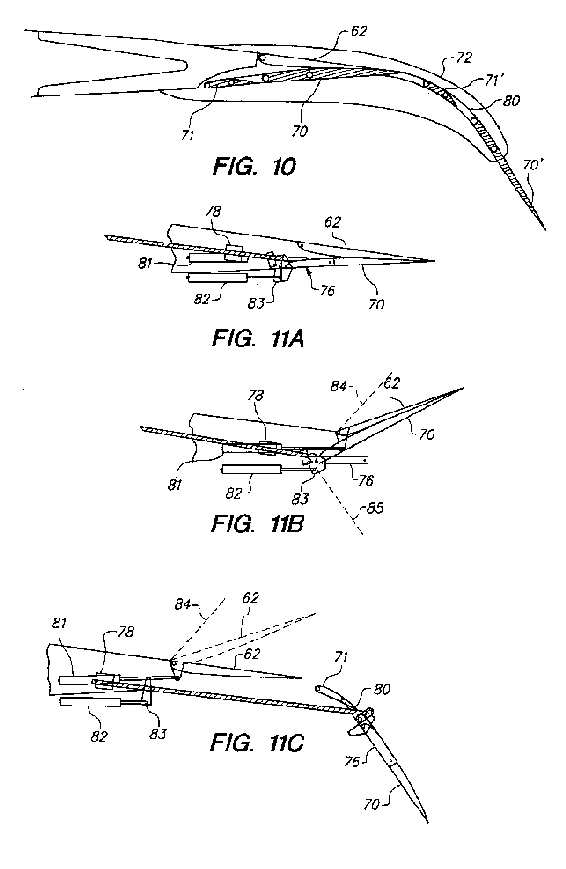
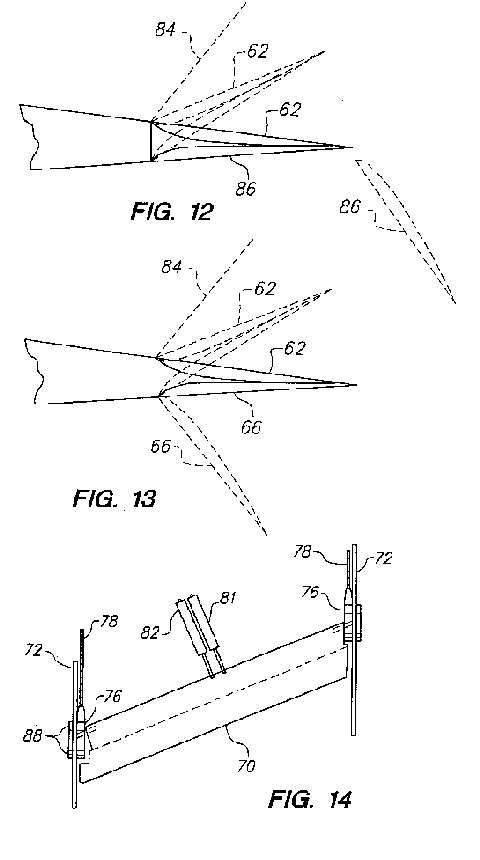
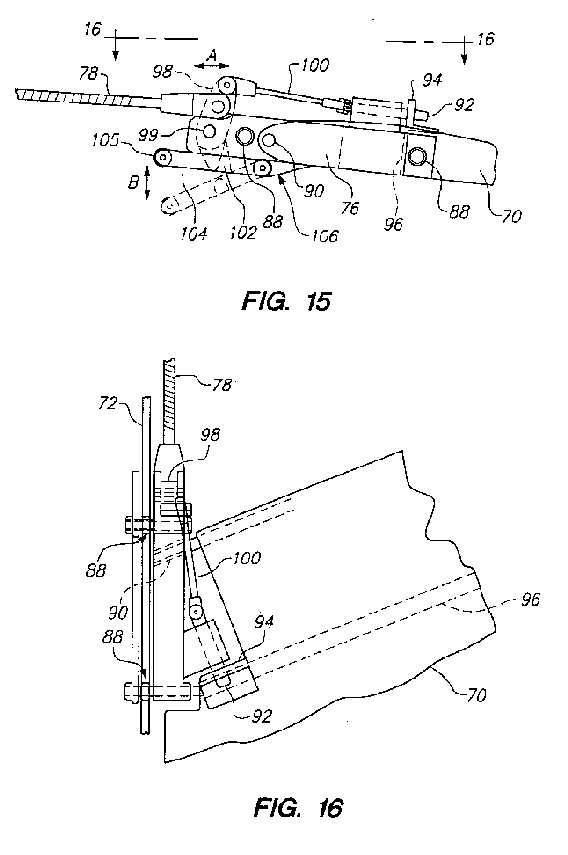
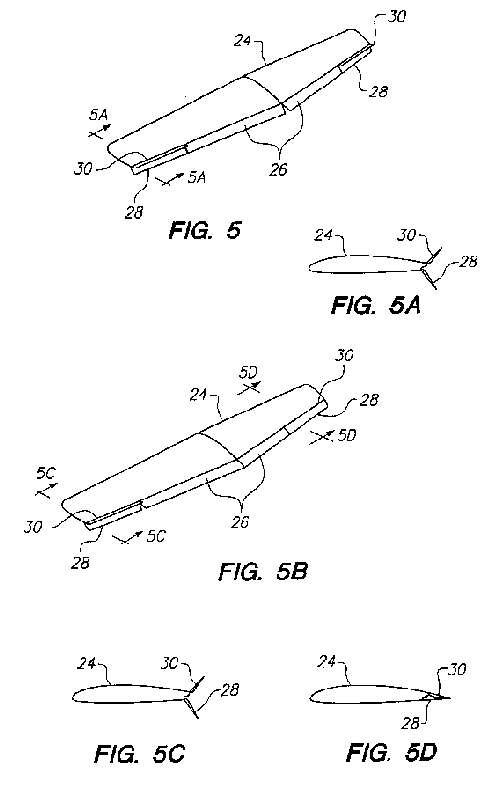
The invention consists of two hinged panels aligned spanwise on the trailing edge. The upper panel is restricted to upward deflection and serves as the primary aileron. The lower panel can deflect upward or downward, acting as an auxiliary flap or part of a full-span flap system. When only the upper panel on one wing is raised, a rolling moment is produced while the rest of the trailing edge remains free for flap deployment. Downward deflection of the lower panel together with upward deflection of the upper panel on the same side creates a drag rudder. Simultaneous opposite-side drag rudder actions provide air braking while still allowing roll control. The system can be installed on any conventional wing-tail aircraft and does not require new materials or manufacturing processes.
Principles
- Trailing-edge control surface
- Variable geometry
- Decoupled aileron/flap sizing
- Mixed-function control (roll, flap, speed brake, drag rudder)
Scientific Domains
Materials
- Aluminum alloy
- Composite material
Mechanisms of Action
- Roll control via upward deflection of the upper panel
- Lift increase via downward deflection of the lower auxiliary flap
- Drag generation for speed brake/drag rudder via opposite deflection of panels
- Full-span flap deployment when lower panels are lowered
Applications
- General-aviation aircraft
- Regional commercial aircraft
- Military fixed-wing aircraft
Claimed Performance
12-16 knots higher cruise speed, 20-30 % lower fuel consumption, 40-50 % greater rate of climb, 200 lb increased useful load, improved roll rate and reduced stall speed.
Experimental Evidence
Flight test on a retrofitted Lancair Columbia (Cessna Corvalis) showed the above performance improvements compared with the stock aircraft.
Replication Status
Only a single prototype has been flight-tested; no independent replication reported.
Limitations
- Increased mechanical complexity with two panels per aileron
- Requires redesign of wing control linkage
- Performance data limited to a single test aircraft
Red Flags
- Performance claims based on a single flight test
- Potential bias as the source is the manufacturer