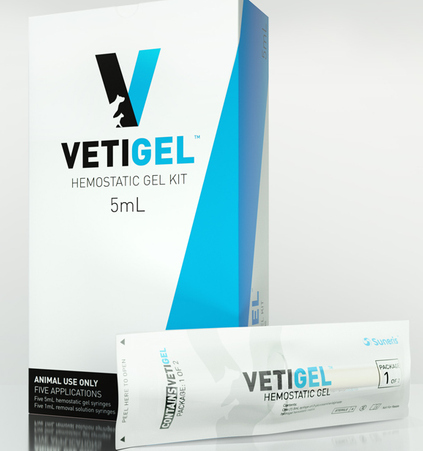
Goal
Rapidly stop traumatic internal and external bleeding (hemostasis) without applying pressure.
Problem
Uncontrolled bleeding in veterinary and (later) human wounds, where current bandages are slow or require pressure.
Concept Summary
A plant-derived gel composed of haemophilic polysaccharide polymers that cross-link in situ to form a mesh that adheres to blood, sealing the wound within seconds.
Detailed Description
The gel contains a mixture of polyanionic polymers (e.g., alginates, hyaluronates) and polycationic polymers (e.g., chitosan, DEAE-Dextran) that, when combined with a cross-linking agent such as calcium chloride, solidify on contact with a wound. The resulting hydrogel matrix captures blood cells, accelerates clot formation, and creates a biocompatible barrier. The product is supplied in a syringe-type applicator for direct topical use. A version is being developed that can be left in the body and gradually absorbed.
Principles
- Hemostatic polymer mesh formation
- In-situ cross-linking of biopolymers
- Bio-adhesion to blood components
Scientific Domains
Materials
- Alginate
- Hyaluronate
- Chitosan
- DEAE-Dextran
- Calcium chloride (cross-linker)
- Other plant-derived polysaccharides
Mechanisms of Action
- Polysaccharide polymers bind blood proteins
- Cross-linking creates a solid gel that seals the wound
- Rapid clot formation without external pressure
Applications
- Veterinary emergency care
- Human trauma and emergency medicine
- Military field wound care
Claimed Performance
Stops traumatic bleeding in <=15 seconds (some reports claim under 10 seconds).
Experimental Evidence
Press releases and media articles report successful animal and ex-vivo demonstrations of bleeding cessation within seconds; no peer-reviewed quantitative data provided.
Limitations
- Requires FDA approval for human use
- Current version must be removed surgically after hemostasis
- Potential need for stitching after gel application
- Scalability and cost ($30 per application) not fully demonstrated