Goal
Provide safe, low-speed, short-take-off and landing (STOL) flight with inherent stall- and spin-resistance.
Problem
Conventional aircraft require higher take-off speeds and are prone to stalls and spins at low speeds, limiting operation in confined or obstacle-rich environments.
Concept Summary
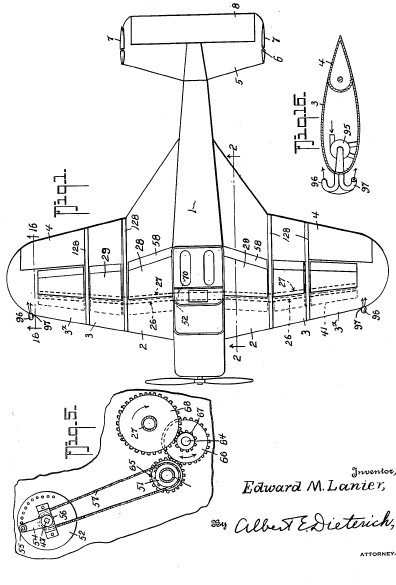
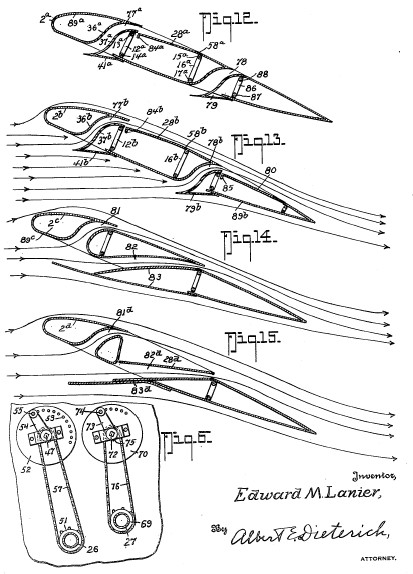
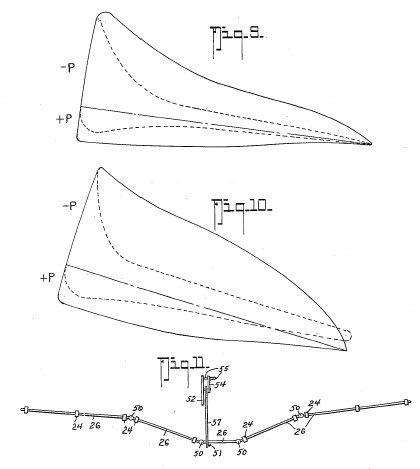
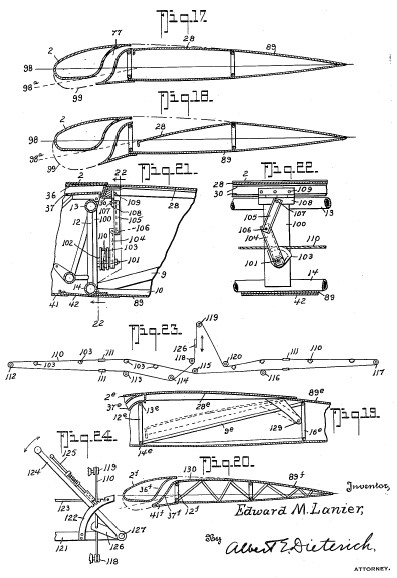
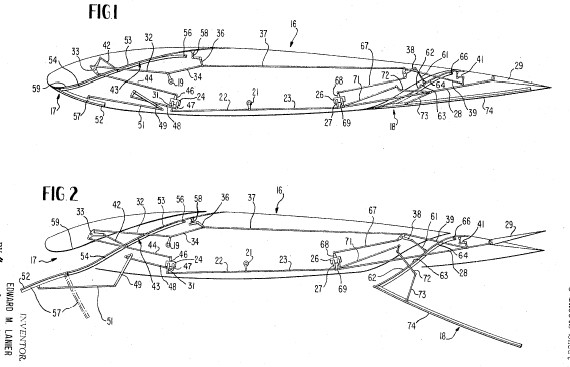
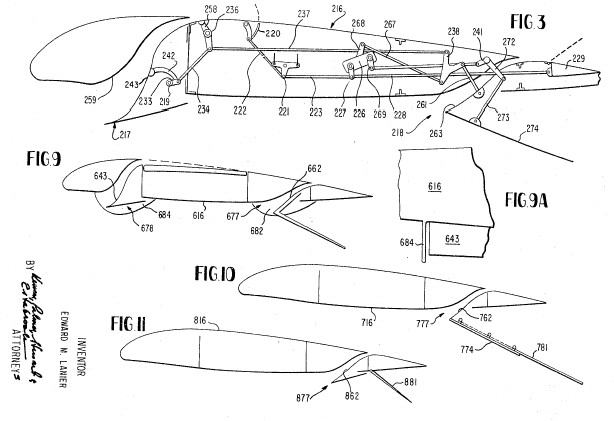
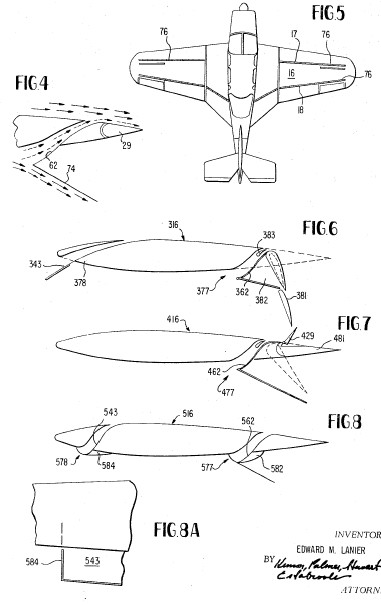
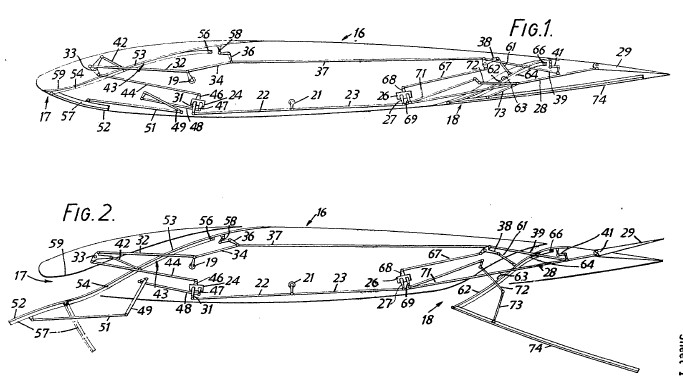
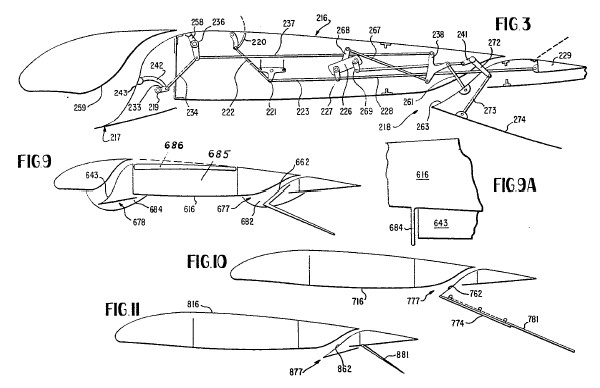
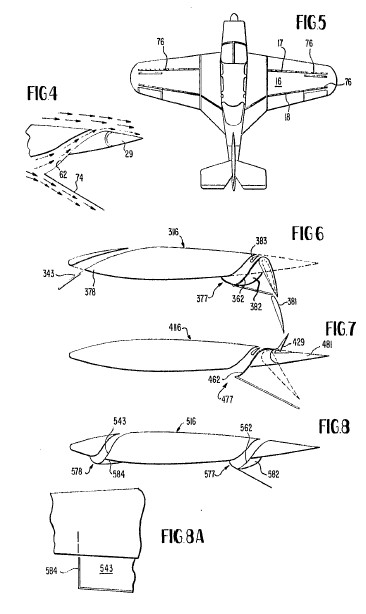
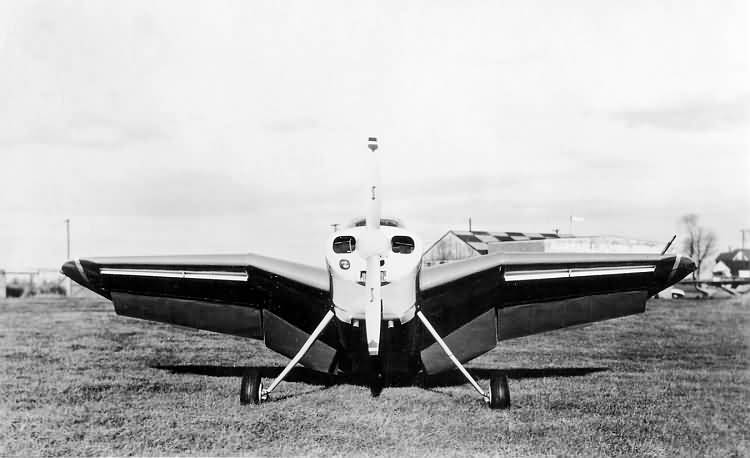
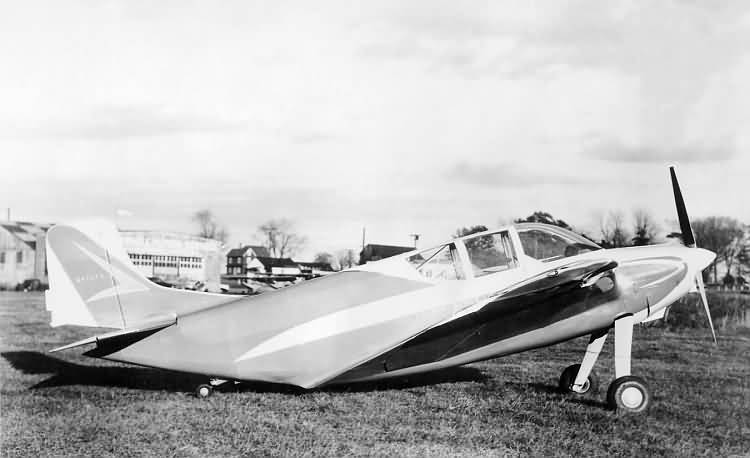
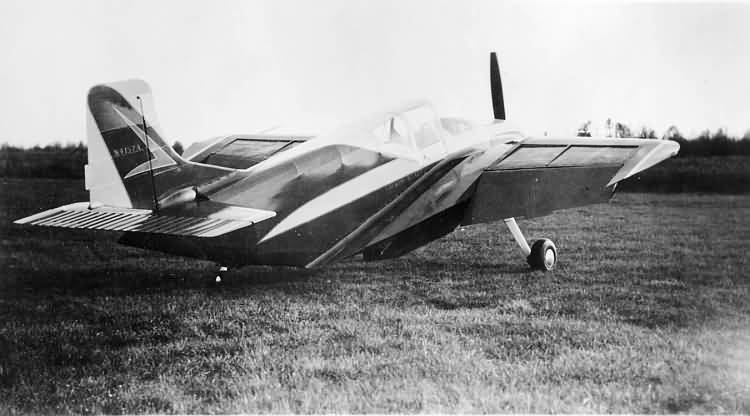
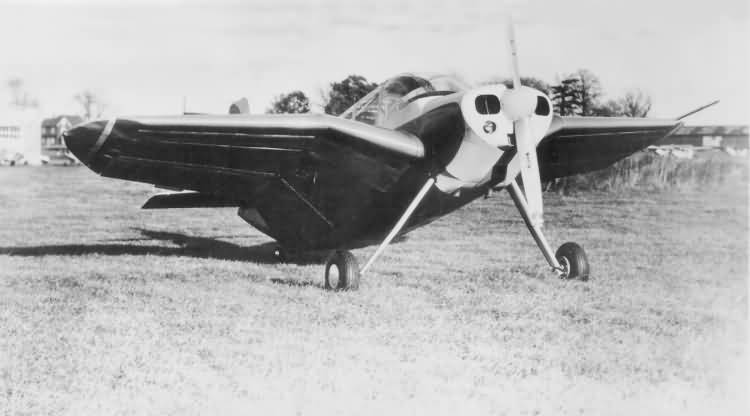
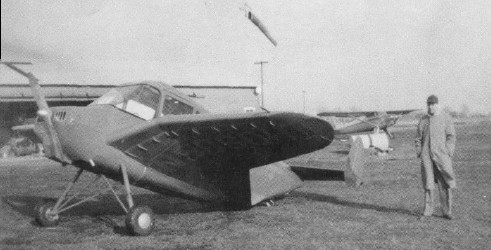
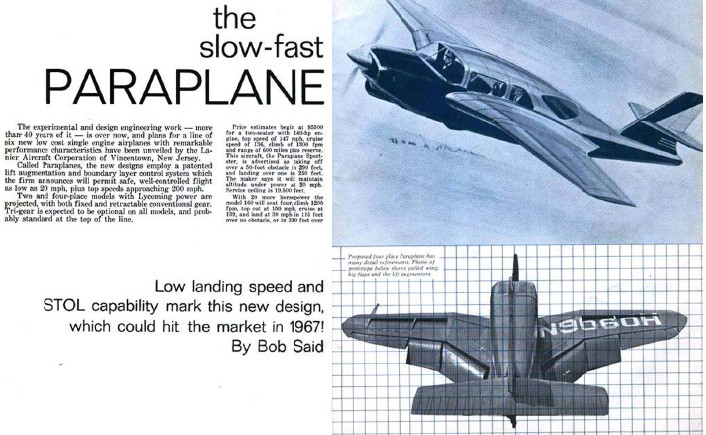
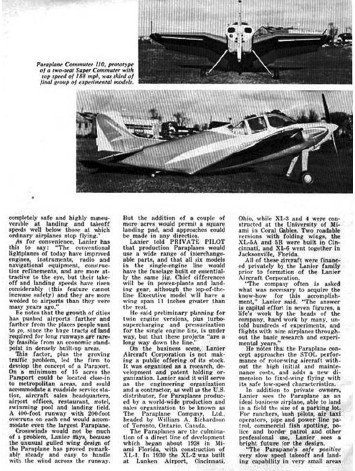
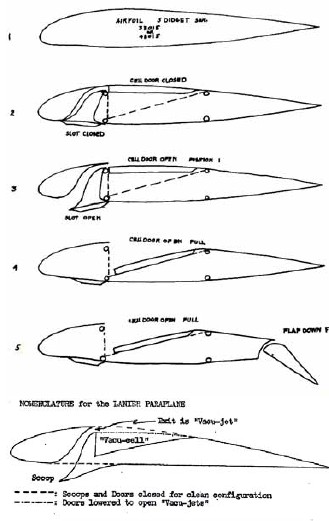
The Paraplane concept uses a centrally-located upwardly-open concave "vacuum cell" that creates reduced pressure over the wing section, increasing lift and providing inherent stability at low speeds. Combined with flaps, flaperons and a low-drag airframe, the aircraft achieves STOL performance, anti-stall characteristics and bird-like maneuverability.
Detailed Description
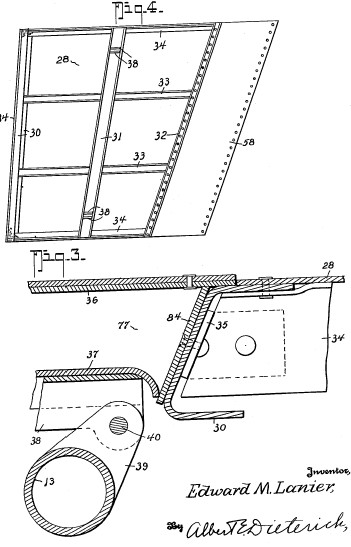
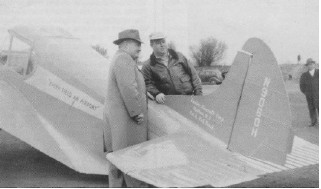
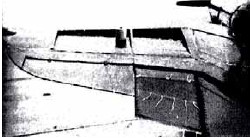
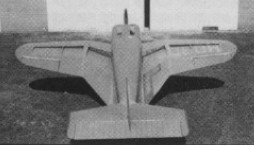
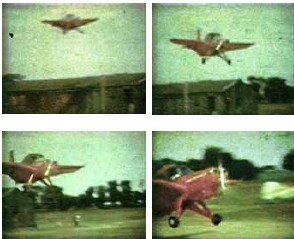
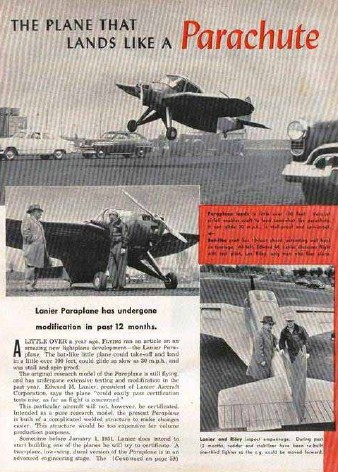
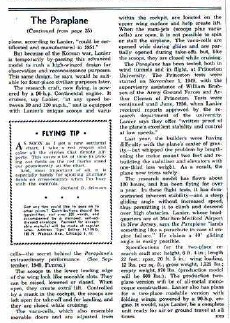
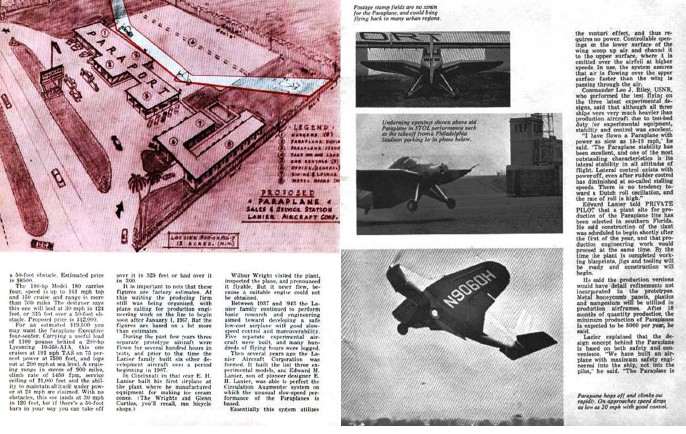
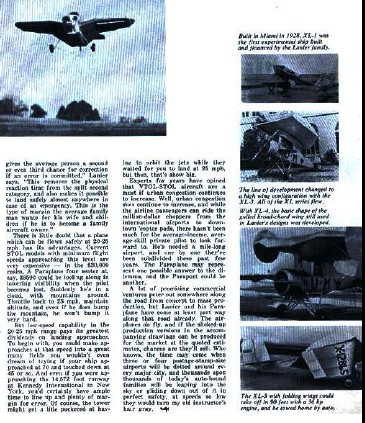
Lanier's series of low-aspect-ratio aircraft (Paraplane and Vacu-plane) incorporated a vacuum-cell cavity in the fuselage or wing center section. Air was drawn through slots into the cavity, lowering pressure and augmenting lift. The design featured a 150 hp Lycoming O-320 engine, metal fixed-pitch propeller, flaps, flaperons and a "Vacu-jet" boundary-layer control system. Performance data for the PL-8 prototype show take-off and landing speeds under 30 mph, take-off distance of ~20 yd, climb rate >1500 ft/min, and controllable slow flight down to 15 mph without loss of altitude. The aircraft was evaluated by the Office of Naval Research and demonstrated stable flight without stall or spin.
Principles
- Aerodynamic lift augmentation via low-pressure vacuum cell
- Boundary-layer control (Vacu-jet)
- STOL wing geometry
- Anti-stall and anti-spin design
Scientific Domains
Materials
- Aluminum alloy
- Steel
- Fabric (covering)
- Rubber (tires)
Mechanisms of Action
- Reduced pressure in vacuum cell increases lift
- Flaps and flaperons modify camber for low-speed control
- Vacu-jet accelerates airflow over wing surface
- Low-drag airframe reduces required thrust
Energy Sources
Applications
- Short-take-off-and-landing transport
- Observation and reconnaissance
- Rescue and utility aircraft in confined areas
Claimed Performance
Take-off speed <30 mph, landing speed <30 mph, take-off distance ~20 yd, rate of climb >1500 ft/min, controllable slow flight down to 15 mph, top speed 165 mph, range 625 nm, ceiling 23 000 ft.
Experimental Evidence
Prototype PL-8 (N4157A) specifications and flight test data are listed; pilots reported stable flight without stall or spin; Office of Naval Research used a test-bed for STOL evaluation.
Replication Status
Prototype built and flight-tested; no evidence of commercial production or independent replication.
Limitations
- Complex vacuum-cell construction
- Limited market adoption historically
- Performance data confined to prototype scale