Goal
Create an alternative to conventional batteries that can power cell phones and other small electronic devices for extended periods.
Problem
Limited energy density and short runtime of existing portable batteries.
Concept Summary
Lattice Energy proposes using low-energy nuclear reactions (LENR) occurring in nanostructured metallic-hydride electrodes. Weak-interaction proton-to-neutron conversion on the electrode surface releases heat and energetic electrons, which can be harvested as electrical power for compact devices.
Principles
- Low-energy nuclear reactions (LENR)
- Weak-interaction proton-electron capture to neutrons
- Surface-plasmons excitation on metallic hydrides
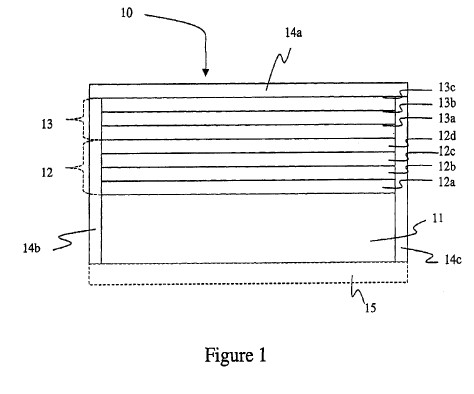
- Nanostructured multilayer thin-film electrodes
Scientific Domains
Materials
- Palladium
- Deuterium (heavy hydrogen)
- Heavy water (D_2O)
- Tin alloy layers
- Metal oxides
- Graphene
- Fullerenes
- Metallic hydride films
Mechanisms of Action
- Proton-electron capture producing neutrons
- Neutron-catalyzed transmutations releasing heat
- Electron emission from energetic neutrons
- Heat-to-electricity conversion in electrochemical cell
Energy Sources
Applications
- Powering cell phones
- Portable electronic gadgets
- Potential low-power remote sensors
Claimed Performance
Cell phones could run up to 500 hours on a LENR-based battery; commercial LENR power sources projected within five years.
Experimental Evidence
Patents describing multilayer thin-film electrodes; theoretical papers (Widom-Larsen); reported anomalous mercury isotope shifts in compact fluorescent lamps; presentations of neutron-catalyzed reactions on metallic hydride surfaces.
Replication Status
Laboratory experiments reported in Russia, China, Japan, and the United States; no independent third-party replication documented.
Limitations
- Lack of peer-reviewed quantitative performance data
- Scalability and manufacturing of nanostructured electrodes not demonstrated
- Regulatory acceptance of nuclear-based consumer devices uncertain
- Reproducibility of LENR claims remains controversial
Red Flags
- Claims of overunity and free energy
- No independent third-party replication reported
- Reliance on a theory (Widom-Larsen) that is not widely accepted in mainstream nuclear physics