Goal
Reduce friction and wear on internal-combustion engine components by depositing hard, hydrogen-free tetrahedral amorphous carbon (ta-C) coatings.
Problem
High friction and wear of piston rings, pins, cams and other engine parts leading to excessive fuel consumption and CO_2 emissions.
Concept Summary
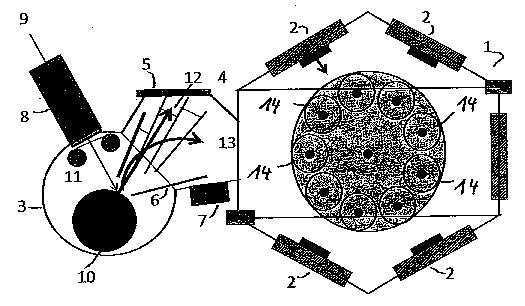
A pulsed laser initiates an electric arc between a graphite anode and cathode inside a vacuum chamber. The arc creates a carbon-rich plasma that is guided by a magnetic filter and deposited onto rotating workpieces, forming a hydrogen-free ta-C coating up to 20 um thick. The process operates at high coating rates and does not require post-deposition mechanical or chemical treatment.
Principles
- Laser-initiated electric arc discharge
- Vacuum plasma deposition
- Magnetic filtering of droplets and particles
- Ion-guided coating onto substrate
Scientific Domains
Materials
- Graphite (cathode/target)
- Tetrahedral amorphous carbon (ta-C)
- Magnetic filter elements
Mechanisms of Action
- Deposition of hard ta-C carbon layer from plasma
- Reduction of surface roughness and friction coefficient
- Improved wear resistance through high microhardness (>=3500 HV)
Energy Sources
Applications
- Automotive engine components (piston rings, pins, cams)
- Motorcycle engines
Claimed Performance
Friction reduced to almost zero; microhardness >=3500 HV; surface roughness Ra ~=0.1 um; potential fuel savings >100 billion L / year over ten years.
Experimental Evidence
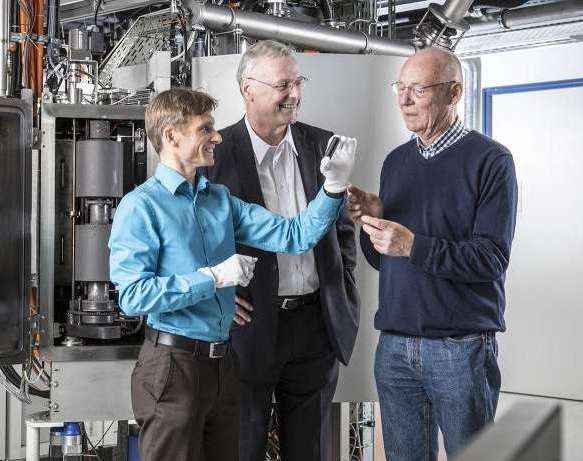
Study published in Tribology International (2012) demonstrated low friction of ta-C coatings; Fraunhofer team produced hydrogen-free ta-C layers up to 20 um thick on industrial scale; BMW is piloting the technology for engine components.
Replication Status
Pilot implementation with BMW; laboratory and small-scale industrial demonstrations reported.
Limitations
- Requires vacuum chamber and magnetic filter, increasing system complexity
- Coating area limited by magnetic filter diameter (~150 mm)
- Deposition rate reduced by 15-20 % when filtering is employed