Goal
Produce potable water from the exhaust gases of military land vehicles and other internal-combustion engines.
Problem
Lack of reliable water supply for troops operating in desert or water-scarce environments and dependence on external logistics.
Concept Summary
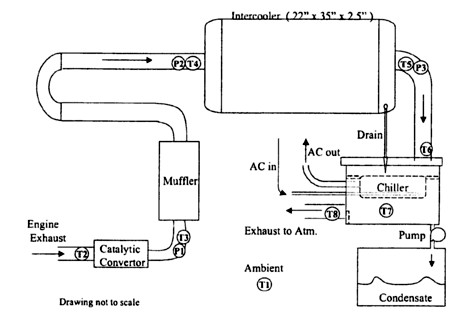
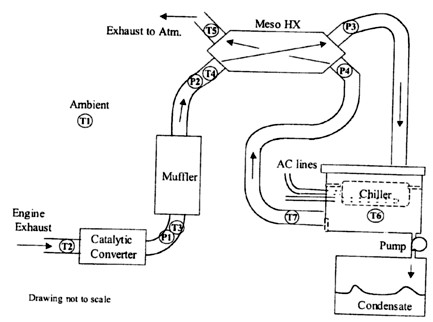
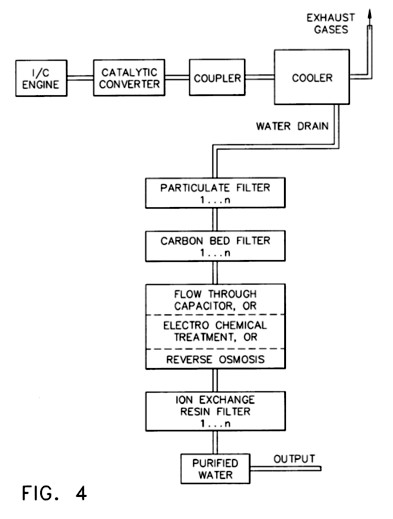
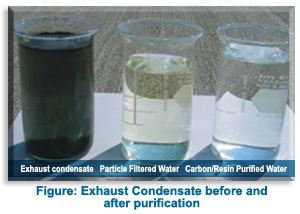
A vehicle-mounted system that condenses water vapor from engine exhaust using a heat-exchanger/chiller, then purifies the condensate through a multi-stage filter train (glass-fiber, activated carbon, carbon-fiber, zeolites, ion-exchange resins) to meet EPA drinking-water standards.
Principles
- Condensation of exhaust vapor by cooling below dew point
- Counter-current heat exchange
- Refrigerant-based sub-cooling (air-conditioning loop)
- Particulate filtration
- Adsorption on activated carbon and carbon-fiber composites
- Ion-exchange resin removal of ionic contaminants
Scientific Domains
Materials
- Aluminum (heresite-coated)
- Stainless steel
- Inconel
- Ceramics
- Graphite
- Glass-fiber filter
- Activated carbon (wood-based, coal-based)
- Carbon-fiber composite
- Zeolites
- Ion-exchange resin (mixed acidic/basic beds)
Mechanisms of Action
- Heat removal from exhaust gases to induce water condensation
- Physical sieving of solids and aerosols
- Chemical adsorption of organic compounds
- Ion-exchange for metal ions and acidic species
Energy Sources
Applications
- Military field operations
- Disaster-relief water provision
- Recreational vehicles in arid regions
Claimed Performance
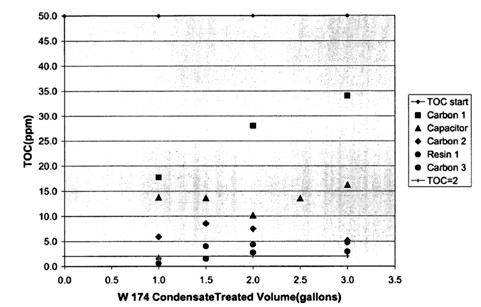
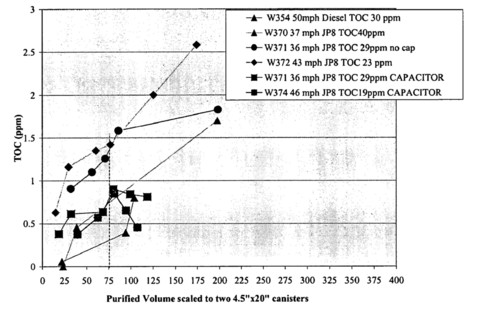
Produces up to 0.7 gal of potable water per gallon of fuel, ~15 gal per day on a HMMWV diesel engine; TOC <0.5 ppm, metal content below EPA limits.
Experimental Evidence
Prototype tests reported TOC <0.5 ppm (detectable limit 0.5 mg/L), water meets EPA drinking-water standards; production rate of ~0.5 gal / gal fuel demonstrated on a 6.5 L diesel engine.
Replication Status
Prototype tested; no independent replication reported.
Limitations
- Performance depends on exhaust temperature and catalytic-converter operation
- Remaining trace unidentified compounds in water
- Heat-exchanger material corrosion risk in acidic condensate