Goal
Provide a flexible, low-cost, environmentally friendly energy-storage device for wearable electronics, roll-up displays, and implanted medical implants.
Problem
Current energy-storage solutions are rigid, expensive, and often derived from non-renewable carbon sources; a need exists for flexible, cheap, and green supercapacitors.
Concept Summary
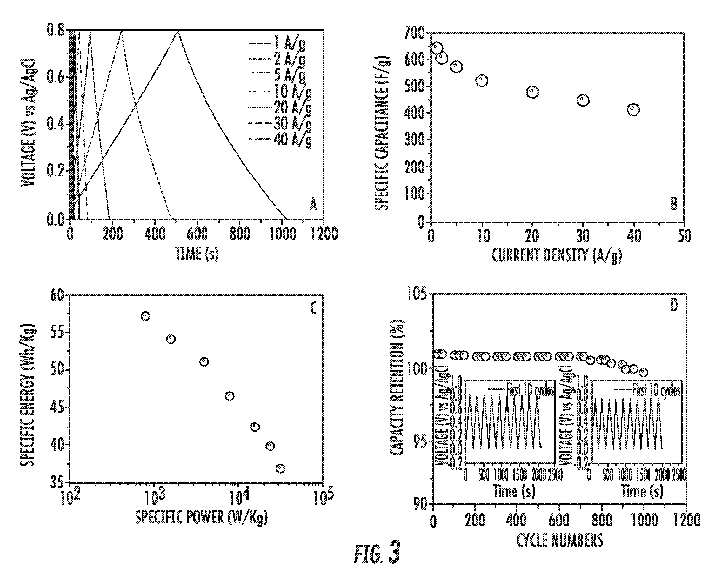
A $5 cotton T-shirt is chemically activated by soaking in sodium fluoride and sequential heating to convert the fibers into activated carbon while retaining flexibility. The resulting carbon textile is then coated with a nano-layer of manganese oxide (MnO_2) to form a flexible supercapacitor that exhibits 97.3 % capacitance retention after 1 000 charge-discharge cycles.
Principles
- Electrical double-layer capacitance
- Pseudocapacitance from MnO_2
- Chemical activation of cellulose to porous carbon
Scientific Domains
Materials
- Cotton (cellulose fibers)
- Sodium fluoride (NaF)
- Activated carbon (derived from cotton)
- Manganese oxide (MnO_2) nano-layer
Mechanisms of Action
- Sodium fluoride-mediated chemical activation of cotton fibers to form porous activated carbon
- Thermal treatment to carbonize and increase conductivity
- Deposition of a MnO_2 nano-layer providing pseudocapacitive redox activity
- Charge storage via electrical double-layer formation in the carbon pores and Faradaic reactions of MnO_2
Applications
- Flexible electronics
- Roll-up displays
- Implanted medical devices
- Wearable power chargers
Claimed Performance
97.3 % capacitance retention after 1 000 cycles; performance comparable to other carbon-based supercapacitors; cost up to 10x lower than coal- or petroleum-derived activated carbon.
Experimental Evidence
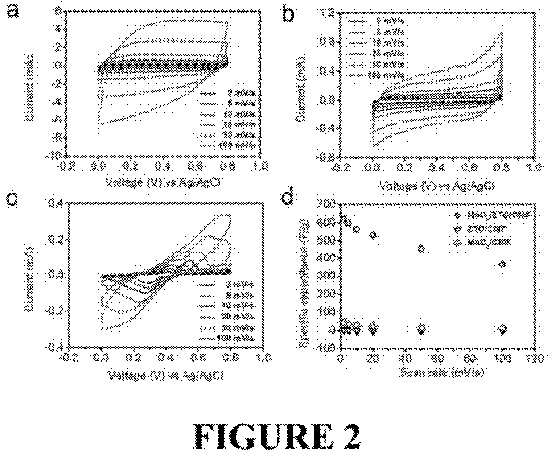
Prototype tested for 1 000 charge-discharge cycles with 97.3 % retention; electrochemical characterization (CV) reported in Advanced Materials abstract shows superior performance of MnO_2-coated carbon textile.
Replication Status
Prototype demonstrated; scaling up and independent replication not yet reported.
Limitations
- Scalability of the activation and coating process not yet demonstrated
- Performance comparable but not markedly superior to existing supercapacitors
- Long-term mechanical durability under repeated flexing unknown