Goal
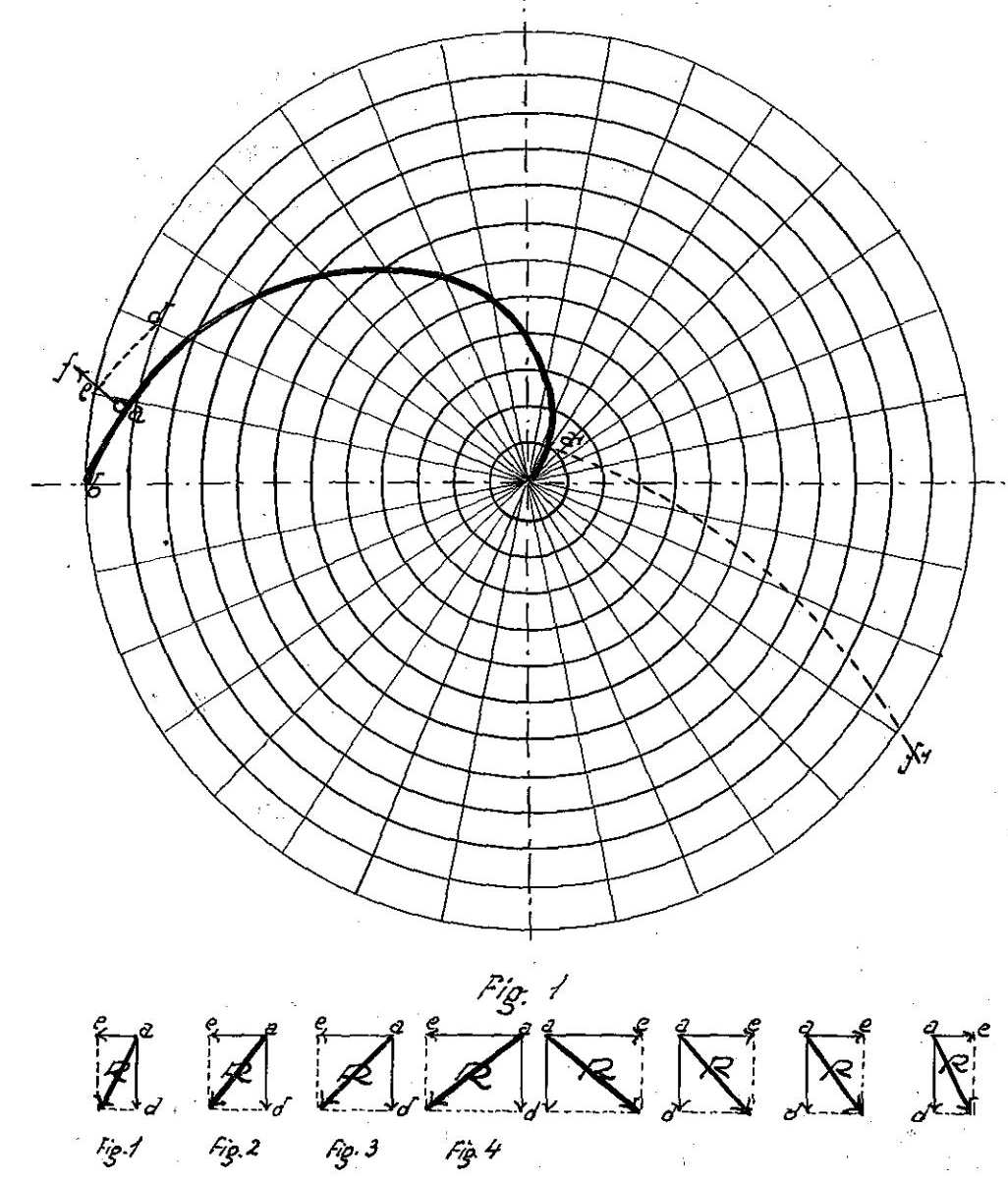
Provide aircraft lift and thrust by driving air in cycloid trajectories and creating a low-pressure (vacuum) region beneath the vehicle.
Problem
Low efficiency of conventional helical propellers and the need for a propulsion method that can generate lift without high fuel consumption.
Concept Summary
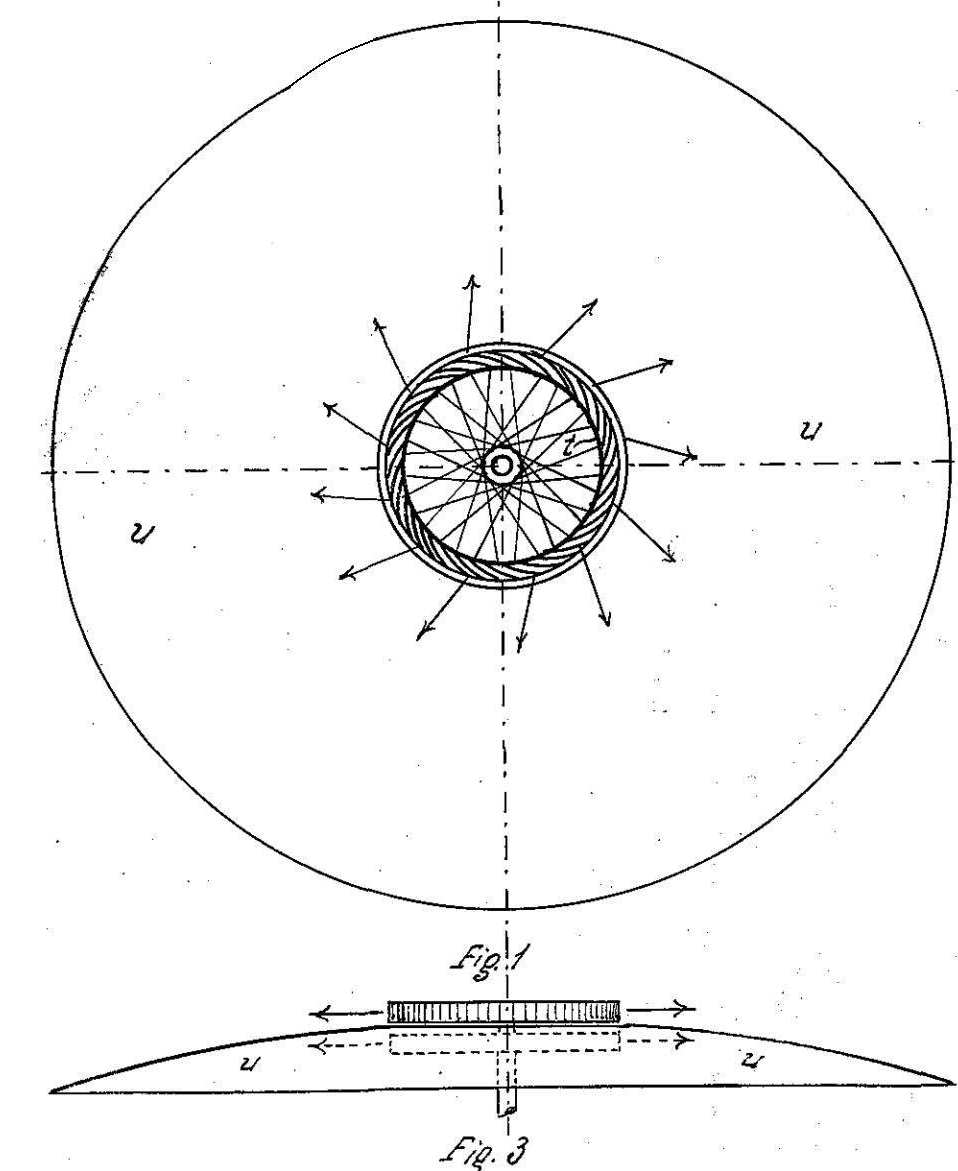
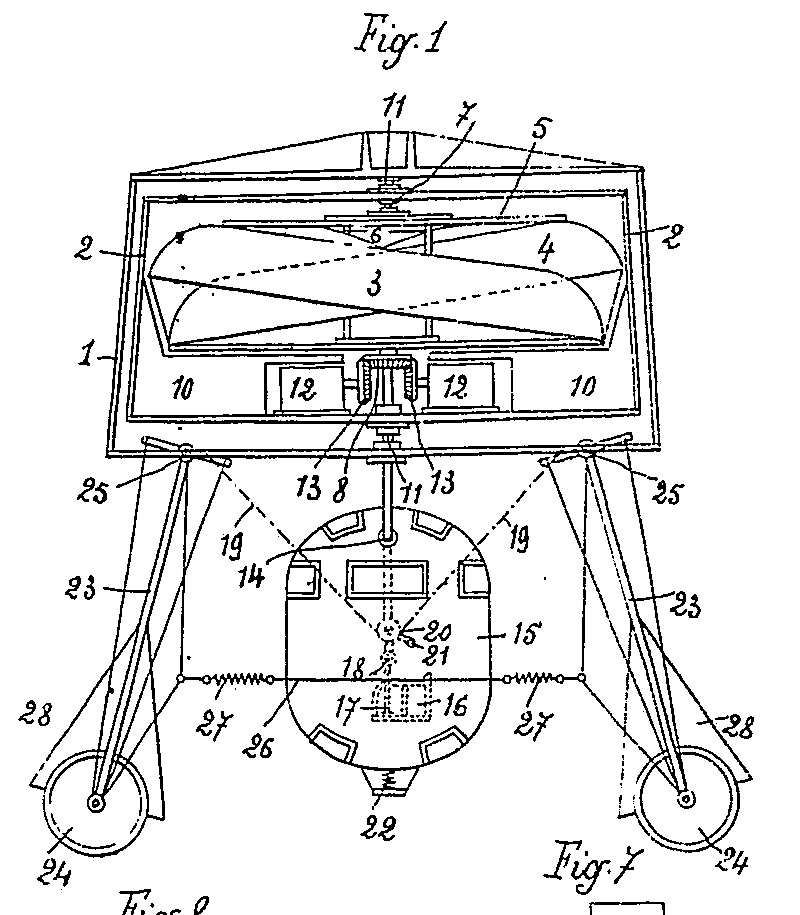
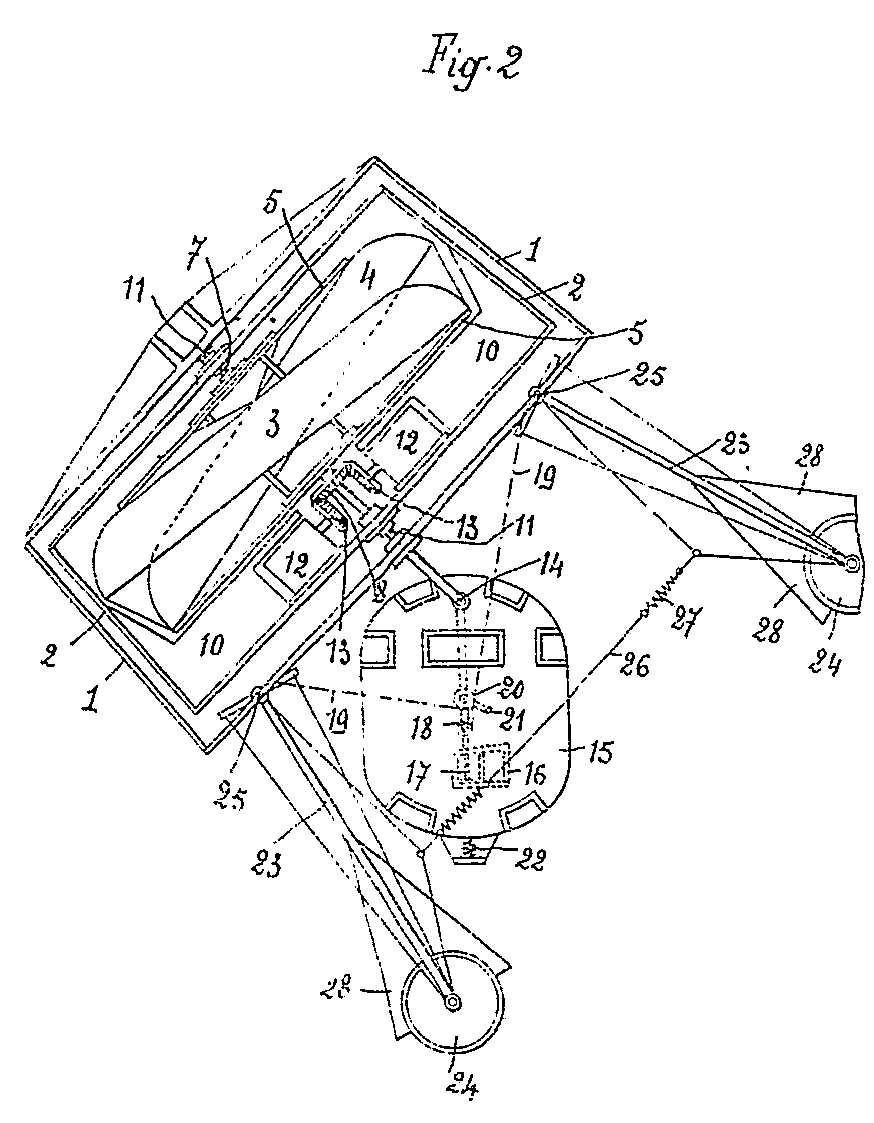
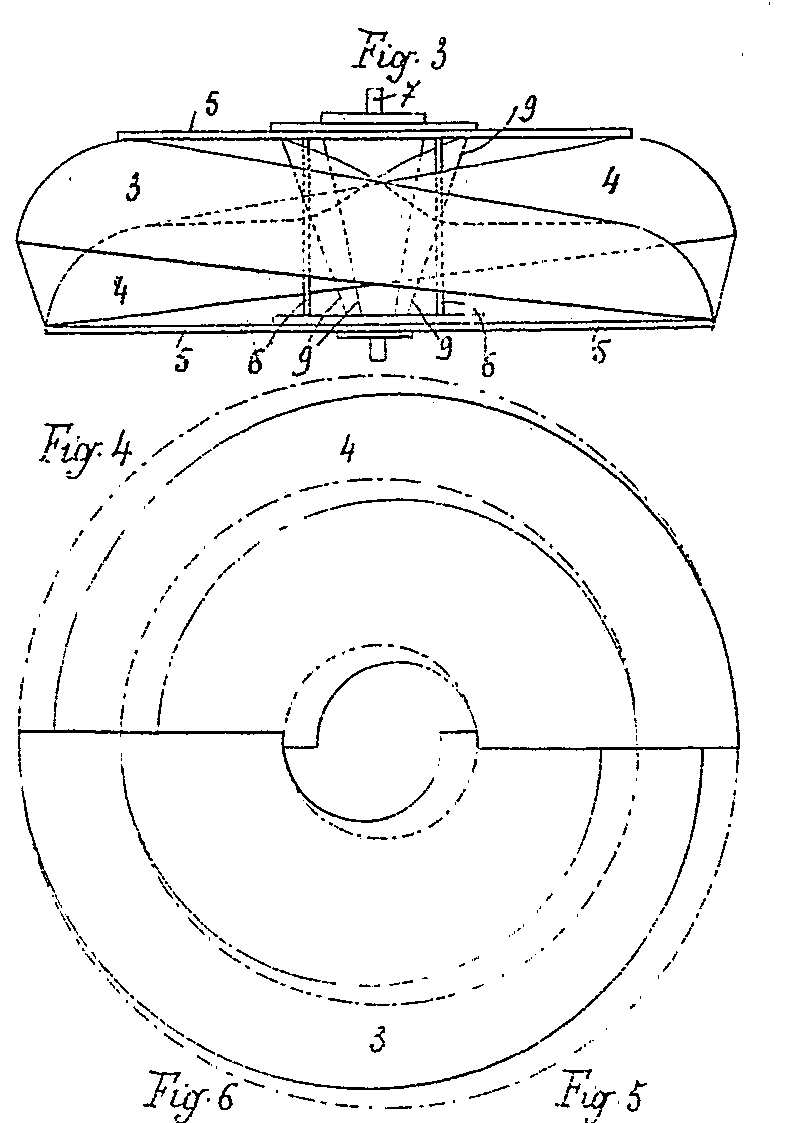
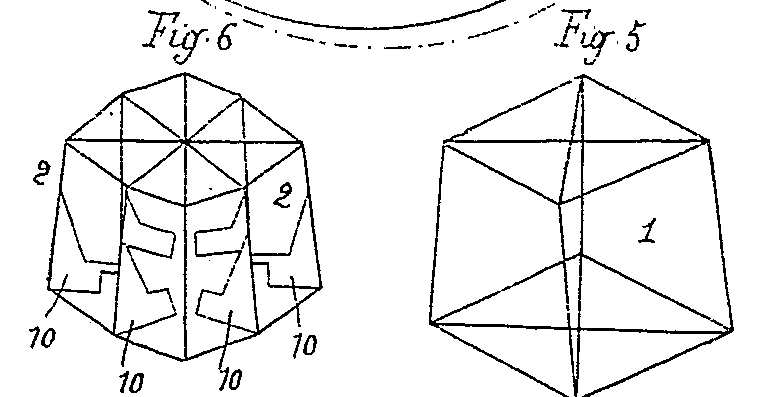
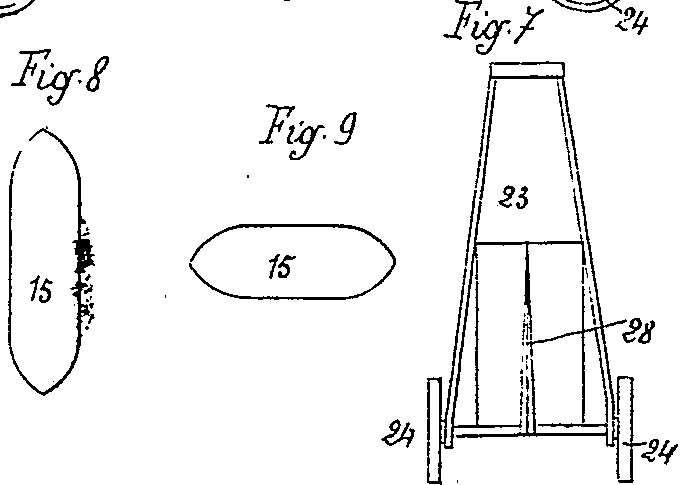
A rotating crown-shaped propeller consisting of multiple concentric rings with angled blades draws air from the center and ejects it radially, creating cycloid air trajectories. The crown is mounted over a porous surface on the fuselage, producing a vacuum (low-pressure) region that pulls the aircraft forward and upward. The design also incorporates Coanda-effect flow-guiding surfaces.
Detailed Description
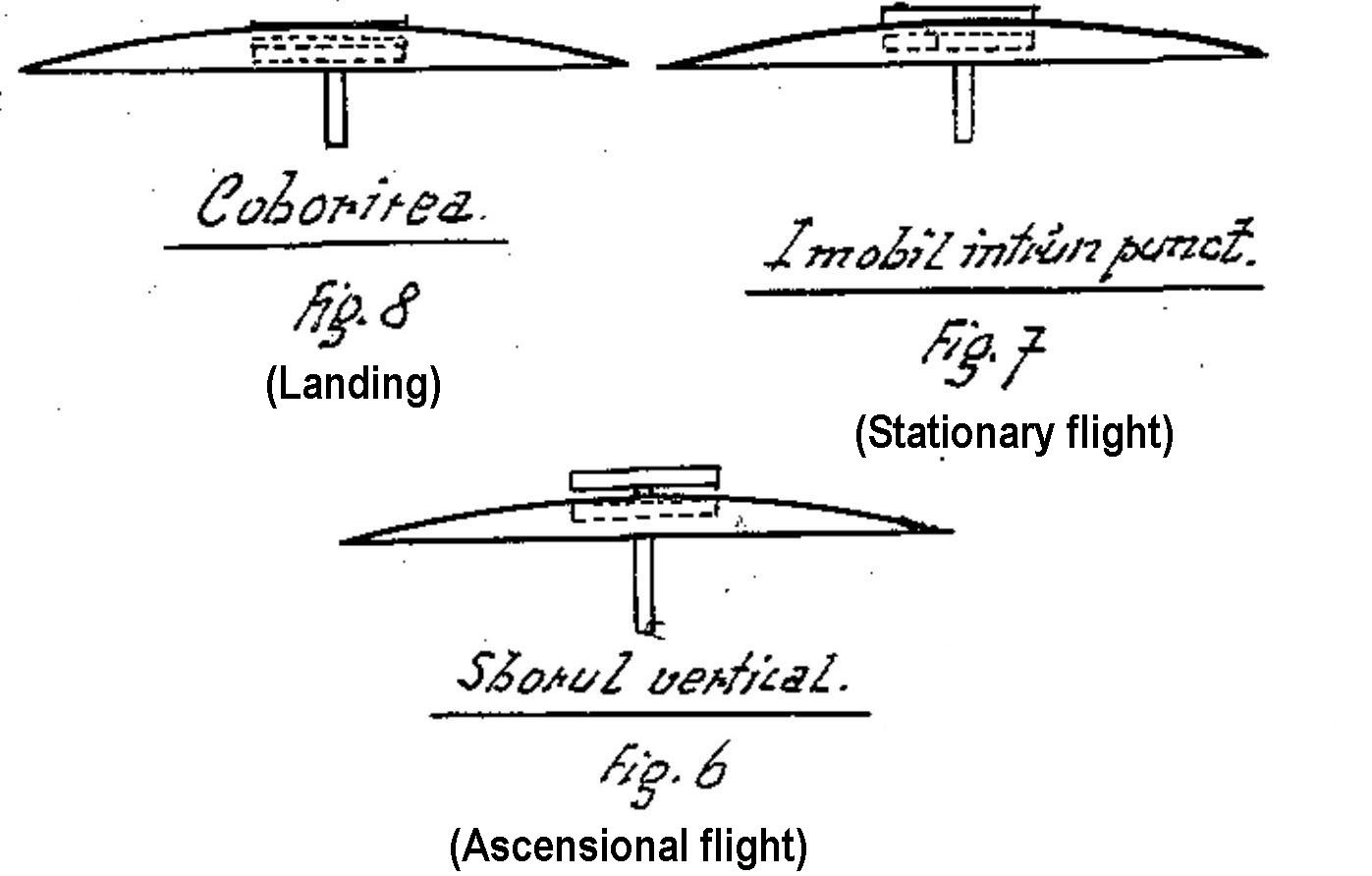
The system uses a crown-shaped rotational device with peripheral speed around 396 m/s. The central axle is connected to spokes that form a vacuum chamber. Air is drawn into the central space and expelled through blade-shaped elements arranged on several rings. The blades are set at angles between 45 deg and 75 deg , each with a 6 deg tip arc and a 20 deg body arc. A porous surface on the aircraft's underside creates a boundary-layer suction (vacuum bell) that enhances lift. The device is claimed to work for take-off, landing, horizontal flight in the troposphere, and, with additional electro-kinetic/MHD methods, for upper-atmosphere or space flight.
Principles
- Cycloid air trajectory
- Vacuum (low-pressure) generation
- Coanda effect
- Porous surface suction
Scientific Domains
Materials
- Metal alloy (blades and crown)
- Porous material (fuselage surface)
Mechanisms of Action
- Central air intake
- Radial evacuation through angled blades
- Creation of low-pressure region under fuselage
- Thrust from cycloid-sh air ejection
Applications
- Aircraft propulsion
- Vertical lift / VTOL
- Atmospheric flight
Claimed Performance
Capable of providing lift and propulsion for small discoidal aircraft (e.g., foo-fighters) and larger Haunebu-type vehicles; specific thrust or efficiency figures are not provided.
Experimental Evidence
Historical patents (RO 21370, 1932; FR 545789, 1933) and wartime reports describe prototype devices built in Germany and Romania; no quantitative test data are presented.
Limitations
- No quantitative performance data
- Unverified claims of vacuum generation
- Potential material and manufacturing complexity
Red Flags
- Claims of vacuum-bell propulsion without published measurements
- References to secret wartime technology and alleged MHD space propulsion
- Lack of peer-reviewed or independently replicated data