Goal
Protect the liver from acute and chronic injury
Problem
Liver damage caused by toxins, viral infection, inflammatory mediators, and ischemia-reperfusion
Concept Summary
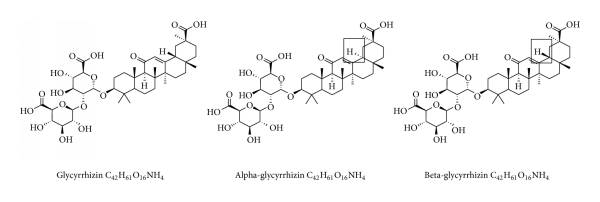
Glycyrrhizin, a triterpene glycoside extracted from licorice root, exhibits hepatoprotective activity through anti-inflammatory, antioxidant, and immunomodulatory mechanisms. Formulations have been developed for injectable, oral, rectal, intranasal and subcutaneous delivery to overcome its low membrane permeability and gel-forming tendency. In animal models (CCl_4, acetaminophen, concanavalin-A, ischemia-reperfusion) and limited clinical studies, glycyrrhizin reduced serum transaminases, suppressed pro-inflammatory cytokines, inhibited iNOS and HMGB1 expression, and improved cellular immunity.
Principles
- Anti-inflammatory
- Antioxidant
- Cytokine modulation
- HMGB1 inhibition
- iNOS down-regulation
- Membrane stabilization
Scientific Domains
Materials
- Glycyrrhizin (glycyrrhizic acid)
- Monoammonium glycyrrhizinate
- Glycine
- L-cysteine
- Solubility agents (e.g., cyclodextrins, polysorbates)
- Absorption-enhancing agents (e.g., surfactants, permeation enhancers)
Mechanisms of Action
- Inhibition of high-mobility group box 1 (HMGB1) release from Kupffer cells
- Suppression of inducible nitric oxide synthase (iNOS) expression
- Reduction of tumor necrosis factor-alpha (TNF-alpha) and other pro-inflammatory mediators
- Scavenging of reactive oxygen species and reduction of lipid peroxidation
- Reversal of altered fatty-acid metabolism
Applications
- Treatment of acute and chronic liver disease
- Adjunct therapy for drug-induced hepatotoxicity
- Supportive care in viral hepatitis and autoimmune hepatitis
Claimed Performance
Significant reduction of ALT/AST (up to 70 % in some animal models) and attenuation of toxin-induced liver injury; clinical improvement of liver function in children with infectious mononucleosis-related liver impairment.
Experimental Evidence
Multiple peer-reviewed studies in mice and rats (CCl_4, acetaminophen, Con A, ischemia-reperfusion) and a randomized clinical trial in children demonstrate hepatoprotective effects of glycyrrhizin.
Replication Status
Effect replicated across several independent animal studies and at least one clinical trial.
Limitations
- Low oral membrane permeability
- Gel formation in high-concentration aqueous solutions
- Requirement for injection in many current formulations
- Limited large-scale clinical data