Goal
Provide irrigation water by harvesting atmospheric moisture, especially in drought-prone regions.
Problem
Severe drought and water scarcity affecting agriculture in arid and semi-arid regions, such as Australia's Murray-Darling basin.
Concept Summary
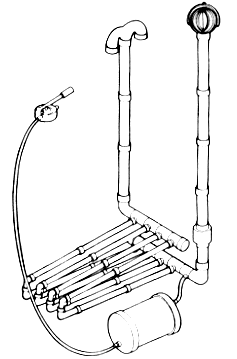
A low-tech, solar-powered device that mimics the Namib beetle's hydrophilic skin to condense water from humid air, then pumps the collected water through underground pipes to irrigate plants.
Detailed Description
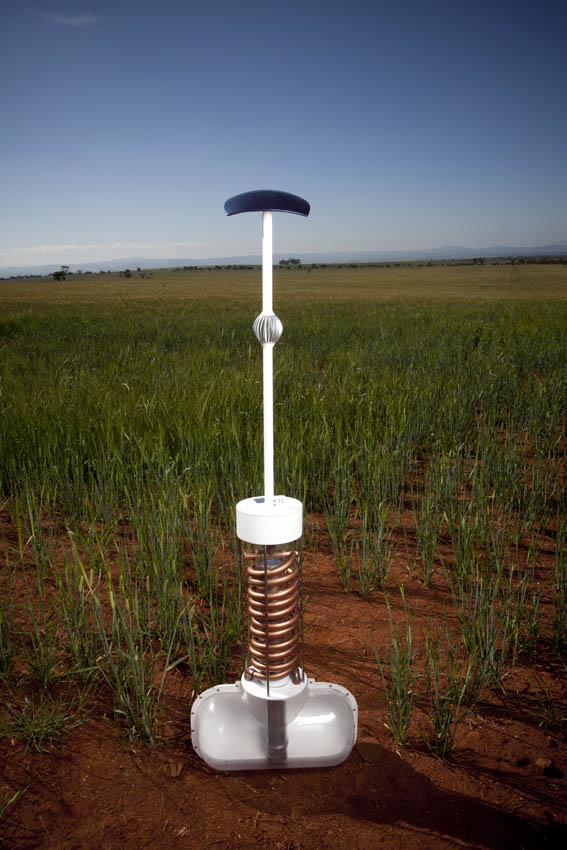
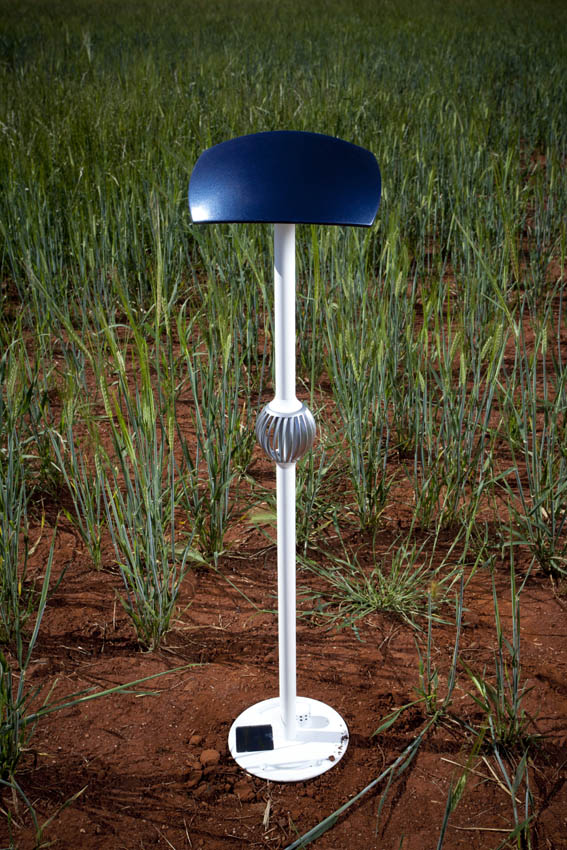
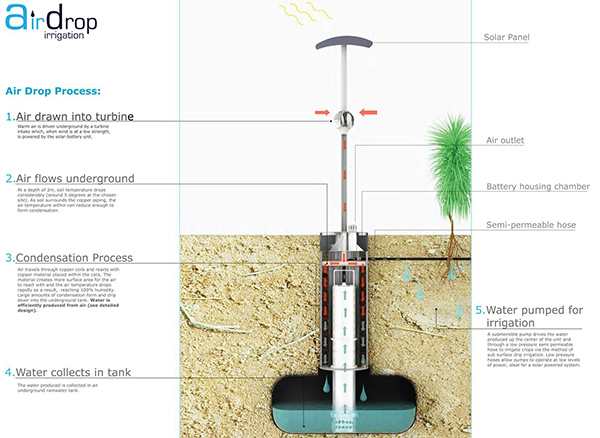
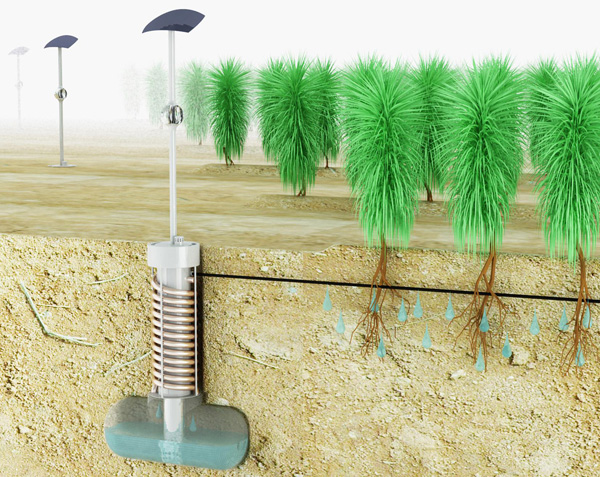
The AirDrop system consists of a solar panel that powers a pump. Air is drawn over a hydrophilic surface where water molecules condense into droplets. The cooled, moisture-laden air is then passed through underground pipes where further cooling causes additional condensation. The collected liquid water is stored and delivered via a network of underground irrigation pipes to plant roots. A prototype produced roughly one litre of water per day (~=11.5 mL per cubic metre of air) under laboratory conditions. The design is intended to be inexpensive, self-sufficient and suitable for deployment by small-scale farmers.
Principles
- Biomimicry (Namib beetle condensation)
- Thermodynamic cooling and condensation
- Solar photovoltaic power
- Hydrophilic surface adsorption
Scientific Domains
Materials
- Hydrophilic coating (polymer or silica-based)
- Solar photovoltaic panel (silicon)
- Plastic or metal underground pipes
- Pump and basic plumbing components
Mechanisms of Action
- Condensation of water vapor on a hydrophilic surface
- Cooling of air in underground pipes to enhance condensation
- Solar-driven pumping of collected water into irrigation lines
Energy Sources
Applications
- Irrigation for farms in arid and semi-arid regions
- Water supply for remote agricultural plots
- Supplemental watering for drought-affected communities
Claimed Performance
Prototype yields close to 1 L of water per day; theoretical harvest rate of ~11.5 mL per cubic metre of air.
Experimental Evidence
A scaled-down prototype was built and tested, producing roughly one litre of water per day under unspecified conditions. The project won several awards (2011 James Dyson Award, Australian Design Awards Honourable Mention, Cumulus Association 3rd prize).
Replication Status
Prototype tested; further testing in varied conditions required; no independent replication reported.
Limitations
- Low water yield compared with conventional sources
- Performance depends on ambient humidity and solar availability
- Scaling to commercial farm sizes not yet demonstrated
- Potential fouling of hydrophilic surface over time