Goal
Increase internal combustion engine efficiency by achieving more complete fuel vaporization before intake.
Problem
Incomplete vaporization of gasoline droplets in the intake manifold causing knock, poor fuel economy, higher emissions, and the need for high-octane fuel.
Concept Summary
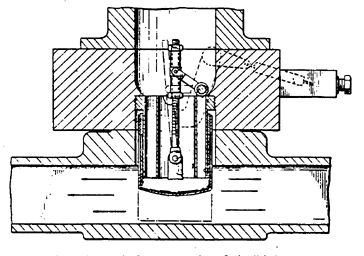
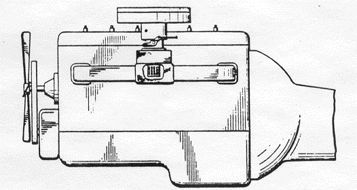
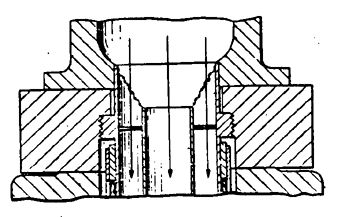
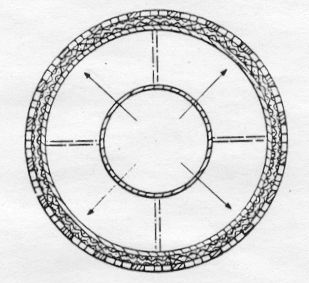
A valve placed between the carburetor and intake manifold that uses two concentric stainless-steel screens with thousands of tiny nozzles. The screens create high turbulence and a low-pressure zone that shears gasoline droplets, causing rapid vaporization and uniform mixing with air before entering the cylinders.
Principles
- turbulent mixing
- droplet shearing
- pressure differential induced vaporization
- enhanced atomization
Scientific Domains
Materials
- stainless steel
Mechanisms of Action
- high-velocity air flow through fine mesh creates shear forces on fuel droplets
- low-pressure region downstream of the mesh promotes rapid phase change
- pre-vaporized fuel mixes uniformly with intake air
Applications
- automotive gasoline engines
Claimed Performance
Fuel economy +6-20%; torque +13-40%; NOx emissions -4-48%; CO emissions -17-54%; HC emissions -5-13%; octane requirement reduced by 10-15 points.
Experimental Evidence
Six test series conducted at EPA-recognized laboratories on a range of octane fuels (75-97) showed the performance changes listed above.
Replication Status
Tested six times at EPA-recognized laboratories; no independent commercial replication reported.
Limitations
- Requires integration with existing carburetor/intake designs
- Potential power loss at high engine speeds due to flow restriction
- Unproven in modern fuel-injected engines
Red Flags
- Performance claims based on limited testing; no peer-reviewed publications
- No independent third-party replication reported