Goal
Create a compact, lightweight rotary internal-combustion engine with very high thermal efficiency to replace conventional piston engines in vehicles, generators, UAVs and other military and civilian applications.
Problem
Conventional piston and Wankel rotary engines are heavy, bulky and waste a large portion of fuel energy as heat and exhaust, limiting power-to-weight and overall efficiency.
Concept Summary
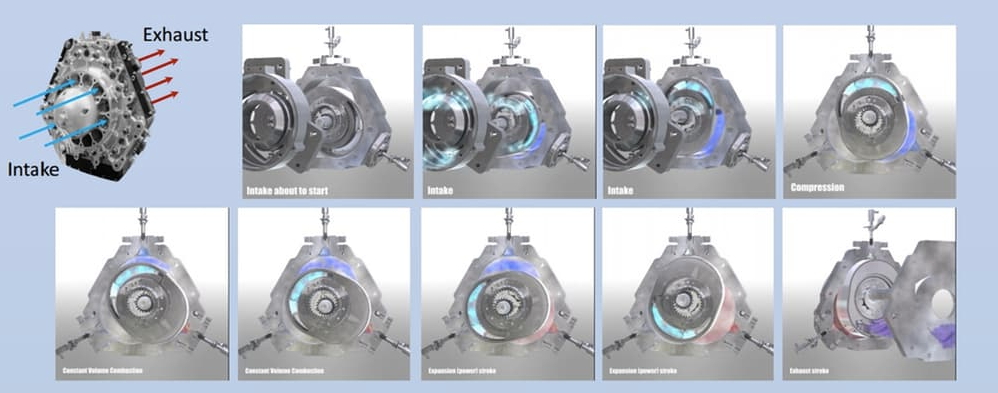
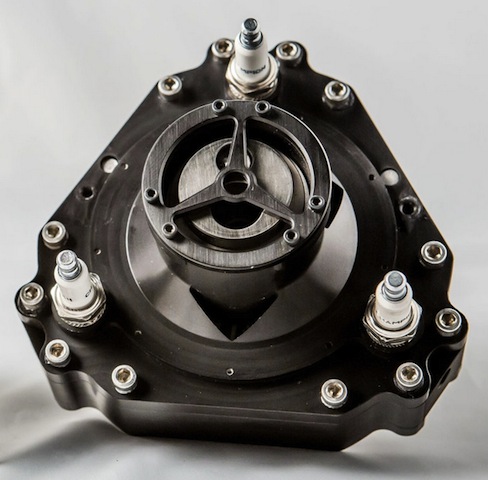
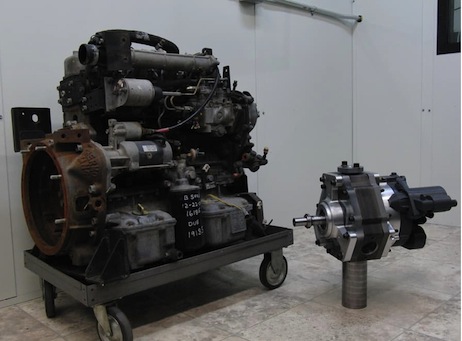
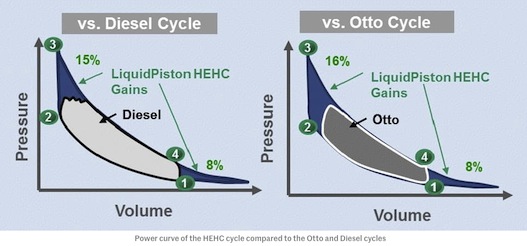
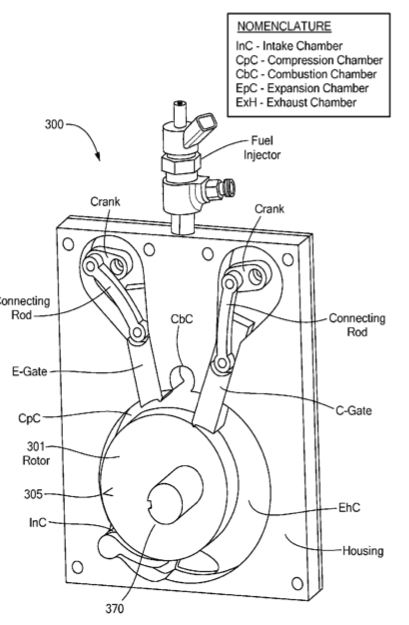
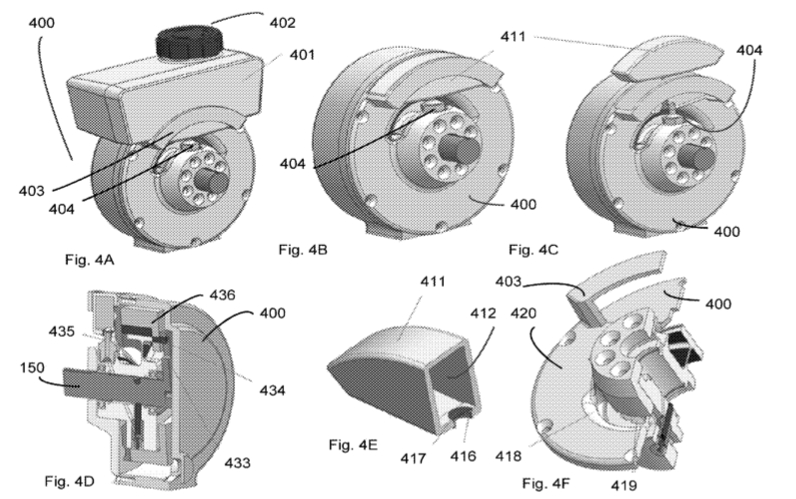
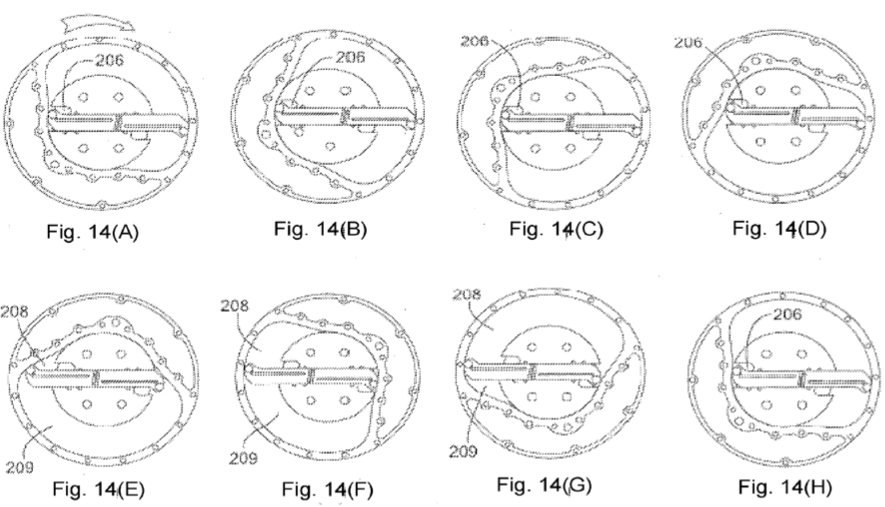
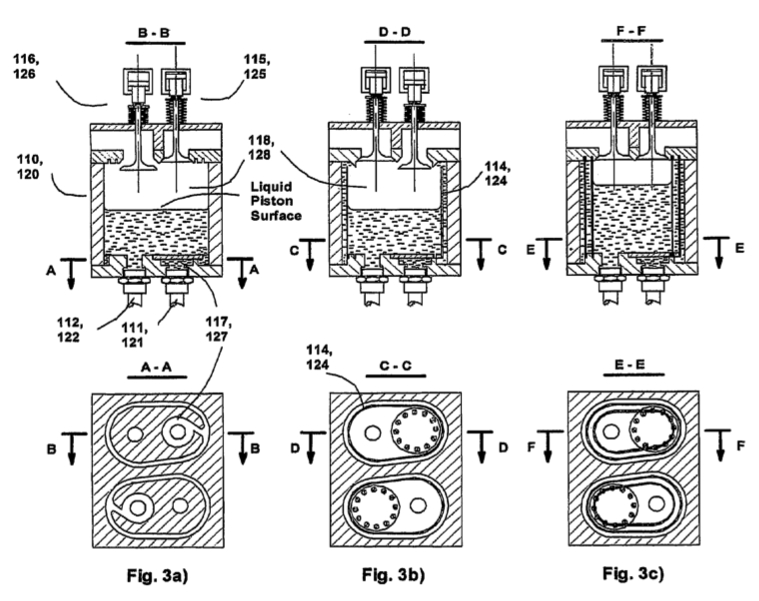
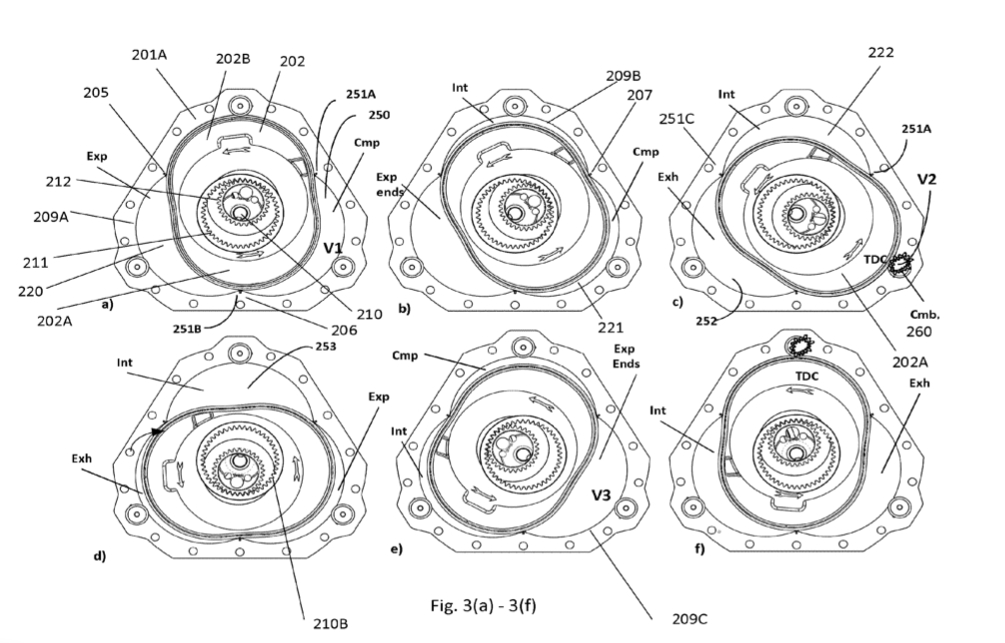
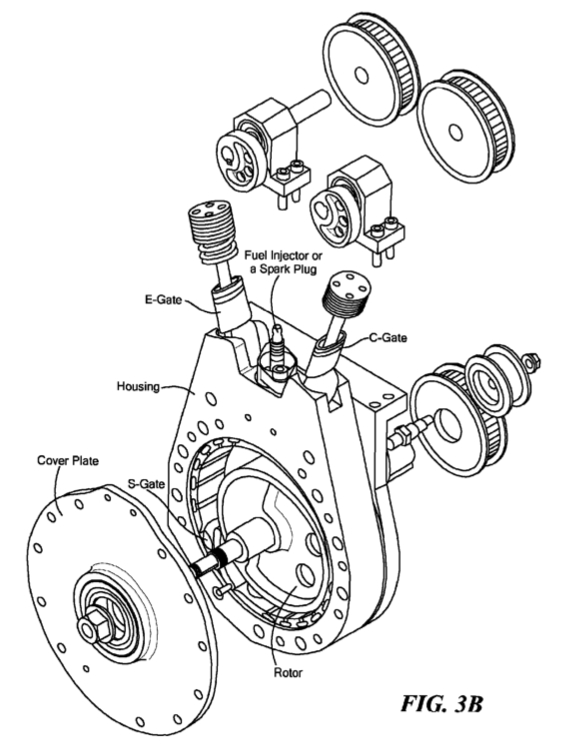
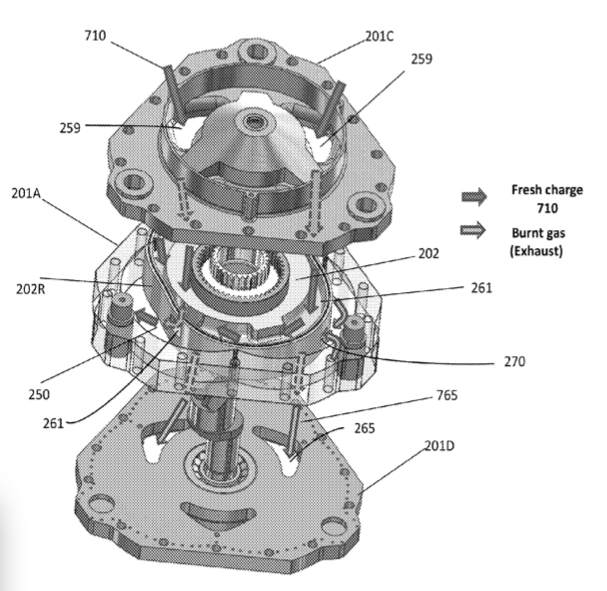
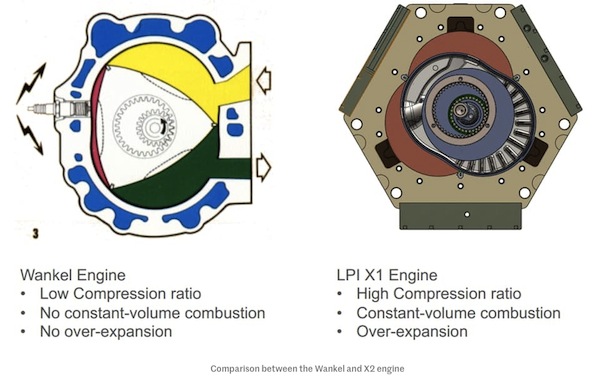
LiquidPiston's X-mini is a three-part rotary engine that uses a proprietary High-Efficiency Hybrid Cycle (HEHC). Air is compressed, then combustion occurs at constant volume (isochoric) before an over-expansion phase extracts almost all the energy. The design eliminates most oil consumption, removes the need for a water-cooling system, and can run on JP-8, diesel or gasoline. The prototype weighs 4 lb and produces 3 hp, with targets of 5 hp and further weight reduction.
Principles
- High-Efficiency Hybrid Cycle (HEHC)
- Isochoric (constant-volume) heat addition
- High compression ratio (~=18:1)
- Over-expansion to atmospheric pressure
- Rotary piston architecture (housing-mounted seals)
- Direct fuel injection
- Water injection for cooling and NOx reduction
Scientific Domains
Materials
- Steel (cylinder housing)
- Aluminum (rotor and housing)
- Ceramic/metal seals
- Lubricant oil
- Water (for injection cooling)
Mechanisms of Action
- Rotary piston motion converts pressure forces into torque
- Air compression in an isolated chamber
- Constant-volume combustion for complete fuel burn
- Expansion of combustion gases into a larger volume to extract work
- Energy recovery via hydraulic shock absorbers and power-conversion modules
Energy Sources
Applications
- Go-kart propulsion
- UAV power
- Backpack-carried generators
- Military robotics
- Lawn-mowers
- Emergency generators
- Mopeds
- Boat engines
Claimed Performance
Prototype: 3 hp at 4 lb (~=0.75 hp/lb). Target: 5 hp and <3 lb. Thermal efficiency claimed up to 57 % in real-world tests, theoretical 75 % (peak).
Experimental Evidence
A working prototype (X-mini) has been built and demonstrated in video; DARPA-funded testing reported 3 hp output. Papers (ICE2006, SAE 2008, SAE 2014) present preliminary experimental results and firing analysis for X1 (70 hp) and XMv3 (3 hp) engines.
Replication Status
Only one prototype built by LiquidPiston; no independent third-party replication reported.
Limitations
- Prototype stage - still early testing
- Weight reduction to target <3 lb not yet achieved
- Scaling to higher power levels may present thermal and material challenges
- Dependence on specific fuels (JP-8, diesel, gasoline)
- No water-cooling system - relies on air or water injection
Red Flags
- Efficiency claims (>50 %) are based on prototype data and theoretical analysis; independent verification lacking