Goal
To destroy breast cancer tumors by minimally invasive freezing, providing a non-surgical treatment option.
Problem
Breast cancer tumors that require removal by surgery, causing discomfort and psychological impact.
Concept Summary
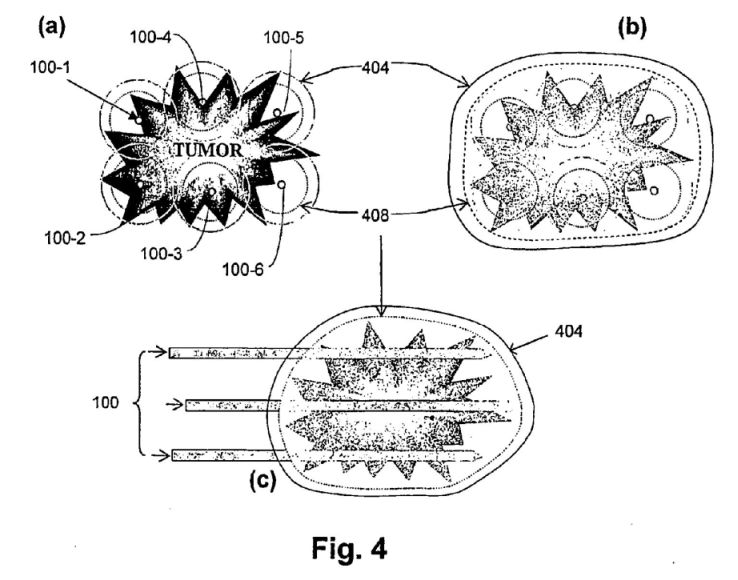
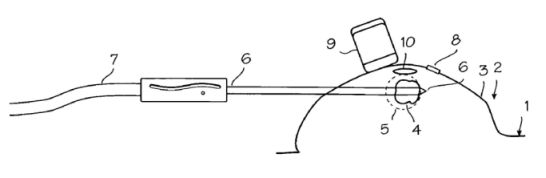
A cryotherapy system uses fine needles (cryoprobes) to deliver super-cold gas directly around a breast tumor, forming an ice-ball that freezes and kills cancer cells within minutes while preserving surrounding tissue.
Detailed Description
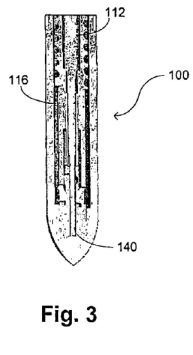
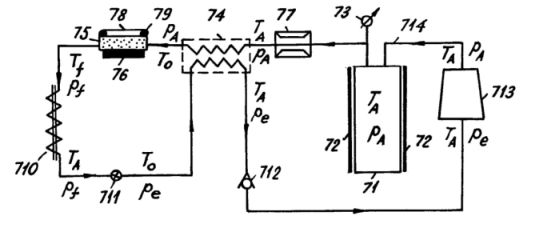
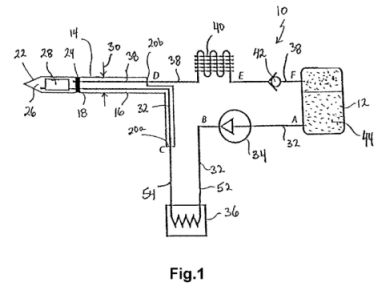
The system comprises multiple cryoprobes with a shaft that carries a cryogenic fluid (e.g., liquid nitrogen) to the distal tip. Flow-control valves and a compressor create a closed-loop system, regulated by a computer processor to achieve a high-power freeze followed by a low-power freeze. The ice-ball formed around the tumor causes cellular rupture and necrosis. Clinical trials on 13 patients showed no cancer recurrence over five years with minimal pain and scarring.
Principles
- Cryogenic cooling
- Minimally invasive ablation
- Ice-ball formation
Scientific Domains
Materials
- Cryogenic gas (liquid nitrogen or argon)
- Metallic cryoprobe shaft
- Insulating vacuum jacket
- Heat exchanger components
Mechanisms of Action
- Rapid tissue freezing
- Cellular rupture by ice crystal formation
- Thermal ablation of tumor mass
Energy Sources
Applications
- Breast cancer treatment
- Ablation of other solid tumors (prostate, liver, lung, cervix)
Claimed Performance
Cancer cells destroyed within minutes of gas injection; patients remained cancer-free for up to five years with no significant complications.
Experimental Evidence
A clinical trial involving 13 breast-cancer patients who refused surgery; all remained cancer-free at five-year follow-up; minimal pain and scarring reported.
Replication Status
Results presented at the Society of Interventional Radiology 35th Annual Scientific Meeting; no independent replication reported.
Limitations
- Small sample size (13 patients)
- Limited to tumors accessible by percutaneous needles
- Long-term comparative data vs. surgery lacking
Red Flags
- Potential damage to surrounding healthy tissue if ice-ball over-extends
- Need for precise imaging guidance